How to Choose the Best Reverse Osmosis Water Filter for Your Home?
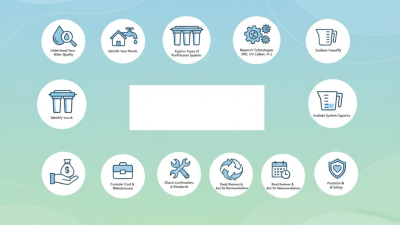
Choosing a reverse osmosis water filter for your home can feel overwhelming. With many options, it is easy to get lost in technical specifications. This guide aims to simplify your decision-making process.
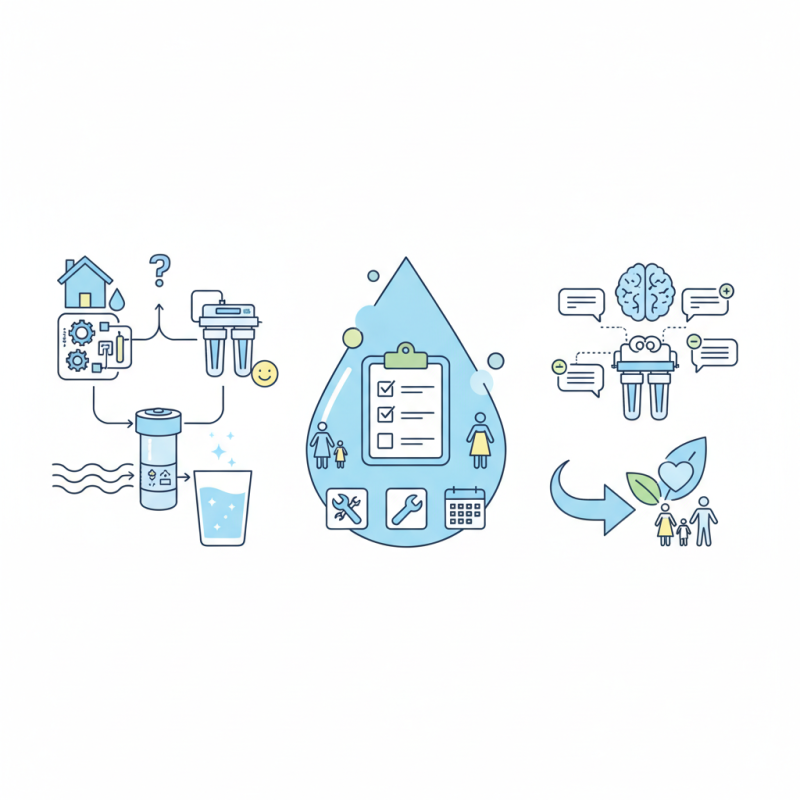
A reverse osmosis water filter is essential for clean drinking water. It removes impurities efficiently. However, not all filters are created equal. Some may lack certain features. Others could be too complex for everyday use. You should consider your home’s specific needs and water quality. Is the filter easy to install? Does it require frequent maintenance?
Take time to research various brands. Each offers different benefits and drawbacks. Some filters are designed for larger families, while others suit smaller households. Reflect on your lifestyle. Will you really use all the features? A thoughtful choice can lead to better health outcomes for you and your family.
Understanding Reverse Osmosis and Its Benefits for Water Filtration
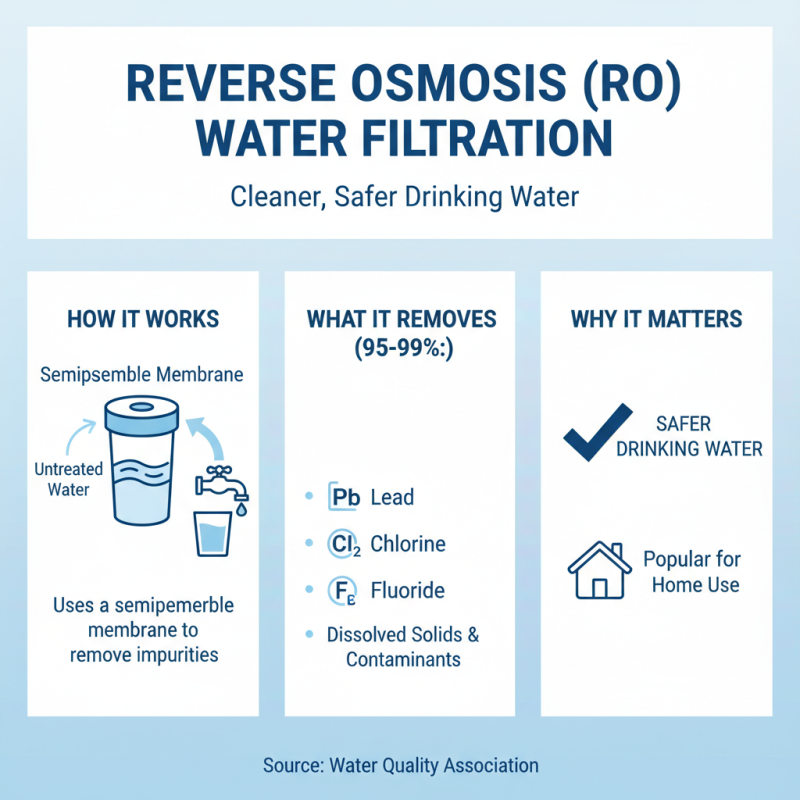
Reverse osmosis (RO) is a powerful water filtration method. It helps in removing impurities from water. This technology uses a semipermeable membrane. According to the Water Quality Association, reverse osmosis can remove about 95-99% of dissolved solids. This includes contaminants like lead, chlorine, and fluoride. Many people are switching to RO systems in their homes for safer drinking water.
When choosing an RO system, consider water quality. Test your water to know what impurities are present. Not all RO filters are the same. Some may not address specific contaminants. A professional report by the NSF International found that reverse osmosis is effective against many household contaminants. However, it may leave some pesticides and volatile organic compounds behind. Understanding your water is crucial.
**Tip:** Look for certifications on filtration systems. They indicate the product's effectiveness in removing harmful substances.
Costs and maintenance are also factors to consider. While initial costs may seem high, think long-term. An RO system may save money by reducing bottled water consumption. Regular maintenance is needed to ensure optimal performance. Filters need changing every six to twelve months, depending on usage.
**Tip:** Keep track of your filter replacement dates. Staying on top of maintenance can improve water quality and system lifespan.
Key Factors to Consider When Selecting a Reverse Osmosis Filter
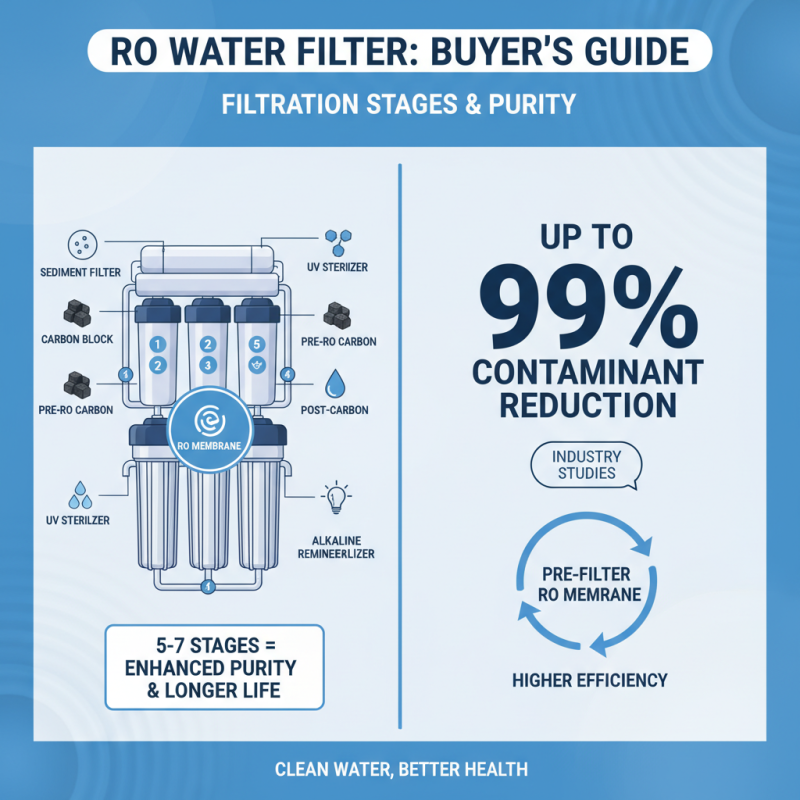
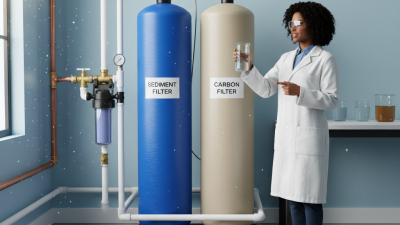
When selecting a reverse osmosis (RO) water filter, several key factors come into play. The system’s filtration stages are crucial. Many models offer 5 to 7 stages of filtration. Each stage serves a specific purpose. For example, the pre-filter removes sediments. An effective pre-filter enhances the life of the RO membrane. Industry studies reveal that systems with a higher number of filtration stages can reduce contaminants by up to 99%.
Water pressure is another important consideration. Reverse osmosis requires sufficient water pressure to function effectively. The ideal range is typically between 40 to 100 psi. Low water pressure can lead to poor filtration performance. Households relying on well water may need a booster pump. This additional investment may sound simple, but it can significantly impact your water quality.
Storage tanks also deserve attention. These tanks hold filtered water until needed. A larger tank means more storage capacity, but it occupies space. Many homeowners face a dilemma: prioritize space or water availability. Monitor the size of your household when choosing a tank. Inadequate space can lead to frequent refills, which is inconvenient. Make sure your choice aligns with your daily consumption needs.
Comparing Different Types of Reverse Osmosis Systems Available
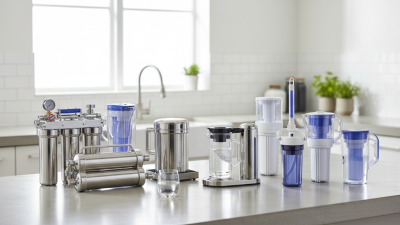
When selecting a reverse osmosis (RO) water filter system for your home, understanding the different types available is essential. There are undersink systems, which are popular for residential use. These systems often combine space efficiency with powerful filtration capabilities. They fit neatly under the sink but require proper installation and maintenance. It’s crucial to assess the space available in your cabinet.
Another option is countertop systems. These are easy to install and move around, making them ideal for renters. However, they can take up counter space. There are also tankless RO systems, which offer efficiency and convenience. They don’t require a storage tank, allowing for continuous water flow. But, they can be more expensive upfront.
Considering the varied maintenance needs is important. Some systems require regular filter changes, which can be overwhelming. It’s easy to overlook, causing reduced water quality. Choosing the right system means balancing your budget, space, and convenience. Each type has its pros and cons. Reflect on how each system aligns with your lifestyle before making a decision.
Installation and Maintenance Tips for Reverse Osmosis Filters
When installing a reverse osmosis (RO) water filter, careful planning is essential. Choose a suitable location near your kitchen sink. The installation area should have easy access to the necessary plumbing. Make sure there is enough space under your sink. Some systems require additional tank storage.
Tips: Always have an extra set of tools ready. You might need them. Check for leaks after installation. A small leak can lead to bigger issues. Regularly inspect connections and filters. This ensures ongoing efficiency.
Maintenance is key for long-lasting performance. Change filters according to the manufacturer’s recommendations. Ignoring this can compromise water quality. Take time to flush the system regularly. This helps remove any build-up. Don’t assume all filters are the same. Some may degrade faster based on usage.
Tips: Keep a calendar reminder for maintenance. It’s easy to forget. If you notice odd tastes or odors, investigate immediately. Outdated filters can affect your health. Stay proactive to avoid costly repairs later.
Assessing Water Quality to Determine Filter Needs and Specifications
Assessing water quality is crucial when choosing a reverse osmosis (RO) water filter. Many households face water quality issues. According to the Environmental Protection Agency, over 70 million Americans receive water that does not meet safety standards. Knowing your water source is essential. Municipal water often contains chlorine and heavy metals. Well water might have contaminants like bacteria or nitrates. Testing your water is the first step.
Water testing kits can provide insights. They measure pH levels, total dissolved solids (TDS), and specific contaminants. Some kits can reveal lead, arsenic, and other heavy metals. The presence of high TDS levels might indicate the need for an advanced RO system. Reports show that effective RO filters can reduce TDS by over 90%. It’s not just about removing bad elements; it’s about enhancing water taste and safety.
However, many users complain about the waste produced by RO systems. This is something to consider. Sometimes, consumers overlook the maintenance needs of these systems. A forgotten filter can lead to recontaminated water. Regular monitoring and replacement of filters will ensure optimal performance. Reflect on your household's specific needs. Every water source is different, and so are the required solutions.
Water Quality Assessment and Filter Needs
This chart illustrates the levels of common contaminants found in household water supplies. The selected contaminants are measured in parts per million (ppm). Understanding these levels can help homeowners choose the appropriate reverse osmosis filter.