What Are the Top Filter Basket Types in 2026?
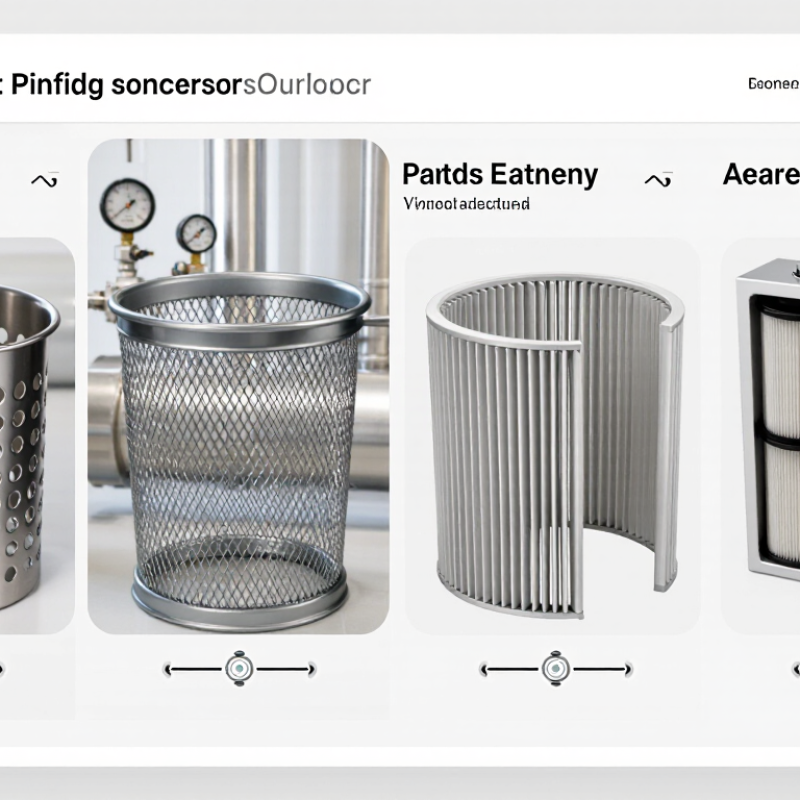
A Filter Basket may look like a simple metal component, but its design can shape flow, capacity, cleaning, and maintenance. In 2026, buyers can compare perforated baskets, wire-mesh designs, wedge-wire screens, and duplex arrangements. Each serves different operating conditions. The right choice depends on the fluid, particle size, flow rate, and available space. Fit matters.
For this introduction, Dr. Alex Morgan is a fictional composite filtration specialist, not a verified industry source. The following is an illustrative expert statement, not a documented quotation: “Choose the basket for the particles you need to retain, then confirm it can handle the required flow.” That principle keeps selection grounded in measurable requirements. A fine mesh may capture smaller particles, yet it can also clog sooner. A larger opening may support flow but let unwanted material pass. Small details count.
This guide will compare common basket types, their construction, and their practical trade-offs. It will also consider material selection, opening size, pressure drop, cleaning access, and replacement needs. These details matter in real installations, where a basket must fit its housing and withstand its working conditions. No single design suits every system. Product specifications should be checked against the actual application, and performance claims should be confirmed with reliable test data. The comparisons ahead offer a starting point, not a substitute for engineering review.
Espresso Filter Basket Basics: The SCA’s 9-Bar Brewing Benchmark
What Are the Top Filter Basket Types in 2026?
Espresso Filter Basket Basics: The SCA’s 9-Bar Brewing Benchmark
The SCA’s commonly cited 9-bar benchmark gives espresso brewing a useful reference point. It is not a magic setting that guarantees a balanced shot. A machine supplies pressure, while coffee dose, grind size, and puck resistance affect how water flows. The basket shapes that flow through its holes and internal space. Small holes matter.
Common choices include single and double baskets, plus pressurized and non-pressurized designs. Single baskets hold less coffee, though their shape can make even extraction harder. Double baskets are widely used for repeatable testing. Pressurized baskets can help with pre-ground coffee, while non-pressurized baskets offer more control over grind and puck preparation. Precision baskets aim for consistent hole placement, but they cannot fix stale coffee or uneven tamping. It is easy to overstate the basket’s role; pressure and basket design are only part of the process.
Tips: Start with a dry, clean basket and weigh the dose. Keep the grind and dose steady while adjusting one variable at a time. If a shot runs fast at nine bar, inspect the grind and puck before blaming the basket. Record the taste, too. A neat-looking extraction can still taste sharp or thin.
Single-Wall Baskets: 7–9 g Doses and Unrestricted Flow
Single-wall baskets have one perforated floor, so water flow depends on the coffee puck rather than a secondary pressure-regulating layer. A 7–9 g dose suits many traditional single-shot baskets, though capacity varies by basket depth and roast. The Specialty Coffee Association’s published espresso benchmark uses a 7 g dose, about 25 mL beverage, and a 20–30 second extraction. Treat that as a reference, not a universal recipe. With unrestricted flow, a slightly uneven tamp can send water through a pale channel, leaving other grounds under-extracted. Small dose. Fast feedback. That makes these baskets useful for learning, but less forgiving of inconsistent grinding.
Tips: Weigh the dry coffee, then check the puck for a level surface and clean edges. Start near 7–9 g only if your basket is rated for that dose. Adjust grind size in small steps, and record dose, yield, and time. A fast shot is not automatically a bad one; taste it before changing several variables.
Expect more visible variation than with baskets designed to simplify extraction. Fresh coffee, grinder consistency, and careful distribution matter. Even then, the result may surprise you. That is part of the appeal—and a reason to keep notes rather than trust timing alone.
Dual-Wall Baskets: Pressure-Assisted Extraction for Pre-Ground Coffee
Dual-wall filter baskets use two layers: a perforated inner basket and a less-open outer wall or outlet. The narrow exit slows the flow and builds pressure, helping pre-ground coffee produce a steady stream even when its grind is not perfectly matched to the machine. That can make morning shots less fussy. It may also create a thicker layer of foam, though foam alone does not prove the coffee is fresh or well extracted.
The design is especially practical when coffee is bought pre-ground, or when a grinder cannot make fine adjustments. A level dose and even tamp still matter; too much coffee can leave the portafilter difficult to lock in. Water temperature and the coffee itself shape the taste, too. That is useful. Still, it has limits. Added pressure can make a shot look convincing while leaving it bitter, thin, or uneven. I would treat the basket as a forgiving tool, not a fix for stale coffee or poor preparation. Rinse its small outlet after brewing, since trapped grounds can slow the next shot.
Precision Baskets: 58 mm Formats and Carefully Distributed Holes
What Are the Top Filter Basket Types in 2026?
Precision Baskets: 58 mm Formats and Carefully Distributed Holes
A precision basket is designed to make water flow more evenly through the coffee bed. In a 58 mm format, the diameter suits many standard espresso setups, but compatibility still depends on the portafilter and its locking fit. Check the basket’s depth, rim shape, and stated capacity before buying. A few millimeters matter.
The holes are the real detail. A carefully distributed pattern can reduce areas of uneven flow, especially when the coffee is ground and tamped consistently. Still, a precision basket cannot fix every problem. Uneven puck preparation, stale coffee, or an unsuitable grind may produce channeling even with a well-made basket. Results vary.
Tips: Keep the dose within the basket’s recommended range, and inspect the underside for blocked holes during cleaning. Change one variable at a time. It is tempting to blame the basket, but sometimes the grinder setting is simply off. That is easy to miss.
Choosing Basket Capacity: 14–18 g Doubles and Larger Dose Sizes
For most double baskets, 14–18 g is a practical starting range, not a universal rule. The Specialty Coffee Association’s published espresso standard describes a traditional double dose as roughly 14 g. Modern baskets often accommodate more, but the number stamped on a basket is only a guide. Coffee density, roast level, and grind can change how much space the dose occupies. Fit matters more.
A simple test is to dose, tamp, lock in the portafilter, then remove it before brewing. If the shower screen leaves a deep imprint, reduce the dose; if the puck looks unusually low, test a slightly larger one. Keep the grind and yield consistent while comparing shots.
For larger 20–22 g doses, use a basket designed for that range rather than forcing extra coffee into a standard double. A crowded basket may restrict water flow; an underfilled one can produce uneven extraction.
Not always. Taste, puck condition, and repeatability matter more than matching a number. The SCA standard offers useful context, but it does not replace testing the basket in your own machine.
A notebook helps: record dose, beverage weight, and shot time, then change one variable at a time.