2026 Top Water Filtration Systems for Global Buyers?
Choosing the right water filtration system in 2026 requires more than comparing flow rates and product prices. Global buyers face different water sources, climates, infrastructure standards, and maintenance conditions. A compact under-sink filter may suit a city apartment, while a commercial facility may need sediment removal, activated carbon, ultraviolet treatment, or reverse osmosis. The correct choice begins with testing the incoming water.
Water quality can change by region.
Dr. Peter Gleick, a leading water expert and co-founder of the Pacific Institute, has said, “Water is the most important resource on the planet.” His statement reflects a central purchasing reality: filtration is not simply an appliance decision. It affects health protection, operating costs, equipment life, and consumer confidence.
This guide reviews the 2026 top water filtration systems for global buyers. It considers contaminant reduction, certified performance, replacement-filter availability, energy use, installation demands, and long-term ownership costs. Buyers should also examine standards such as NSF, ANSI, and applicable national requirements. Certification does not make every system suitable for every location. That distinction matters.
Real-world conditions can be messy. A filter may perform well in a laboratory but struggle with muddy feedwater, unstable pressure, or delayed cartridge replacement. Some product descriptions also promise too much. Careful buyers should question vague claims and request test reports. The strongest systems combine verified technology with practical servicing, clear instructions, and local technical support. Perfection is unlikely. A dependable, maintainable system is usually the wiser investment.
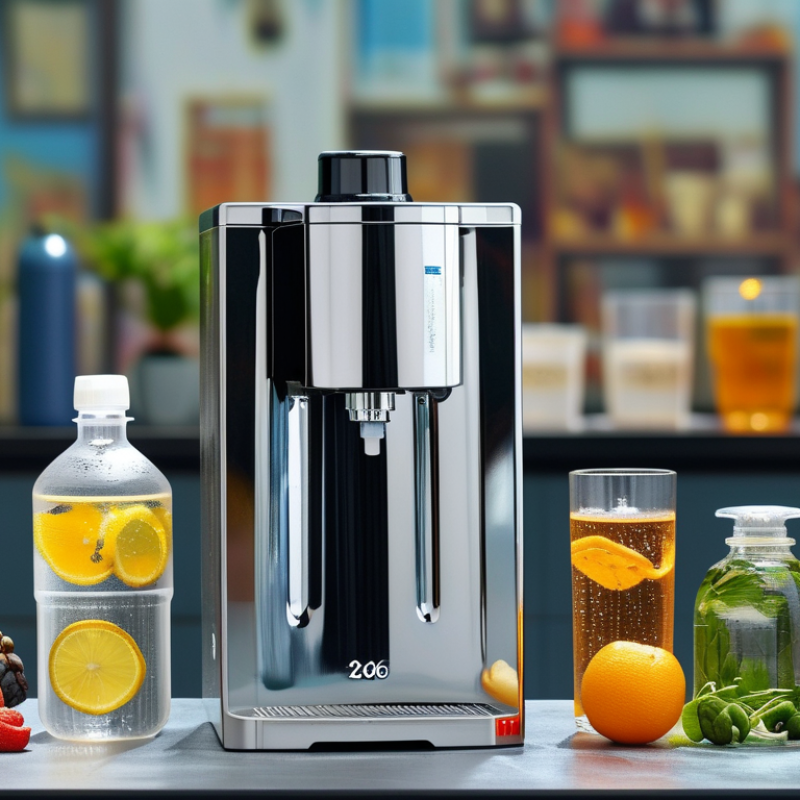
Water Filtration Systems: Definition, Purpose, and Core Technologies
Water filtration systems remove or reduce unwanted particles, chemicals, metals, and microorganisms from water. Their purpose is practical: safer drinking water, better taste, and protection for pipes and equipment. The WHO/UNICEF Joint Monitoring Programme reported that 2.2 billion people lacked safely managed drinking water in 2022. That figure keeps filtration relevant for homes, workplaces, and emergency facilities.
Core technologies work differently. Sediment filters trap visible particles, such as sand and rust. Activated carbon reduces chlorine, odors, and many organic compounds. Ultrafiltration uses a fine membrane against bacteria and suspended solids. Reverse osmosis removes dissolved salts and several heavy metals, but it produces wastewater and needs stable pressure. Ultraviolet systems can inactivate microorganisms, although they cannot remove dirt or chemicals. Ion exchange targets hardness and selected ions.
No filter is universal. That assumption fails. Buyers should test source water before selecting equipment. A clear glass may still contain dissolved contaminants. The U.S. Environmental Protection Agency recommends risk-based testing and treatment decisions, while the WHO Guidelines for Drinking-water Quality stress local hazard assessment. Certification can improve confidence, but installation quality matters just as much. A poorly sealed housing can recontaminate treated water. Maintenance records, replacement intervals, flow rate, wastewater ratio, and independent laboratory results deserve equal attention. In practice, the cheapest unit may become expensive when cartridges clog early or electricity is unreliable.
| Technology | Working Principle | Typical Separation Scale | Main Contaminants Reduced | Typical Operating Pressure | Energy Requirement | Water Recovery | Best-Fit Applications | Key Advantages | Important Limitations |
|---|---|---|---|---|---|---|---|---|---|
| Activated Carbon | Adsorbs dissolved chemicals onto a highly porous carbon surface. | Adsorption rather than a defined membrane pore size | Chlorine Taste and odor compounds Many organic chemicals Some pesticides | Usually low pressure; commonly used with municipal water pressure | Very low; normally no dedicated pump | Nearly 100% during normal operation | Point-of-use drinking water, food service, pretreatment, and polishing | Improves taste and odor; simple operation; relatively low capital and operating cost | Does not reliably remove dissolved salts, hardness, nitrate, or most microorganisms; media must be replaced before exhaustion |
| Microfiltration (MF) | Uses a low-pressure membrane to retain suspended particles and larger microorganisms. | Approximately 0.1–10 micrometres | Suspended solids Turbidity Algae Many bacteria | Approximately 0.1–3 bar | Low; pressure-driven | Often about 85–98%, depending on backwash and concentration management | Pretreatment, surface-water clarification, process-water filtration, and wastewater polishing | Good particle removal; low energy demand; suitable as a pretreatment step | Does not remove dissolved salts, most dissolved organic compounds, or viruses reliably; membrane fouling requires control |
| Ultrafiltration (UF) | Uses a tighter membrane to separate particles and high-molecular-weight substances by size exclusion. | Approximately 0.01–0.1 micrometres | Colloids Turbidity Bacteria Protozoa Some viruses | Approximately 0.5–5 bar | Low to moderate; pressure-driven | Often about 80–98%, depending on system design and cleaning cycles | Drinking-water treatment, decentralized systems, surface-water treatment, and pretreatment for reverse osmosis | Produces low-turbidity water; generally retains useful minerals; usually does not require high pressure | Does not substantially remove dissolved salts, hardness, nitrate, or many small dissolved chemicals |
| Nanofiltration (NF) | Uses a semi-permeable membrane that combines size exclusion with charge-based rejection. | Approximately 0.001–0.01 micrometres | Hardness ions Color Natural organic matter Some pesticides Many divalent ions | Approximately 5–25 bar | Moderate; pressure-driven | Commonly about 60–90%, depending on feedwater and recovery target | Hardness reduction, color removal, industrial process water, and selective desalination | Lower pressure and energy than reverse osmosis; can selectively reduce hardness while retaining more monovalent minerals | Rejection varies by contaminant and membrane; produces a concentrate stream; pretreatment is usually required |
| Reverse Osmosis (RO) | Applies pressure greater than osmotic pressure to force water through a dense membrane. | Effective separation of many dissolved substances at molecular and ionic scale | Dissolved salts Fluoride Nitrate Many metals Microorganisms Many PFAS compounds | Approximately 8–20 bar for brackish water; seawater systems are commonly about 55–80 bar | Moderate to high; requires a high-pressure pump | Residential systems often about 20–40%; optimized larger systems can exceed 70% | Drinking-water desalination, brackish-water treatment, seawater treatment, and high-purity process water | Broad dissolved-contaminant reduction; adaptable to small and large installations | Rejects useful minerals as well as contaminants; creates concentrate; sensitive to scaling, fouling, and chlorine damage; usually needs pretreatment |
| Ultraviolet (UV) Disinfection | Uses UV-C light to damage the genetic material of microorganisms and prevent replication. | Not a filtration barrier; performance is based on UV dose | Bacteria Viruses Protozoa | Usually low pressure through the treatment chamber | Low to moderate; requires electrical power for the lamp or LED system | Nearly 100%; no routine water loss | Microbiological disinfection after filtration, private wells, healthcare, hospitality, and decentralized drinking water | No chemical taste; rapid treatment; does not add by-products when properly operated | Does not remove particles, salts, metals, or chemicals; turbidity and color can shield microorganisms; no lasting residual protection |
| Distillation | Boils water and then condenses the vapor, leaving many non-volatile contaminants behind. | Phase-change separation rather than a membrane pore size | Dissolved salts Many metals Microorganisms Many non-volatile compounds | Atmospheric pressure or controlled vacuum | High; requires thermal energy and cooling | Often about 10–70%, depending on design and cooling-water management | Laboratories, specialized high-purity water, emergency treatment, and small-scale applications | Very broad contaminant reduction; relatively straightforward separation principle | Higher energy use and operating cost; slow compared with pressure-driven systems; volatile compounds may carry over unless additional treatment is used |
| Ion Exchange | Exchanges undesirable dissolved ions with ions held on synthetic resin beads. | Ion-selective process rather than a membrane pore size | Calcium and magnesium hardness Nitrate Specific metal ions Deionization targets | Usually low pressure; commonly designed for pressurized water lines | Low during service; regeneration may require chemicals and rinse water | Generally high during service; regeneration creates wastewater | Water softening, boiler feed pretreatment, laboratory deionization, and targeted contaminant removal | Highly effective for selected ions; compact equipment; can be tailored to water chemistry | Does not remove particles or microorganisms; resin capacity is finite; regeneration chemicals, brine discharge, or cartridge replacement may be required |
| Multistage System | Combines two or more treatment barriers, such as sediment filtration, carbon, RO, and UV. | Depends on the selected treatment sequence | Particles Chlorine Dissolved salts Organic compounds Microorganisms | Depends on the pressure-driven components | Low to high, depending on pumps, UV, and thermal equipment | Depends on membrane recovery and reject-water management | Homes, commercial buildings, hospitals, food processing, industrial facilities, and municipal systems | Provides layered protection; can match treatment steps to local source-water risks | Higher complexity, maintenance, monitoring, space requirements, and total ownership cost |
Related Posts
-
10 Best Home Water Filtration Systems for Clean and Safe Drinking Water
-
Best Water Filtration System for Your Home in 2026?
-
Top 10 Benefits of Home Water Filtration Systems for Health and Safety
-

2026 Top Water Filtration Solutions for Global Buyers?
-
10 Best Reverse Osmosis Water Filtration Systems for Clean Water?
-
Top 10 Benefits of Reverse Osmosis Water Filtration System?