2026 Top Hybrid Energy Storage Solutions for Global Buyers

Global energy markets are entering a more demanding storage cycle. Renewable generation is expanding, yet electricity demand is becoming less predictable. The International Energy Agency reported that battery storage additions in the power sector reached about 42 GW in 2023, increasing by roughly 130% from the previous year. IRENA’s Renewable Capacity Statistics 2025 also recorded 585 GW of new renewable capacity added worldwide in 2024. These figures reveal a practical problem: solar and wind capacity can grow faster than grid flexibility.

Hybrid Energy Storage Solutions respond by combining technologies with different strengths. A lithium-ion battery can react within milliseconds. Thermal storage can retain heat for longer periods. Pumped hydro, flow batteries, or hydrogen systems may support extended discharge. The right mix depends on grid conditions, climate, tariffs, land availability, and safety requirements. It is not simply a larger battery.

For global buyers, project quality requires more than attractive capacity figures. The U.S. Department of Energy’s Long Duration Storage Shot identifies cost, duration, and system reliability as major commercialization priorities. Buyers should examine round-trip efficiency, degradation curves, warranty exclusions, fire protection, software interoperability, and local service capability. A container may look impressive on a sunny datasheet. Its performance during a humid night in Southeast Asia may tell a different story.

No single architecture wins every market. That remains easy to forget. This 2026 guide compares leading hybrid configurations, supplier capabilities, lifecycle economics, and regional procurement risks. The analysis draws on recognized industry reports, manufacturer documentation, and practical deployment considerations. Some projections will change, and they should. Careful buyers must test assumptions before signing long-term contracts.
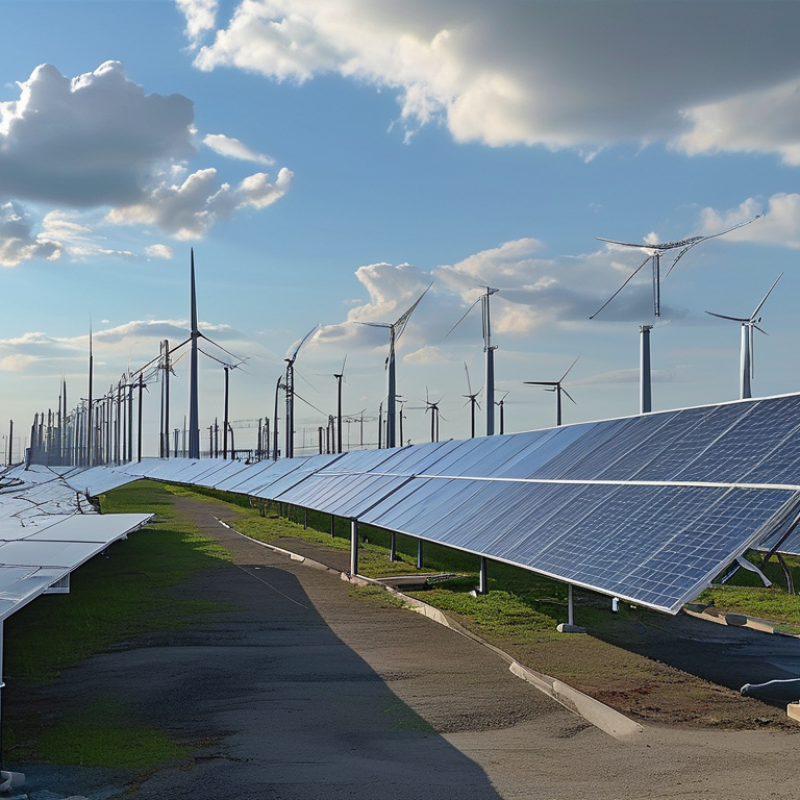
2026 Top Hybrid Energy Storage Solutions for Global Buyers

Hybrid Energy Storage: Definition, Components, and Operating Principles

Hybrid energy storage combines two or more storage technologies within one coordinated system. Common combinations include lithium-ion batteries, flow batteries, thermal storage, and hydrogen. Each component serves a different duty. Batteries respond quickly to frequency changes, while longer-duration units support evening demand or cloudy weather.

A hybrid system typically includes power conversion equipment, energy management software, protection devices, cooling systems, and grid interfaces. The controller reads demand, solar output, state of charge, and electricity prices. It then assigns short bursts to batteries and sustained output to the longer-duration unit. This operating principle can reduce battery stress and improve renewable energy use. The International Energy Agency reported in 2024 that global battery storage capacity must expand to 1,200 GW by 2030 to support climate targets. That target is ambitious. Real projects may face weak grids, limited land, and changing market rules.

Tips: Buyers should request round-trip efficiency at different loads, not only the headline figure. Check degradation assumptions, fire protection, warranty limits, and software compatibility. NREL modeling shows that system value depends heavily on dispatch strategy and local tariffs. A technically impressive system can still perform poorly if its control logic ignores seasonal demand. Procurement teams should also test islanding behavior, maintenance access, spare-parts plans, and data security. One overlooked sensor can distort the entire operating schedule. This is where many evaluations become too neat.

Key Technologies Shaping Hybrid Storage Solutions in 2026

In 2026, hybrid energy storage will be designed around flexibility, not simply larger batteries. The International Energy Agency reports that global storage capacity must rise sixfold by 2030. Its projection reaches about 1,500 GW, including roughly 1,200 GW of battery storage. IRENA estimates utility-scale battery costs fell 89% between 2010 and 2023, reaching about $273 per kWh. Cost declines help, but duration still matters. Lithium iron phosphate batteries can manage daily cycling. Pumped hydro, compressed air, thermal storage, and flow batteries can cover longer periods. This pairing reduces solar curtailment during bright midday hours.

Digital control is the second major shift. Forecasting software now combines weather, load, market, and equipment data. A supervisory energy-management system can dispatch batteries within seconds, then reserve long-duration assets for evening demand. The US Department of Energy identifies long-duration storage as essential for multi-hour and multi-day reliability. Power converters are equally important. Grid-forming inverters can support voltage and frequency when renewable generation dominates. Safety design should include thermal monitoring, fire separation, and independent commissioning tests. Yet field performance is less tidy. Degradation, weak forecasts, and poor controls can erase projected savings. That is the uncomfortable lesson. Buyers should request measured round-trip efficiency, warranty assumptions, response-time tests, and site-specific dispatch simulations before selecting a system.

2026 Top Hybrid Energy Storage Solutions for Global Buyers – Key Technologies Shaping Hybrid Storage Solutions in 2026
Hybrid Solution Primary Technology Combination Typical Discharge Duration Typical Round-Trip Efficiency Response Time Typical Cycle Life Best-Fit Applications Key 2026 Buying Considerations
Solar-Plus-Lithium-Ion Storage Solar photovoltaic generation + lithium-ion battery system 1–8 hours 85–95% Milliseconds to seconds Approximately 3,000–10,000 full cycles, depending on chemistry and operating conditions Solar shifting, peak shaving, frequency regulation, backup power and renewable self-consumption Commercially mature
Evaluate thermal management, fire protection, degradation guarantees, augmentation strategy and local recycling requirements.
Battery-plus-Supercapacitor Hybrid Lithium-ion battery + supercapacitor or ultracapacitor Seconds to several hours Approximately 80–95% Milliseconds Supercapacitors commonly support hundreds of thousands to millions of shallow cycles; battery life depends on reduced peak loading High-power ramps, voltage support, regenerative braking, microgrids and applications with frequent short-duration fluctuations Mature for specialized uses
Compare power-to-energy ratio, control-system quality, converter efficiency and the value of reduced battery stress.
Lithium-Ion-plus-Flow Battery High-power lithium-ion battery + vanadium or other redox-flow battery 2–12+ hours Approximately 65–85% Milliseconds to seconds Lithium-ion: typically 3,000–10,000 cycles; flow systems: commonly 10,000–20,000+ cycles Renewable firming, long-duration peak shifting, utility-scale microgrids and high-throughput projects Commercially available
Assess electrolyte availability, pumping energy, footprint, ambient-temperature performance and the cost of frequent cycling.
Lithium-Ion-plus-Thermal Storage Short-duration battery + molten salt, phase-change material, hot-water or other thermal energy storage 4–24+ hours Electric-to-electric: approximately 40–75%; higher when directly supplying thermal loads Seconds to minutes Often 10,000+ thermal cycles; project life can exceed 20 years with suitable materials and maintenance Industrial heat, district heating and cooling, commercial buildings, concentrated solar power and grid energy shifting Application dependent
Prioritize the thermal-load profile, insulation quality, heat-exchanger design, site integration and whether heat is used directly or reconverted to electricity.
Battery-plus-Green-Hydrogen Battery system + electrolyzer + hydrogen storage + fuel cell or hydrogen turbine 12 hours to multiple days or seasonal periods Approximately 25–45% electricity-to-electricity; higher for direct hydrogen use Seconds to minutes, depending on the power-conversion equipment Battery subsystem: typically 3,000–10,000 cycles; electrolyzer and fuel-cell stacks require periodic replacement Multi-day backup, remote microgrids, energy resilience, renewable curtailment management and heavy-duty fuel supply Early commercial growth
Check renewable electricity supply, water consumption, hydrogen storage method, safety zoning, certification and delivered hydrogen cost.
Battery-plus-Compressed-Air Storage Battery system + compressed-air energy storage in suitable vessels or geological formations 4–100+ hours Approximately 40–70% Seconds to minutes Potentially tens of thousands of cycles; life depends strongly on compressors, expanders and storage structures Large-scale renewable integration, capacity firming and long-duration grid storage Site specific
Review geological or vessel requirements, compression heat management, permitting, round-trip efficiency and minimum economic project scale.
AC-Coupled Multi-Technology Microgrid Solar or wind generation + battery storage + dispatchable generator, thermal storage or hydrogen system Seconds to several days Approximately 60–90%, depending on the energy pathway and operating mode Milliseconds to minutes Determined by the battery and other subsystem technologies Critical facilities, islands, mines, remote communities, data centers and weak-grid locations Fast-growing solution
Assess microgrid controls, black-start capability, islanding performance, cybersecurity, fuel logistics and interoperability between inverters.
DC-Coupled Solar, Battery and Power Conversion System Solar photovoltaic array + battery connected on a shared direct-current bus 1–8 hours Approximately 88–95% from DC bus to AC output, subject to system design Milliseconds to seconds Typically 3,000–10,000 battery cycles Utility-scale solar-plus-storage, reduced inverter clipping and improved use of oversized photovoltaic capacity Commercially mature
Compare clipping recovery, DC/DC converter architecture, battery oversizing, interconnection limits, warranty conditions and operational flexibility.
Indicative ranges reflect commonly reported performance characteristics for commercially available and emerging systems. Actual results vary with chemistry, system sizing, ambient conditions, depth of discharge, power-conversion equipment, control strategy and project operating profile.

How to Evaluate Capacity, Efficiency, Safety, and Total Cost

Hybrid energy storage should be evaluated as an operating system, not a battery container. Capacity is only the starting point. Measure usable megawatt-hours at the required discharge duration, temperature, and state-of-charge limits. A 100 MWh system may deliver less after reserve margins and conversion losses. The International Energy Agency reported that global battery storage capacity additions rose sharply in 2023, increasing pressure on buyers to compare real performance rather than nameplate ratings.

Efficiency needs two measurements: round-trip efficiency and seasonal availability. NREL’s 2024 Annual Technology Baseline uses roughly 85–90% round-trip efficiency for many utility-scale battery configurations. Request independently verified results at partial load. A system operating near 40% load can perform differently from its brochure value. Small losses matter. Over ten years, wasted electricity, cooling demand, and auxiliary consumption can materially change project economics.

Safety evaluation should include cell monitoring, thermal propagation testing, ventilation, emergency response, and site separation. UL 9540A test evidence and NFPA 855 alignment provide useful reference points, but paperwork cannot replace a site-specific risk review. Total cost should include equipment, installation, grid interconnection, land, insurance, software, maintenance, augmentation, replacement, and end-of-life handling. Lazard’s latest storage cost analysis shows that levelized costs vary widely by duration and operating profile. I would also challenge my own model: predicted degradation is often too optimistic. Use conservative cycling assumptions, transparent warranties, and sensitivity cases for electricity prices, downtime, and delayed approvals.

Global Applications Across Grid, Commercial, Industrial, and Off-Grid Markets

2026 Top Hybrid Energy Storage Solutions for Global Buyers

Hybrid energy storage now serves four distinct markets: grid, commercial, industrial, and off-grid sites. Grid projects combine batteries with solar, wind, or flexible generation. They support peak shifting, frequency control, and backup capacity. System designers should examine connection rules, response times, and battery degradation. A low purchase price may hide costly replacement cycles.

Commercial buildings often need smaller systems with strong energy management. A battery can reduce demand charges and protect essential loads during outages. Industrial facilities require deeper analysis. Motors, furnaces, pumps, and uneven production schedules create demanding power profiles. Thermal control, fire protection, remote monitoring, and service access matter as much as capacity. Off-grid projects face different risks. Dust, humidity, weak roads, and limited technical support can change the design completely. Field experience shows that simple maintenance plans often outperform complex features.

Tips: Match storage size to measured load data, not rough estimates. Test the system during cloudy weeks and peak production. Confirm local electrical approvals before delivery. Keep critical spare parts nearby. No design is perfect. A careful review of weather, operator skills, and future loads can prevent expensive surprises. Some buyers still overvalue battery capacity and undervalue controls, training, and long-term service. That mistake deserves more attention.

2026 Top Hybrid Energy Storage Solutions for Global Buyers

Representative discharge-duration ranges for hybrid storage deployments across grid, commercial, industrial, and off-grid applications.

Grid-scale systems commonly provide around 2–4 hours for renewable integration and peak shifting, while commercial, industrial, and off-grid projects often require longer durations to manage demand charges, critical loads, and renewable variability. Actual sizing depends on load profiles, renewable generation, local grid conditions, and backup requirements.

Selecting the Right Hybrid Energy Storage System for Regional Needs

Selecting the Right Hybrid Energy Storage System for Regional Needs

Regional conditions should drive system design, not a standard catalog. The International Energy Agency’s Batteries and Secure Energy Transitions report estimates that global energy storage capacity must increase sixfold by 2030. That growth will not use one technical formula everywhere.

In hot regions, buyers should prioritize liquid cooling, dust protection, and conservative battery spacing. High humidity demands corrosion control and careful enclosure testing. Cold climates may need preheating before charging. Climate changes the answer.

In markets with unstable grids, a battery paired with solar generation can support critical loads during short outages. Where outages last overnight, adding longer-duration storage or a dispatchable backup source may be more practical. IRENA’s World Energy Transitions Outlook 2024 highlights the growing need for flexibility as renewable generation expands.

Tariff structures also matter. A system designed for peak shaving may need high power for two hours. A remote microgrid may require six to twelve hours of dependable energy. Buyers should compare round-trip efficiency, usable capacity, degradation, replacement intervals, and local service capability. NREL research shows that storage value depends strongly on operating strategy and grid conditions, not capacity alone.

A neat sizing formula can mislead. Load data may reflect one unusual season. Installation teams should validate forecasts with interval measurements, weather records, and outage logs. Data remains imperfect. Regional safety rules, emergency access, recycling plans, and technician training deserve equal attention. A lower purchase price may become expensive when spare parts cross borders or unsuitable controls reduce battery life.

Build your system. Protect your boat. Join the movement.

Compare Products
Talk to Sales