7 Tips to Choose a China Chandeliers Supplier?
Choosing a China Chandeliers Supplier requires more than comparing catalog prices. The global decorative lighting market continues to expand, although report definitions differ. Grand View Research’s 2024 Decorative Lighting Market report estimates steady growth through 2030, driven by hospitality, residential renovation, and energy-conscious design. Fortune Business Insights also reports continued growth in the broader lighting fixtures market. These figures suggest opportunity, but they do not guarantee a reliable factory.
Real buying experience shows where problems usually appear. A chandelier may look elegant online, yet arrive with uneven plating, weak packaging, or unclear installation instructions. The supplier’s response matters. Ask for factory evidence, material specifications, production photos, quality records, and samples before discussing large orders. Check whether brass, stainless steel, crystal, wiring, and finishes match the approved sample. Request test documentation for electrical safety and verify that products meet the destination market’s requirements. Do not rely only on certificates sent by email.
A strong China Chandeliers Supplier should communicate clearly, control production, and explain defects honestly. Visit the factory when possible, or use an independent inspection company. Review lead times, replacement policies, carton testing, and spare-part support. Small details matter: foam thickness, socket labeling, screw alignment, and protective film can determine customer satisfaction. Price is important. It is not the whole decision.
Some buyers focus too heavily on polished showrooms. I have found that imperfect conversations can reveal more than perfect presentations. A supplier who admits a limitation may be more dependable than one promising everything. These seven practical tips will help you assess capability, reduce avoidable risk, and select a supplier suited to your market.
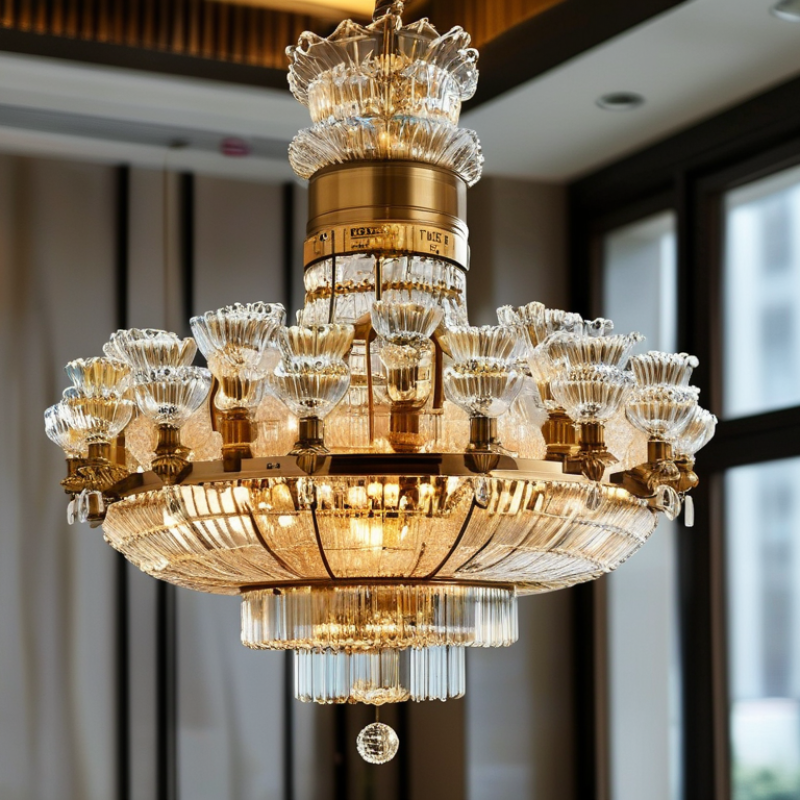
Define Your Chandelier Requirements and Quality Standards
Before contacting a China chandelier supplier, define the fixture’s job and environment. Record the room size, ceiling height, mounting method, desired diameter, finish, light direction, and cleaning access. A 1.2-meter chandelier can overwhelm a compact dining area. It may also create harsh glare if the bulbs sit below eye level.
Set measurable quality standards, not vague phrases such as “premium” or “luxury.” Specify the required color temperature, color rendering index, dimming method, voltage, power factor, and allowable color variation. The U.S. Department of Energy reports that LED lighting uses at least 75% less energy and lasts up to 25 times longer than incandescent lighting. However, those figures do not guarantee every chandelier performs equally. Ask for LED module data, lumen-maintenance evidence, and test conditions.
Safety requirements need equal attention. Request conformity evidence related to IEC 60598-1 for luminaire safety, plus clear information about insulation, grounding, heat management, and load-bearing parts. For decorative glass, inspect edge finishing, thickness consistency, and packaging test records. I have seen attractive samples fail during installation because the canopy was too shallow. That mistake is expensive.
For larger projects, require a pre-production sample and written inspection criteria. Check illumination, wobble, finish color, remote controls, and spare components. Keep a tolerance list. A two-millimeter gap may be acceptable on a hidden bracket, but not around a visible metal frame. Good specifications make supplier comparisons fair, though they still need practical review.