7 Tips for Choosing a PTO Chipper Shredder?
Choosing the right Pto Chipper Shredder can change how quickly a property handles branches, brush, and seasonal pruning. The wrong machine may leave uneven chips, strain your tractor, or demand constant knife adjustments. A practical decision starts with your actual workload, not a product photograph.
Before buying, measure the tractor’s PTO horsepower and check the manufacturer’s required range. Then compare the feed opening with the branches you regularly collect. A narrow opening may suit light pruning, but it can slow work after a storm. Look closely at rotor design, blade access, discharge control, and frame strength. These details matter when wet wood creates vibration and resistance. They are easy to overlook.
Safety deserves equal attention. Guards, emergency stops, stable supports, and clear operating instructions should be standard expectations. Ask whether replacement knives and belts are locally available. A strong dealer network can matter more than a slightly lower purchase price. I have found that maintenance access often predicts long-term satisfaction better than impressive capacity claims. Still, no single model fits every operator. Soil conditions, storage space, transport distance, and operator experience can change the best choice. Some buyers focus too heavily on maximum branch diameter. That number alone does not describe real performance. This guide presents seven practical tips for comparing a Pto Chipper Shredder with greater confidence, while recognizing that careful field testing remains valuable. Expect a few compromises. That is normal.
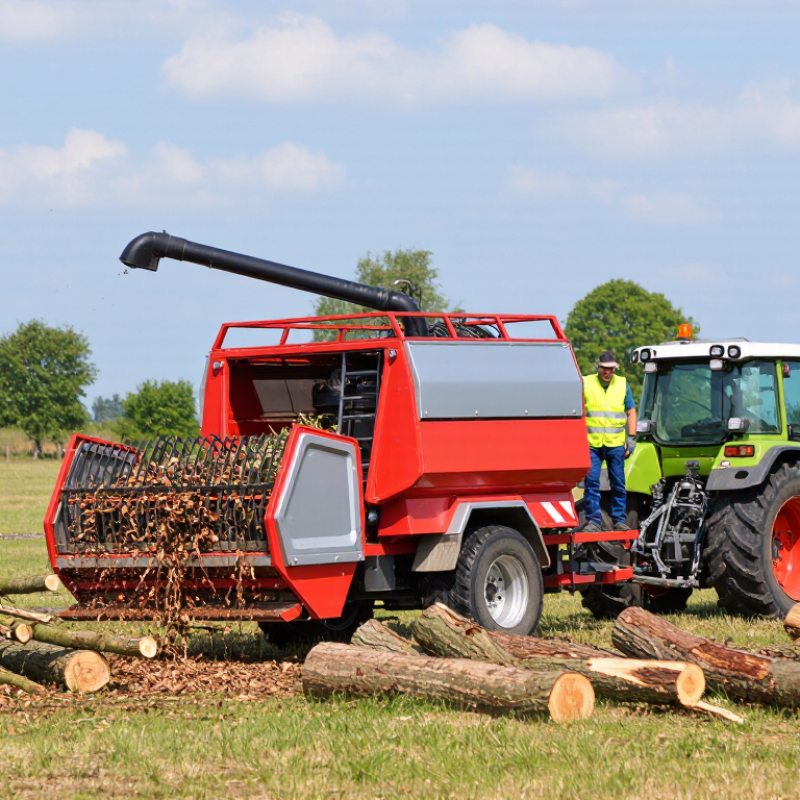
Understand Your Chipping and Shredding Requirements
Understand your chipping and shredding requirements before comparing PTO chipper shredders. Start by measuring the branches you usually handle. A few thin limbs require different equipment than hardwood logs measuring eight inches across. Record the average diameter, largest diameter, and weekly volume. Photos can help, especially when memory becomes unreliable.
Consider the material itself. Fresh green branches may feed smoothly, while dry, twisted wood can slow the machine. Leaves, vines, and garden debris may need stronger shredding capacity. Check whether you want fine mulch, rough chips, or both. Output size affects composting, livestock paths, and ground cover. Your tractor’s PTO horsepower, hydraulic capacity, and three-point lift rating must also match the equipment specifications. Do not rely on engine size alone.
Think about your working environment. Narrow gates, uneven ground, and low branches can make a large machine frustrating to use. Measure access points before purchasing. I have seen operators choose high capacity, then struggle with small piles and difficult storage. That mistake is easy to repeat. Also examine feeding height, discharge direction, adjustment controls, and emergency stopping features. Read the operating manual and maintenance schedule carefully. A realistic workload, measured space, and honest assessment of your habits will produce a safer, more useful choice.
7 Tips for Choosing a PTO Chipper Shredder? - Understand Your Chipping and Shredding Requirements
| Selection Dimension | What to Assess | Practical Requirement or Guideline | Questions to Confirm Before Purchase |
|---|---|---|---|
| 1. Material Type | Determine whether the machine will process branches, brush, leaves, vines, or mixed green waste. | Match the machine to the feedstock Chippers are designed primarily for woody branches, while shredding systems are better suited to leaves, soft plant material, and smaller garden waste. Mixed-material work requires a machine rated for both functions. | What percentage of the workload is woody material? Will wet leaves, fibrous plants, or partially decomposed material also be processed? |
| 2. Maximum Branch Diameter | Identify the largest branch diameter that will be handled regularly, not only occasionally. | Choose capacity with operating margin The stated maximum feed diameter is a limit, not a recommended continuous working size. Selecting a unit with additional capacity can reduce clogging, slowdowns, and excessive wear. | Is the maximum diameter measured for fresh, straight wood? Does the specification change for hardwood, crooked branches, or damp material? |
| 3. Tractor PTO Compatibility | Compare the shredder's PTO power requirement with the tractor's available PTO horsepower and shaft speed. | Verify power and speed together PTO-driven equipment must be matched to the tractor's available PTO output. The tractor must also provide the required PTO speed, commonly 540 rpm on compact and utility tractors, unless the implement specifies otherwise. | What PTO horsepower range is required? Is the implement designed for 540 rpm, 1,000 rpm, or another configuration? Is the tractor's PTO independent and correctly sized? |
| 4. Throughput and Workload | Estimate the volume of material and the number of operating hours per week or season. | Size for the real workload A small property with occasional brush clearing may need a compact machine, while landscaping, municipal, or farm operations may require a larger feed opening, faster processing, and a more robust rotor or cutting system. | How many cubic metres or cubic yards of material must be processed per hour? Will the machine be used continuously or intermittently? |
| 5. Cutting and Shredding System | Review the rotor, knives, hammers, screens, and adjustment features used to reduce material. | Prioritize serviceable components Replaceable cutting parts, accessible inspection points, adjustable discharge screens, and balanced rotating components can support consistent particle size and simplify maintenance. | Are knives or hammers reversible or replaceable? Can the screen be changed without excessive disassembly? Are replacement wear parts readily available? |
| 6. Feeding, Discharge, and Particle Size | Consider operator loading effort, discharge direction, discharge height, and the desired output size. | Match output to the end use Coarser chips may be suitable for pathways or mulch, while finer shredded material may be preferred for composting. A controllable discharge chute can improve loading into trailers, carts, or windrows. | Does the feed opening accept the intended material without excessive trimming? Can the chute rotate or adjust? Is the output suitable for mulch, compost, biomass, or site cleanup? |
| 7. Safety, Transport, and Maintenance | Evaluate guarding, emergency stopping procedures, PTO shaft protection, access for cleaning, and transport requirements. | Safety and upkeep are essential The machine should include guarding around moving parts and a properly protected PTO driveline. Confirm that the implement can be safely attached, transported, cleaned, lubricated, and inspected according to the operating manual and applicable local requirements. | Are all rotating parts guarded? Is the PTO driveline protected and correctly sized? Can blockages be cleared only after shutdown and complete disengagement? Are lubrication points and service intervals clearly documented? |
Important: Always follow the implement and tractor operating manuals, observe the required PTO speed, and shut down and isolate the power source before inspection, clearing a blockage, or performing maintenance.