What Is a Bedroom Fur Carpet and How Do You Choose One?
A Bedroom Fur Carpet can soften the first step out of bed, add warmth to a bare floor, and make a room feel more inviting. But softness is only part of the decision. Pile height, backing, shedding, cleaning needs, and the rug’s fit beside the bed all affect daily comfort. A plush rug can look perfect online and still feel wrong underfoot. That is worth remembering.
Grand View Research estimated the global area-rug market at about $11.7 billion in 2022, with projected growth through 2030. That report covers area rugs broadly, not fur carpets alone, so it should not be mistaken for a precise measure of this niche. Interior designer Nate Berkus has said, “Your home should tell the story of who you are, and be a collection of what you love.” For a bedroom rug, that idea meets practical questions: Does its texture suit your routine? Will its color work with the bedding and floor? Can you clean it without special equipment? This guide explores fur-style materials, sizes, pile types, and care considerations, helping you compare choices with clearer expectations. There is no single best rug. The right one depends on the room, the sleeper, and a little honest reflection about upkeep.
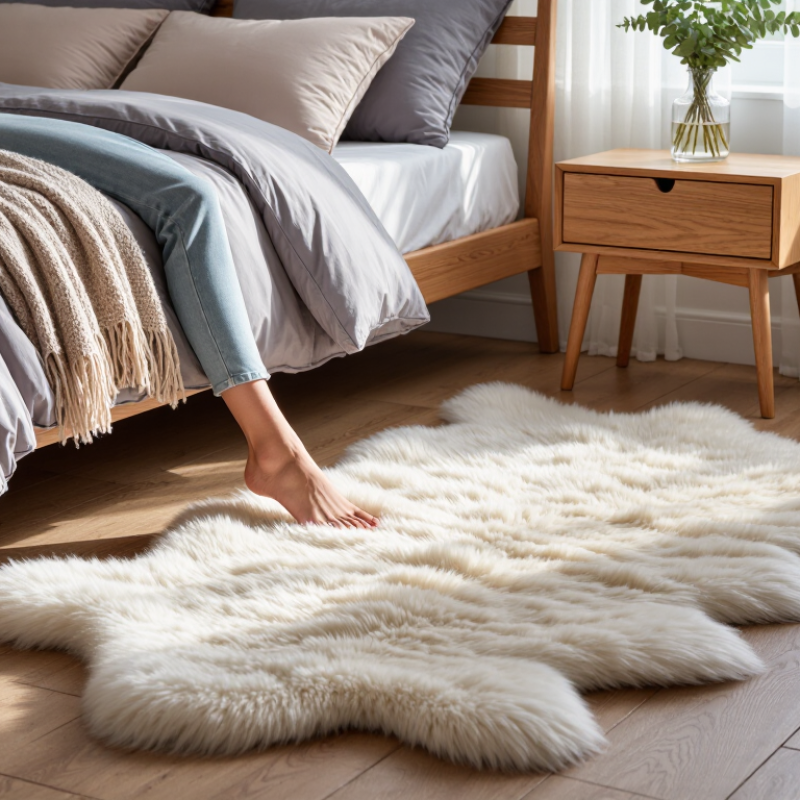
What a Bedroom Fur Carpet Is
A bedroom fur carpet is a soft floor covering with a dense, fluffy surface that resembles animal fur. Despite the name, many are made from synthetic fibers such as polyester or acrylic. The term describes the look and feel, not one specific material. Some versions use natural fibers, so check the product label rather than relying on the name alone.
The pile may be short and smooth or long enough to shift under your fingers. A rug beside the bed can cushion bare feet on a cold floor and soften the room’s appearance. It is usually a decorative comfort layer, not a replacement for firm flooring or a supportive mattress. Soft, not structural. A rug with a stable backing is less likely to slide, though no backing guarantees grip on every surface.
Cleaning needs depend on the fiber, pile length, and backing. Dust and hair can settle deep in long fibers, making regular vacuuming useful; use a setting suited to delicate rugs. Spills need prompt attention, but soaking the rug may damage its backing or prolong drying. Check care instructions before washing. I once assumed every fluffy rug could be shaken clean; that was a bit optimistic. Pile can trap fine debris, and dampness may linger beneath the surface.
Materials, Texture, and Construction
A bedroom fur carpet is a plush rug with a deep, soft pile, usually made to resemble fur. Most faux-fur versions use polyester or acrylic; others contain wool or blended fibres. Textile Exchange’s Materials Market Report 2024 estimates polyester made up 57% of global fibre production in 2023. That helps explain its prevalence, but fibre content alone cannot predict comfort or longevity. Check the label. Polyester is often practical for spot cleaning, while wool tends to feel springy and may shed at first. Neither is automatically better.
Pile length and density shape the feel. Long strands look dramatic and feel soft under bare feet, but can flatten where you step most. Shorter, denser pile is usually easier to vacuum. Feel it first. Press your palm into the rug, then check whether the fibres recover or stay matted. Construction matters underneath, too: a firmly stitched or tufted backing helps hold the pile, while loose edges can curl. Small detail, big difference.
For a bedroom, check care instructions and backing before buying. A rug that cannot be cleaned easily may not suit a bedside spot where dust gathers. A non-slip underlay can help limit movement on smooth floors. One imperfect test: brush the pile by hand and inspect the backing for loose fibres. It is not a durability guarantee, but it can reveal poor finishing.
Bedroom Fur Carpet: A Guide to Pile Height
Pile height is the length of the carpet fibers. Lower piles are generally easier to vacuum, while deeper, shag-style piles feel plusher underfoot and may need more frequent, careful cleaning. These approximate reference points are common guidelines; category cutoffs vary. One inch equals 25.4 millimeters.
Common Styles and Bedroom Uses
A bedroom fur carpet is a soft, furry-looking rug, usually made from synthetic fibers or sheepskin. Common styles include shag, with long, loose pile; short-pile faux fur, which is easier to vacuum; and small sheepskin shapes for beside the bed. Texture changes the room’s feel. A thick shag rug softens bare floor underfoot, while a low-pile style suits a narrow walkway or a room with a chair that needs to move easily. Small details matter: check whether the rug’s backing grips the floor, especially beside the bed.
Grand View Research’s 2024 Carpets & Rugs Market Report estimated the global market at 51.7 billion U.S. dollars in 2023. That broad figure reflects many rug types, not bedroom fur carpets alone, but it shows how widely rugs are used in home interiors.
For bedroom use, place a larger rug partly under the bed so its edges frame the bedside area, or use a smaller one where bare feet land each morning. A soft layer feels inviting. It can also collect lint and hair. I still find long-pile rugs less practical near a dressing table, where loose fibers can catch small debris. Choose a washable option if spills or frequent cleaning are likely, and check the care label before buying.
How to Choose the Right Fur Carpet
Choosing a bedroom fur carpet starts with the room, not the trend. Measure the clear floor area around your bed and leave enough exposed flooring to avoid a cramped look. A small rug beside the bed can warm bare feet; a larger one can extend beneath the bed and frame both sides. Check pile height against door clearance and furniture legs. Dense, long fibers feel plush but can trap dust and show footprints. Natural and synthetic fibers also differ in feel, shedding, and cleaning needs. Read the care label before buying.
Think about maintenance as carefully as softness. The Carpet and Rug Institute’s carpet-care guidance recommends weekly vacuuming, with more frequent cleaning in busy areas. For delicate long pile, use gentle suction and follow the maker’s instructions; a rotating brush may snag fibers. A rug pad helps limit slipping on smooth floors. The U.S. Environmental Protection Agency’s A Brief Guide to Mold, Moisture and Your Home advises keeping indoor humidity below 60%, ideally between 30% and 50%. That matters if a thick rug gets damp. Let it dry fully. One detail is easy to miss: samples can feel softer than the finished rug, and color may shift in bedroom light. Check the return terms, and inspect the backing and edges in person if possible.
Placement, Cleaning, and Long-Term Care
What Is a Bedroom Fur Carpet and How Do You Choose One?
Placement, Cleaning, and Long-Term Care
A bedroom fur carpet feels soft underfoot, but its placement affects comfort and upkeep. Leave enough clearance for doors to swing freely. Keep the rug away from damp corners and direct, strong sunlight, which can fade some fibers. A nonslip pad helps prevent bunching on smooth floors. Check the care label before buying; natural and synthetic fibers may need different cleaning methods.
Tips: Place the rug beside the bed, where your feet land in the morning. For a larger rug, check that furniture legs sit evenly and do not trap the pile.
Vacuum gently with low suction, preferably without a rotating brush that can pull at fibers. Shake smaller rugs outdoors, then blot spills promptly with a clean, dry cloth. Avoid scrubbing; it can mat the pile and spread a stain. Use only cleaners suited to the rug’s material, and test them on a hidden spot first. Let the carpet dry completely before putting it back. Rotate it every few months to reduce uneven wear. No routine is perfect, and dust can settle deep in the pile, so occasional professional care may be useful when the label recommends it.