Choosing the best Ceramic Cooking Ware from China requires more than comparing glossy finishes or low prices. China has a deep ceramic tradition, supported by skilled workshops and advanced factory production. Yet quality can vary widely between suppliers.
British ceramic authority Bernard Leach wrote, “The potter’s art is one of the oldest and most universal of human activities.” His observation remains relevant in modern kitchens. Good cookware should combine useful design, stable materials, and dependable performance. A well-made ceramic casserole feels balanced in the hand. Its glaze looks even, without pinholes, cracks, or rough edges. The lid should sit firmly, not wobble over steam.
Look closely.
The clay body matters. Stoneware usually offers stronger heat resistance than ordinary earthenware. However, not every ceramic dish suits direct flame, stovetop cooking, or sudden temperature changes. Many products work safely in ovens but fail on induction surfaces. Always check the manufacturer’s instructions.
Food-contact safety deserves equal attention. Reliable brands should provide test information for lead and cadmium migration. They should also explain firing temperatures, glaze composition, and recommended use. These details build trust, although labels alone are not perfect proof. Independent laboratory testing remains more convincing.
This guide examines Chinese Ceramic Cooking Ware through practical experience and technical judgment. It considers heat distribution, durability, cleaning, design, and supplier transparency. Some attractive pieces may disappoint after repeated use. That is the uncomfortable part. The best choice is not always the most beautiful one. It is the piece that performs safely, consistently, and honestly in a real kitchen.
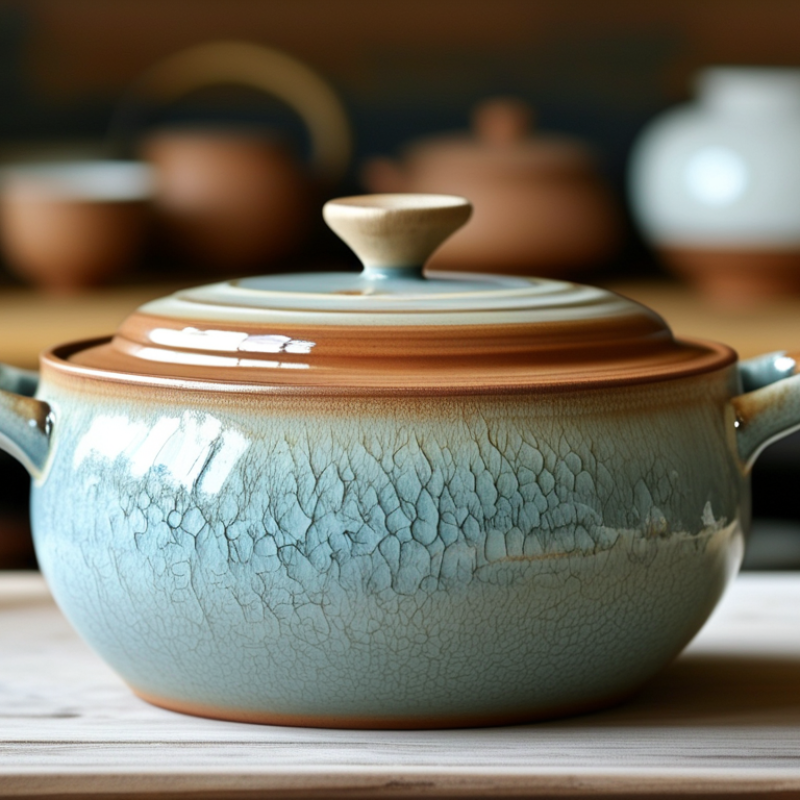
What Is the Best Ceramic Cooking Ware from China?
Chinese ceramic cookware covers several distinct types. Solid stoneware is thick, heat-retentive, and useful for casseroles or slow baking. Porcelain cookware has a denser body and smoother surface. It suits oven dishes, serving, and controlled reheating. Glazed earthenware offers attractive colors and handmade texture, but it can absorb heat unevenly. Use moderate temperatures.
Ceramic-coated metal cookware is different. Its aluminum or steel core improves heat distribution, while the ceramic coating provides a smooth cooking surface. It heats faster than solid ceramic ware. However, scratches, thermal shock, and abrasive cleaning can shorten its service life. My practical preference is solid stoneware for oven baking and coated metal for daily stovetop cooking. Neither is perfect.
The 2024 Cookware Market report from Grand View Research valued the global cookware market at about 20.88 billion US dollars in 2023. It also forecasts continued growth through 2030, supported by home cooking and premium kitchen products. This figure covers cookware broadly, not ceramic products alone. That distinction matters. China’s manufacturing strength allows factories to produce porcelain, stoneware, earthenware, and coated cookware at different price levels. Buyers should still check glaze testing, edge finishing, thickness, heat limits, and migration compliance. Product photographs cannot verify these details. A small manufacturing flaw may become a crack after repeated heating.
What Is the Best Ceramic Cooking Ware from China?
Key Materials and Manufacturing Methods
The best ceramic cooking ware starts with a stable clay body. Porcelain usually contains kaolin, feldspar, and quartz. It feels dense, smooth, and less porous after high-temperature firing. Stoneware uses stronger, coarser clay and often retains heat well. Alumina may be added when greater hardness is required.
Manufacturers commonly shape cookware by pressing, slip casting, or wheel forming. Pressing creates consistent plates and casserole bodies. Slip casting handles complex shapes, but poor control can leave thin areas. After drying, workers bisque-fire the piece, apply glaze, and fire it again, often above 1,200°C. A properly matured glaze should look even, without crawling, pinholes, or sharp edges.
I inspect the rim, base, handles, and interior before judging quality. A flat base matters on glass and induction-compatible designs. The handle should feel secure, not merely decorative. I once rejected a visually attractive sample because its glaze showed fine cracks near the rim. That decision was cautious, but not perfect; some surface lines are harmless, while others may expand with repeated heating. Reliable suppliers should provide food-contact test reports for lead and cadmium, plus thermal-shock data. Ask how samples were tested. Do not trust appearance alone.
When comparing Chinese ceramic cookware, start with the material, not the decoration. I inspect the rim, base, and glaze under bright light. A smooth, even surface usually signals careful finishing. Tiny pinholes, rough edges, or uneven coloring deserve questions. Ask whether the body is stoneware, porcelain, or another ceramic blend. The clay type affects weight, heat retention, and resistance to sudden temperature changes. “Handmade” can describe craftsmanship, but it does not guarantee performance.
In my kitchen, I check how evenly a pan heats and whether its base sits flat. I avoid moving a hot dish onto a cold stone counter. Thermal shock can damage otherwise attractive cookware. Compare wall thickness, handle attachment, lid fit, and the clarity of care instructions. Reliable sellers should provide food-contact test reports, production details, and temperature limits. Generic certificates are less useful when they cannot be linked to the exact product or batch.
I once chose a beautifully glazed casserole with a loose lid and poor heat control. It looked excellent in photographs. It disappointed me during slow cooking. That mistake changed my comparison method. I now value consistent measurements, honest limitations, and replacement support. Check whether the cookware works on your intended heat source. An oven dish may not suit direct flame or induction. Read feedback about cracking, staining, and repeated use. Quality is easier to trust when appearance, testing, and everyday performance agree.
What Is the Best Ceramic Cooking Ware from China?
The best ceramic cookware depends on the meal, heat source, and handling habits. For slow braises, thick stoneware casseroles hold heat steadily and keep sauces warm at the table. For rice, soups, and clay-pot cooking, a glazed ceramic pot gives gentle, even heating. It needs patience, though. Sudden temperature changes can cause cracking. For daily frying, ceramic-coated metal cookware feels lighter and responds faster than solid ceramic. It suits eggs, vegetables, and low-to-medium heat cooking.
Market data supports this growing interest. Grand View Research estimated the global cookware market at about US$20 billion in 2023, with continued growth expected through 2030. Fortune Business Insights also identifies ceramic cookware as a rising segment, driven by demand for easier cleaning and lower-oil cooking. These figures describe market direction, not cooking quality. A large market does not guarantee a safe glaze or durable base.
For Chinese ceramic ware, inspect the glaze, wall thickness, and heat-source instructions. Ask for independent testing for lead and cadmium migration, especially when food touches damaged surfaces. Look for clear temperature limits and traceable factory documentation. I would choose a heavier pot for stews and a lighter ceramic-coated pan for quick meals. That is not perfect. Ceramic coatings can lose performance when overheated, scrubbed harshly, or used with metal tools. The practical test is simple: the handle stays firm, the base sits flat, and the glaze remains smooth after repeated use.
| Cookware Type | Best Cooking Needs | Typical Construction | Typical Heat Capability | Induction Compatibility | Main Advantages | Important Limitations | Care Guidance |
|---|---|---|---|---|---|---|---|
| 100% Ceramic Casserole or Dutch Oven | Slow cooking, soups, stews, baking, and serving at the table | Dense fired ceramic body, often glazed on the cooking surface | Many oven-safe models tolerate approximately 200–260°C (392–500°F); the exact limit depends on the product specification | No, unless a separate magnetic base is incorporated | Excellent heat retention, attractive presentation, non-reactive cooking surface, and gentle heat distribution | Usually heavier and more fragile than metal cookware; sudden temperature changes can cause thermal shock or cracking | Preheat gradually, avoid placing a hot dish on a cold or wet surface, and check whether the item is dishwasher-safe |
| Ceramic-Coated Aluminum Frying Pan | Eggs, vegetables, fish, pancakes, and low-to-medium-heat sautéing | Aluminum body with a sol-gel ceramic nonstick coating | Often suitable for approximately 180–230°C (356–446°F); lid, handle, and coating limits may be lower | Only when a ferromagnetic plate or magnetic stainless-steel base is added | Lightweight, heats quickly, and offers easy food release with little oil when new and properly maintained | Nonstick performance gradually decreases with high heat, abrasive cleaning, metal utensils, and surface wear; it is not the same as solid ceramic | Use low or medium heat, silicone or wooden utensils, soft sponges, and avoid aerosol cooking sprays unless approved by the instructions |
| Ceramic-Coated Cast Iron Dutch Oven | Braising, bread baking, roasting, and long simmering | Cast-iron core with a vitreous enamel or ceramic enamel surface | Commonly oven-safe to approximately 230–260°C (446–500°F), but knobs and lids may have lower limits | Usually yes, because the cast-iron core is magnetic; verify the base design | Very strong heat retention, suitable for induction, and resistant to reaction with acidic foods when the enamel is intact | Heavy; enamel can chip from impact, and the exterior may become discolored with prolonged high heat | Lift rather than slide on glass cooktops, avoid thermal shock, and do not use abrasive cleaners or metal scouring pads |
| Glazed Ceramic Baking Dish | Lasagna, casseroles, gratins, fruit desserts, and oven-to-table meals | Fired ceramic or stoneware with a glazed interior and exterior | Many models are rated for approximately 200–250°C (392–482°F); always follow the marked temperature limit | No | Distributes oven heat steadily, retains warmth, and is available in useful shapes for family-sized baking | Not intended for direct stovetop use unless specifically labeled; may crack if transferred directly from freezer to a hot oven | Allow the dish to warm gradually, avoid thermal shock, and inspect for chips or hairline cracks before use |
| Porcelain Enamel Saucepan | Milk-based sauces, tomato sauces, reheating, and small-batch cooking | Steel or cast-iron core covered with a glass-like porcelain enamel surface | Often oven-safe, but the safe temperature is determined by the handle, lid, and manufacturer instructions | Usually yes with a steel or cast-iron core; confirm with an induction magnet test or product specification | Non-reactive surface, easy cleaning, good resistance to staining, and compatibility with acidic ingredients | Enamel can chip if dropped or struck; exposed metal beneath the chip may rust on some steel constructions | Use moderate heat, avoid heating an empty pan for long periods, and clean with non-abrasive materials |
| Unglazed Stoneware Baker | Pizza, bread, roasting, and foods that benefit from moisture absorption | Porous, high-fired clay or stoneware without a fully sealed glaze | Designed for oven use, commonly around 230–260°C (446–500°F), depending on thickness and firing | No | Absorbs and releases heat gradually, supports browning, and can produce a crisp base for baked foods | Porous surface can absorb oils and odors; it may stain, crack from thermal shock, and is not suitable for stovetop burners | Do not soak for long periods, avoid soap if the care instructions prohibit it, and place food on the stone before heating when required |
| Ceramic Tagine or Covered Cooking Pot | Low-temperature braising, steamed dishes, and slow cooking with moisture retention | Glazed or partially glazed ceramic base with a tall ceramic lid | Usually suited to gradual low-to-medium oven heat; many models require a heat diffuser on a stovetop | No, unless designed with a magnetic metal base | Condenses steam inside the lid, helping retain moisture and concentrate flavor during slow cooking | More sensitive to rapid temperature changes; direct high heat can cause cracking, especially with traditional unglazed clay | Start with low heat, follow any soaking instructions for unglazed clay, and never move a hot pot directly onto a cold surface |
| Ceramic Grill or Griddle Insert | Low-oil grilling, warming, and serving grilled vegetables or meats | Heat-resistant ceramic or ceramic-coated metal with a ridged or flat cooking surface | Varies significantly; many products are designed for medium heat rather than direct extreme heating | Usually no for solid ceramic; coated metal versions depend on the base material | Can retain heat well and provides a non-reactive surface for serving and gentle grilling | May heat slowly, can be difficult to move when hot, and is vulnerable to cracking if exposed to sudden cooling | Preheat gradually, avoid cold liquids on a hot surface, and use utensils that will not scratch any coating |
Note: “Ceramic cookware” can refer to solid fired ceramic, porcelain enamel, or a ceramic nonstick coating. Heat ratings, stovetop suitability, dishwasher safety, and induction compatibility vary by construction, so the product label and care instructions should always take priority.
What Is the Best Ceramic Cooking Ware from China?
Safety, Care, and Buying Considerations
The best ceramic cooking ware is not chosen by appearance alone. I check the glaze, clay body, heat rating, and food-contact documentation. “Ceramic” does not automatically mean safe. Reliable sellers should provide test results for lead, cadmium, and other restricted substances. These documents should identify the product, not merely show a factory certificate. Look for clear instructions about oven, stovetop, microwave, and dishwasher use. If the information is vague, I would keep searching.
Thermal shock causes many avoidable cracks. Do not move a hot ceramic dish onto a cold stone counter. Place it on a dry wooden board instead. Avoid direct flame unless the cookware is specifically designed for it. A cold dish should enter a gradually heating oven, not a fully heated one. Small scratches can trap food residue. Use soft sponges and mild detergent. Metal tools may damage decorative or glossy surfaces. I still sometimes forget to dry the base completely, which can leave stains or create slipping on glass cooktops.
When buying from China, ask about firing temperature, glaze composition, wall thickness, and quality inspections. A heavier base often feels steadier, but weight alone proves nothing. Examine the rim for pinholes, uneven glaze, or hairline cracks. Choose sellers who explain replacement policies and batch inspection procedures. Imported cookware may also need compliance evidence for your country’s food-contact rules. Those requirements differ. Product photos can hide flaws, so request close-up images and packaging details before payment. A beautiful finish is useful only when it survives real cooking.
Safety, care, and buying considerations compared across common ceramic cookware types.
Glazed stoneware offers a strong balance of food safety, everyday durability, and easy cleaning. Porcelain is dense and highly heat-resistant but may require more careful handling because of its harder, less forgiving surface. Unglazed earthenware is porous and more vulnerable to staining, moisture absorption, and thermal shock. Ceramic-coated metal heats efficiently, but the coating should be protected from scratches and abrasive cleaners. Scores use a practical five-point comparison based on material properties and normal care requirements, not laboratory test results.
Build your system. Protect your boat. Join the movement.