What Are the Best CNC Parts Manufacturers in China?

Choosing the right Cnc Parts manufacturer in China requires more than comparing prices on a supplier directory. Quality depends on machining capability, inspection discipline, material control, and communication throughout production. This guide examines manufacturers that serve industries such as automation, medical equipment, automotive systems, and industrial machinery.

A dependable supplier should explain its processes clearly. Look for CNC milling and turning capacity, documented tolerances, calibrated measuring equipment, and traceable material certificates. Certifications such as ISO 9001 can support credibility, but they should not replace practical verification. A factory may hold a certificate and still struggle with surface finish or repeatability.

Real confidence comes from evidence. Request sample parts, dimensional inspection reports, photographs of the workshop, and references for similar projects. Ask how the manufacturer handles drawing revisions, rejected parts, and unexpected material shortages. Small details matter, such as clean deburring, protected threads, and accurate hole positions.

Price still matters.

However, the lowest quotation can hide weak process control, unclear specifications, or unstable production schedules. Experienced buyers often compare total value, not only the unit price. Lead time, packaging, engineering support, and after-sales response can affect the final result.

This article does not present one universal ranking. Every project has different requirements, and even established suppliers can make mistakes. That is worth remembering. The goal is to identify strong candidates and provide a practical framework for evaluating China’s best Cnc Parts manufacturers with greater confidence.
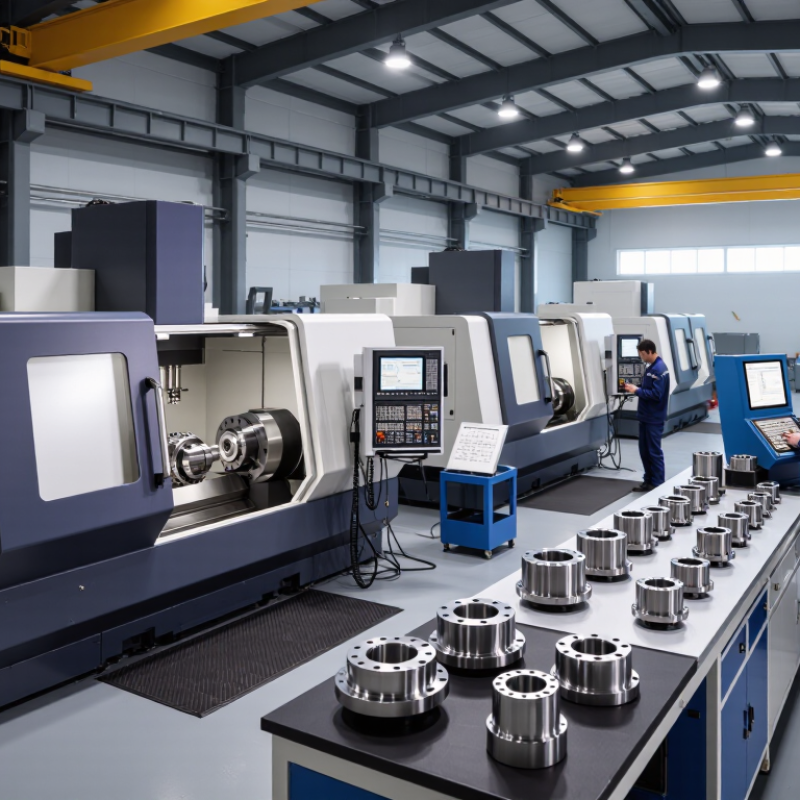
What Are the Best CNC Parts Manufacturers in China?

Understanding What Makes a CNC Parts Manufacturer Stand Out in China

A standout CNC parts manufacturer in China offers more than competitive pricing. It demonstrates repeatable quality under real production pressure. Experienced engineers review drawings before machining and identify unclear tolerances, sharp internal corners, or difficult material choices. This practical feedback can prevent costly changes later. Good communication matters. Fast replies are useful, but precise replies matter more.

Reliable manufacturers use calibrated equipment, documented inspection procedures, and traceable material records. Coordinate measuring machines, micrometers, and surface testers help verify critical dimensions. Inspection reports should match the part number, revision, and batch. A serious supplier also explains its process clearly. It should discuss machining limits honestly instead of promising everything. That honesty is valuable.

Production experience becomes visible during sampling and repeat orders. A capable factory controls tool wear, fixture positioning, cutting parameters, and operator training. It can support prototypes without losing sight of volume production. Packaging also deserves attention, especially for polished or tight-tolerance parts. Small scratches can create major problems for the customer. No manufacturer is perfect. I once assumed a low quote represented efficiency, but missing inspection details created extra coordination work. Buyers should compare total risk, not only unit price. Factory visits, sample checks, and independent audits can reveal differences that online profiles often hide. A dependable partnership grows through evidence, correction, and consistent delivery.

What Makes a CNC Parts Manufacturer Stand Out in China?

Dimensional consistency is a key indicator when evaluating CNC parts manufacturers. The chart shows the general dimensional tolerances of ISO 2768-1, tolerance class m, for different nominal size ranges. A capable manufacturer should be able to control these limits and apply tighter tolerances when the engineering drawing requires them.

Reference: ISO 2768-1 general tolerances for linear dimensions, class m. Values are shown as ± tolerance in millimetres and apply when no individual tolerance is specified on the drawing.

Exploring China’s Main CNC Manufacturing Regions and Specialties

China’s CNC manufacturing strengths are regional, not uniform. The Yangtze River Delta, including Shanghai, Jiangsu, and Zhejiang, supports precision parts, automation components, and medical equipment. Its dense supplier network helps shorten tooling and finishing cycles. The Pearl River Delta, led by Guangdong, is stronger in consumer electronics, aluminum housings, and rapid production. UNIDO’s World Manufacturing Production report places China at roughly one-third of global manufacturing output, showing the scale behind these clusters.

Shandong is known for heavy machinery, steel components, and larger milled structures. Sichuan and Chongqing offer growing capacity for automotive and aerospace-related parts, often with competitive labor and factory costs. The International Federation of Robotics reported 276,288 industrial robot installations in China during 2022. That figure reflects rising automation, but it does not guarantee better machining quality. Buyers still need to verify tolerance records, inspection equipment, material certificates, and process control. I have seen attractive quotations hide weak finishing capacity. Regional reputation is only a starting point.

Tips: Match the region to the part. Choose the Yangtze River Delta for tight tolerances and complex assemblies. Consider Guangdong for fast-turn aluminum and electronic enclosures. Request a sample inspection report, not only a machine list. Confirm whether measurement is performed after finishing and heat treatment. Small details matter.

Comparing Leading Chinese CNC Parts Manufacturers by Key Criteria

When comparing Chinese CNC parts manufacturers, judge more than quoted price. Review machining experience, equipment, and inspection depth. A capable factory should explain its tolerance limits clearly. Ask for sample reports, material certificates, and dimensional records. Details matter. Look for coordinate measuring machines, calibrated tools, and documented process checks. A supplier producing aluminum housings may need different controls than one machining hardened steel shafts. Their experience with similar geometries often predicts fewer production problems.

Compare lead times, minimum order quantities, and communication quality. Reliable manufacturers usually confirm drawings before cutting metal. They identify unclear dimensions instead of guessing. Request a prototype and inspect surface finish, thread quality, edge conditions, and hole positions. A low price can hide weak packaging or unstable processes. I have seen attractive quotations fail because revision control was informal. That risk deserves attention. Certifications can support credibility, but they do not replace physical inspection or traceability.

Tips: Send complete drawings with revision numbers, material grades, tolerances, and finish requirements. Ask how rejected parts are isolated and replaced. Compare at least three written quotations using the same specifications. Discuss inspection frequency, packaging, and delivery terms before approval. Keep a small pilot order. It may reveal problems that a polished sales call conceals.

Evaluating Quality Control, Certifications, Capacity, and Customization

Choosing the best CNC parts manufacturer in China requires more than comparing hourly prices. Quality control should be visible on the shop floor. Look for incoming material inspection, calibrated CMM equipment, first article inspection, and full batch traceability. The ISO Survey 2021 recorded 426,716 ISO 9001 certificates in China. However, certification alone does not prove stable machining performance. Ask for recent inspection reports and sample parts.

Capacity also needs practical testing. UNIDO’s International Yearbook places China at roughly one-third of global manufacturing value added. This supports a deep supplier base, but factory size can be misleading. A large workshop may still subcontract critical operations. Confirm machine availability, spindle capability, tolerance history, and backup capacity. For complex parts, request process capability data, such as Cpk results, rather than broad promises. Customization should include engineering feedback, DFM reviews, material alternatives, surface treatment control, and controlled drawing revisions. One overlooked revision can ruin an otherwise accurate batch.

Tips: Request a small pilot order before volume production. Check five dimensions independently. Ask who performs final inspection. Certifications from laboratories accredited under ISO/IEC 17025 add credibility. Still, I would not treat every polished report as reliable; sampling methods may be weak, and supplier data can be selective. A factory tour, video inspection, and documented corrective-action records reveal more than a sales presentation. Industry 4.0 reports often emphasize digital traceability, yet many smaller workshops still rely on manual records. That gap deserves careful review.

Choosing the Right Chinese CNC Parts Manufacturer for Your Project

Choosing the right Chinese CNC parts manufacturer starts with your drawings, not a supplier’s sales pitch. Define material grade, critical tolerances, surface finish, batch size, and inspection requirements. A capable manufacturer should explain machining limits clearly. Ask for sample parts before approving production. Check dimensions with a coordinate measuring machine when accuracy is important.

Communication also matters. Request a detailed quotation with tooling, setup, packaging, lead time, and inspection costs separated. Review the manufacturer’s quality system, equipment list, operator experience, and traceability records. Reliable suppliers can share inspection reports and respond with specific technical questions. Vague promises are warning signs. Protect design files through a clear confidentiality agreement and controlled document access.

Tips: Send a fully dimensioned drawing. Mark critical features. Confirm acceptable tolerances in writing. Ask how rejected parts are handled. Request photos of fixtures and first-article inspection results. Do not choose only by price.

A cheaper quote may hide weak process control or repeated rework. That mistake can delay assembly and increase total cost. I would also compare two or three trial samples, even when the first sample looks excellent. Surface finish can vary near pockets, threads, and sharp internal corners. Small details matter. Keep communication practical, documented, and measurable.

What Are the Best CNC Parts Manufacturers in China? - Choosing the Right Chinese CNC Parts Manufacturer for Your Project

Evaluation Dimension Recommended Benchmark Why It Matters Evidence to Request
Machining Process The supplier should offer the required process, such as CNC milling, CNC turning, Swiss turning, 5-axis machining, or EDM. The correct process affects geometry, surface quality, production efficiency, and achievable tolerances. Machine list, sample parts, process capability information, and an application-specific quotation.
Dimensional Tolerance A general CNC tolerance around ±0.05 mm is common for many parts; tighter tolerances such as ±0.01 mm require suitable equipment, inspection, and process control. Unnecessary ultra-tight tolerances increase machining time, inspection requirements, and cost. Tolerance capability by material and feature size, inspection reports, and a drawing review before production.
Material Capability The manufacturer should have documented experience with the specified material, such as aluminum, stainless steel, carbon steel, brass, titanium, engineering plastics, or tool steel. Different materials require different cutting tools, speeds, feeds, coolants, and handling procedures. Material certificates, lot traceability, approved material specifications, and test documentation when required.
Surface Finish Surface requirements should be specified by measurable roughness values, such as Ra, together with any cosmetic acceptance criteria. Surface finish influences appearance, friction, sealing, wear resistance, and coating adhesion. Surface-roughness records, approved samples, finishing process details, and inspection methods.
Secondary Operations Useful services may include anodizing, plating, passivation, powder coating, heat treatment, laser marking, assembly, and deburring. A coordinated supply chain can reduce handling, transport, communication, and quality risks. Approved-process list, finish specifications, coating thickness records, color standards, and subcontractor controls.
Quality Management An ISO 9001-certified quality management system is a useful baseline, but certification alone does not guarantee part quality. Documented procedures support repeatability, corrective action, and controlled production. Current certificate, scope of certification, quality plan, nonconformance process, and recent audit or inspection records.
Inspection Equipment The supplier should use calibrated tools appropriate to the part, such as CMM equipment, height gauges, optical measurement systems, micrometers, and gauges. Inspection capability must match the drawing tolerances and critical characteristics. Calibration certificates, inspection equipment list, sample dimensional reports, and measurement-system controls.
Prototype and Production Capacity The supplier should be able to support the required quantity, from one-off prototypes and small batches to repeat production. A supplier suitable for prototypes may not have the planning, tooling, or capacity needed for volume production. Monthly capacity estimate, current lead-time assumptions, production schedule, and contingency planning.
Lead Time Lead time should be quoted separately for engineering review, prototyping, machining, finishing, inspection, and shipping. A clear schedule makes it easier to identify delays caused by materials, subcontracted finishes, or export logistics. Milestone-based schedule, material availability, production start date, inspection date, and shipping terms.
Cost Transparency The quotation should identify machining, material, tooling, finishing, inspection, packaging, shipping, and applicable taxes or fees. The lowest initial price may not be the lowest total cost if rework, inspection, delays, or logistics are excluded. Itemized quotation, payment terms, tooling ownership, revision policy, and clarification of shipping responsibilities.
Communication and Engineering Support The supplier should provide drawing review, manufacturability feedback, prompt technical communication, and controlled handling of revisions. Early engineering feedback can prevent design errors, avoidable cost, and production delays. Design-for-manufacturing comments, designated technical contact, revision records, and response-time expectations.
Export Packaging and Logistics Packaging should protect precision surfaces and separate finished parts from moisture, impact, contamination, and corrosion during transport. Proper packaging reduces damage and preserves dimensional and cosmetic quality after inspection. Packaging specification, corrosion-protection method, shipping documents, Incoterms, and tracking procedure.

Note: Capability, tolerance, lead time, and cost vary by part geometry, material, quantity, finishing requirements, inspection criteria, and shipping method. Confirm all values against the supplier’s quotation and technical documentation.

Build your system. Protect your boat. Join the movement.

Compare Products
Talk to Sales