10 Best Flat Lock Sewing Machines for Global Buyers?

Choosing among the 10 Best Flat Lock Sewing Machines for Global Buyers requires more than comparing prices. A Flat Lock machine must create smooth, durable seams without damaging lightweight or stretch fabrics. In practical production, small details matter. Needle cooling, thread tension, presser-foot pressure, and differential feed can affect every garment.

This guide evaluates ten machines through production-focused criteria. These include stitch consistency, operating speed, motor efficiency, adjustment range, and maintenance access. It also considers fabric types, from sportswear jersey to medium-weight knitwear. Global buyers should examine voltage options, certification documents, warranty terms, spare-part availability, and local technical support. A machine with impressive specifications may still disappoint when replacement parts take months to arrive.

Real factories need reliable equipment.

Operator comfort also deserves attention. Clear controls, low vibration, and accessible threading points can reduce fatigue during long shifts. Noise levels and oil management should not be ignored. They influence the working environment and daily maintenance routine. However, no machine performs perfectly in every workshop. Some published specifications may depend on ideal testing conditions, while dealer information can be incomplete. That uncertainty matters.

The recommendations balance documented features with practical purchasing concerns. Buyers should test sample fabrics before placing large orders. They should also confirm stitch appearance under their own operators’ hands. The final choice may not be the most expensive model. It should be the machine that offers dependable seams, manageable ownership costs, and support that remains useful after installation. Small compromises are sometimes acceptable, but hidden service problems are not.
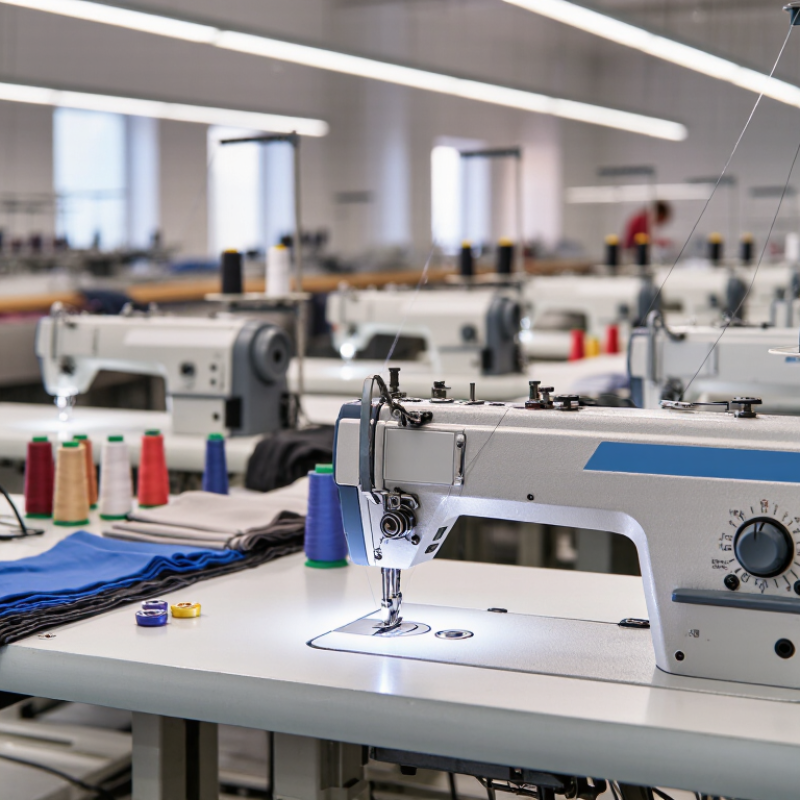
10 Best Flat Lock Sewing Machines for Global Buyers?

What Is a Flatlock Sewing Machine and How Does It Work?

A flatlock sewing machine creates a seam that lies almost completely flat against the fabric. Unlike a traditional raised seam, it joins fabric edges with overlapping stitches. The needle threads pass through the fabric, while loopers form threads underneath. Together, they create a flexible seam with little bulk.

In practical garment production, this structure works well for sportswear, underwear, base layers, and lightweight knitwear. It reduces rubbing against the skin. The finished seam may also become a visible design detail. Some machines use two or three needles, depending on the desired width and stitch appearance. Thread tension must remain balanced. Excessive tension can wrinkle the fabric, while weak tension may leave loose loops.

When testing machines for international purchasing, I check stitch consistency, adjustment access, and operator safety features. I also inspect how easily the machine handles different fabric weights. Small differences matter. A machine that performs smoothly on thin jersey may struggle with dense elastic fabric. Power compatibility, replacement parts, clear manuals, and local technical support deserve equal attention. I once focused too heavily on sewing speed and overlooked maintenance access. That was a costly mistake in production planning. Buyers should test real fabric samples before making a final decision. A short demonstration can reveal skipped stitches, uneven feeding, or uncomfortable noise.

Key Features Global Buyers Should Compare

When comparing the 10 best flat lock sewing machines for global buyers, inspect stitch control before appearance. A dependable machine should produce even seams on lightweight jersey and thick sweatshirt fleece. Test the stitch length, differential feed, and thread tension with real fabric samples. Small adjustments matter.

Motor performance deserves close attention. A high speed rating looks impressive, but it may create vibration, skipped stitches, or uneven hems. Choose a machine with stable torque and a responsive speed controller. A quiet servo motor can improve comfort during long production hours. Check the needle system, presser-foot lift, thread path, and access to the loopers. Simple maintenance helps.

Global buyers should compare voltage compatibility, plug options, manuals, spare-part availability, and local service support. A clear threading diagram saves time when production stops unexpectedly. Confirm whether the machine includes safety guards and suitable lighting. Warranty terms also need careful reading, especially for international repairs. In practical trials, I would record seam quality after several hours, not only during a short demonstration. That test can reveal heat buildup or operator fatigue. Price still matters, but the cheapest option may become expensive when parts are difficult to source. Availability can change. Recheck it before ordering.

10 Best Flatlock Sewing Machines for Different Production Needs

10 Best Flatlock Sewing Machines for Different Production Needs

Choosing among the ten best flatlock sewing machines depends on fabric, seam style, and daily output. A two-needle model suits lightweight underwear and soft sportswear. A three-needle machine offers stronger decorative seams for T-shirts and base layers. Four-needle equipment supports wider, more stable seams on medium-weight knits.

For narrow hems, choose a machine with adjustable stitch width and clear gauge options. A wide-bed flatlock machine handles visible seams on sweatshirts and performance garments. A cylinder-bed design reaches cuffs, sleeves, and small tubular sections more easily.

Feed-off-the-arm equipment can improve long sleeve production, although operators need practice. A coverstitch-flatlock combination saves floor space for smaller workshops. It may reduce setup time, but changing operations can slow inexperienced teams.

A high-speed model benefits large factories with steady orders and trained mechanics. A lower-speed machine may be safer for sampling and short production runs.

From hands-on machine checks, differential feed matters more than many buyers expect. It helps control rippling on stretch fabrics. Test the machine with your actual fabric, thread, and seam allowance.

Check needle availability, lubrication access, motor noise, and spare-part support. These details affect downtime more than attractive catalog photographs.

I would also inspect the presser-foot lift and thread path under poor lighting. Small weaknesses appear there. Ask for stitch samples after several continuous hours, not just one perfect sample. Specifications can look convincing, yet real production may expose vibration, skipped stitches, or difficult adjustments.

How to Choose the Right Flatlock Machine for Your Factory

10 Best Flat Lock Sewing Machines for Global Buyers?

Choosing the right flatlock machine starts with fabric, not the catalog ranking. A factory sewing lightweight jersey needs different thread control than one sewing thick sportswear. Check the machine’s stitch width, differential feed, needle system, presser-foot clearance, and available spare parts. Test real production panels before purchasing. A smooth sample can hide skipped stitches during an eight-hour shift.

Textile Exchange’s 2024 Materials Market Report estimated global fiber production at 124 million tonnes in 2023. It projects about 160 million tonnes by 2030. This growth increases pressure on factories to handle recycled fibers, stretch fabrics, and mixed constructions consistently. Ask suppliers for documented speed, noise, power consumption, and maintenance intervals. ITMF’s recent industry surveys also show continuing cost and order pressure. Efficiency matters, but repair access may matter more. A cheaper machine becomes expensive when a technician waits weeks for parts.

Tips: Compare three machines using the same fabric, thread, needle, and operator. Record seam strength, skipped stitches, heat, vibration, and hourly output. Do not trust speed alone. Review warranty terms, training, voltage compatibility, and local service coverage. I would also inspect the needle area after a long trial; tiny burrs can damage delicate fabric. That detail is easy to miss.

10 Best Flat Lock Sewing Machines for Global Buyers? - How to Choose the Right Flatlock Machine for Your Factory

Rank Recommended Machine Configuration Best Factory Use Needles / Threads Seam Width Maximum Speed Stitch Length Typical Power Material Range Key Advantage Important Buying Check
1 Three-needle, five-thread flatlock High-volume sportswear and activewear 3 / 5 5.6–6.4 mm 6,000–7,000 spm 1.2–4.0 mm 550–750 W Light to medium knits Balanced strength, coverage, and production speed Confirm differential-feed adjustment and folder compatibility
2 Two-needle, four-thread flatlock T-shirts, underwear, and lightweight garments 2 / 4 4.8–5.6 mm 5,500–6,500 spm 1.2–4.0 mm 550–750 W Lightweight and medium knits Soft, flexible seams with moderate thread consumption Check needle gauge options and stitch visibility on fine fabric
3 Three-needle coverstitch with flat-seam setup Bottom hems, sleeve hems, and decorative flat seams 3 / 5 5.6 mm 5,000–6,000 spm 1.5–4.0 mm 550–750 W Light to medium stretch fabrics One machine can cover several finishing operations Verify whether the supplied parts support both cover and flat-seam work
4 Narrow-gauge flatlock Fine underwear, leggings, and close-fitting apparel 2–3 / 4–5 3.2–4.8 mm 5,000–6,000 spm 1.2–3.5 mm 400–650 W Fine knits and elastic fabrics Low-profile seam suitable for next-to-skin comfort Test skipped stitches when using high-stretch elastane blends
5 Wide-gauge flatlock Sweatshirts, fleece garments, and heavier knitwear 3 / 5 6.4–8.0 mm 4,500–5,500 spm 1.5–4.5 mm 550–750 W Medium and heavy knits Provides broader seam coverage and strong thread interlocking Check presser-foot lift, feeding capacity, and needle system
6 Differential-feed flatlock Stretch fabrics, rib knit, and fabrics prone to waviness 2–3 / 4–5 4.8–6.4 mm 5,000–6,500 spm 1.2–4.0 mm 550–750 W Light to medium stretch knits Controls stretching and gathering during sewing Measure the actual differential-feed ratio and adjustment range
7 Cylinder-bed flatlock Small tubular parts, cuffs, necklines, and narrow openings 2–3 / 4–5 4.8–6.4 mm 4,500–5,500 spm 1.5–4.0 mm 550–750 W Light and medium knit components Improves access around curved and tubular sections Confirm cylinder diameter and available attachment options
8 Heavy-duty flatlock Workwear knit panels, uniforms, and reinforced sports garments 3 / 5 5.6–8.0 mm 4,000–5,000 spm 1.5–4.5 mm 750–1,000 W Heavy knits and layered assemblies Handles thicker materials with stronger feeding components Request a production test using the factory’s actual fabric layers
9 Thread-trimming flatlock Large garment lines where manual trimming is a bottleneck 2–3 / 4–5 4.8–6.4 mm 4,500–6,000 spm 1.2–4.0 mm 550–750 W Light to medium knits Reduces post-sewing labor and improves line consistency Check trimming reliability, sensor settings, and maintenance access
10 Servo-motor flatlock workstation Factories prioritizing energy control and operator comfort 2–3 / 4–5 4.8–6.4 mm 4,500–6,500 spm 1.2–4.0 mm 400–750 W Light to medium knits Variable-speed control, quieter operation, and lower idle energy use Verify voltage, motor certification, spare-parts supply, and local service
Note: Specifications are typical ranges for industrial flatlock and coverstitch configurations. Actual speed, stitch width, power consumption, fabric capacity, and available attachments vary by machine setup, needle gauge, sewing material, motor, and working conditions. Always request a sample-sewing test before placing a factory order.

Global Buying, Installation, and Maintenance Considerations

Global buyers should evaluate a flat-lock sewing machine beyond its purchase price. ITMF’s 2024 Global Textile Industry Survey identified weak demand, rising costs, and supply uncertainty as major industry pressures. A cheaper machine may create higher costs later. Check needle-system availability, spare-part lead times, warranty coverage, and technician access before ordering. Confirm voltage, frequency, plug type, table dimensions, and local electrical requirements. These details prevent expensive installation surprises.

Installation needs a stable table, accurate leveling, suitable lighting, and clean compressed air when pneumatic functions are included. Leave service space around the machine. In many workshops, lint gathers beneath the table, not only around the needle area. Train operators to adjust thread tension gradually. Incorrect settings can damage stretch fabrics within minutes. The ILO’s 2023 global estimates recorded 2.93 million work-related deaths annually, reinforcing the value of guarding, posture training, and safe maintenance procedures.

Maintenance should follow a written schedule, not memory. Clean lint daily, inspect needles every shift, and check lubrication points according to the technical manual. Record skipped stitches, unusual vibration, and thread breaks. These small signals often appear before timing problems. The IEA reports that electric motor systems represent a substantial share of global electricity use, so efficient operation deserves attention, even with small machines. Some buyers overlook humidity and dust control. That is a mistake. Still, preventive schedules are not perfect; fabric type, operator skill, and production speed can change service intervals.

Article Source:

Build your system. Protect your boat. Join the movement.

Compare Products
Talk to Sales