China Best Water Filter System for Home How to Choose?
Choosing the best water filter system for home use in China starts with a simple question: what is in your water? Municipal supplies, well water, and building pipes can create different concerns. A cloudy glass, a chlorine smell, or white scale on a kettle may offer clues, but none confirms which contaminants are present. A water test gives you better evidence. It also helps prevent paying for features your household may not need.
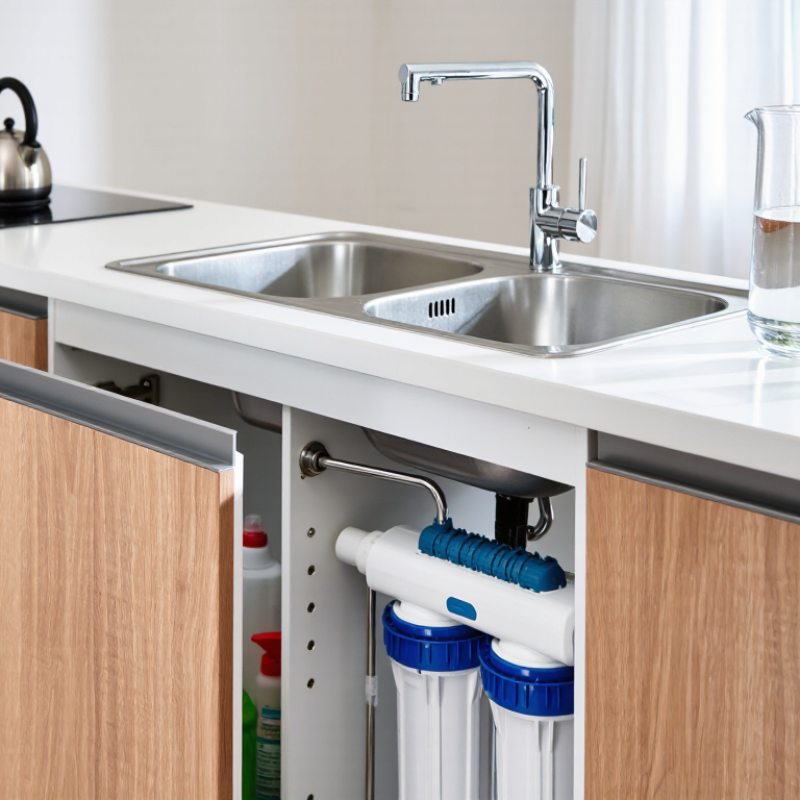
Dr. Joseph Cotruvo, a drinking-water quality expert, has emphasized that treatment should match the water-quality problem. A practical paraphrase of that guidance is: “Test your water first, then choose a filter for the contaminants found.” That distinction matters. A carbon filter may improve chlorine taste, while a reverse-osmosis system can reduce certain dissolved substances when properly certified and maintained. Check the exact contaminant-reduction claims, not just broad labels like “premium” or “advanced.” Look for relevant NSF/ANSI certifications, confirm the system’s flow rate, and note cartridge costs and replacement intervals. A filter that sits unused because its cartridges are difficult to find is not a good fit. Small details count, like whether it fits beneath your sink or leaves room for the cleaning supplies already there. No single system suits every home. And a low price can hide recurring costs. The sections ahead explain how to compare filter types, certifications, installation needs, and long-term value, so you can choose with clearer evidence and fewer assumptions.
Start with a Water Test: China’s GB 5749-2022 Covers 97 Indicators
Choosing a home water filter in China should begin with a test, not a product label. GB 5749-2022, China’s National Standard for Drinking Water Quality, took effect on April 1, 2023. It sets limits across 97 indicators, covering microbial, chemical, sensory, and other water-quality characteristics. A single TDS reading is not enough. It measures dissolved substances but cannot identify every contaminant or prove water is unsafe. Clear water can still need testing.
Ask a qualified laboratory to test water at the kitchen tap, especially in older buildings or homes using private wells. Compare the results with the relevant GB 5749-2022 limits, then choose filtration suited to the contaminants found. WHO and UNICEF’s 2023 Joint Monitoring Programme report, Progress on Household Drinking Water, Sanitation and Hygiene 2000–2022, estimated that 2.2 billion people lacked safely managed drinking water in 2022. This is a global figure, not a China-specific household estimate, but it highlights why reliable water-quality checks matter. Retest after plumbing repairs or source changes. Keep the lab report, and ask how samples were collected. Water changes. One test is only a snapshot.
Match Filter Claims to NSF/ANSI 42, 53, and 401 Test Categories
Choosing a home water filter starts with the contaminants you want reduced, not a broad “clean water” claim. NSF/ANSI 42 covers aesthetic effects, such as chlorine taste and odor, and some particulate reduction. It does not mean a filter removes every harmful substance. Check the exact reduction claim and filter model in the certifier’s listing.
For health-related contaminants, look for NSF/ANSI 53 claims tied to specific substances, such as lead or cysts. NSF/ANSI 401 addresses certain emerging compounds, including some medicines and pesticides. The standard number alone is not enough. Read the performance data sheet: it should name the tested contaminant, reduction level, and operating conditions. Small print matters.
At a kitchen sink, compare the listed capacity with your household’s daily use and replacement schedule. A filter tested at a particular flow rate may perform differently if water runs faster. Check whether your local water report identifies a relevant concern, too. It can be tempting to choose the system with the longest list of claims, but that list may not match your tap water. Replacement costs and missed cartridge changes are easy to overlook.
China Best Water Filter System for Home: How to Choose?
Match each filter claim to the relevant NSF/ANSI test category.
Bars count the representative claim types listed here—not contaminant-removal performance or the number of contaminants covered by a standard. NSF/ANSI 42 commonly covers aesthetic effects such as chlorine taste and odor; 53 covers health effects such as lead and cysts; 401 covers certain emerging compounds, including some pharmaceuticals and pesticides. Coverage varies by product and specific claim: check the model’s certified performance data sheet.
Compare RO Performance: NSF/ANSI 58 Sets a 75% TDS Reduction Benchmark
When comparing a home reverse osmosis system, treat NSF/ANSI 58 as a useful performance reference.
The standard includes a 75% TDS-reduction benchmark under specified test conditions. TDS means total dissolved solids, measured as a combined reading rather than a list of individual substances. A certified system’s listing can help verify whether it has been tested to the standard; do not rely on a package claim alone.
Your tap water and kitchen setup matter too. Feed-water pressure, temperature, and membrane condition can affect real-world performance. A handheld TDS meter can compare incoming and treated water, but it cannot identify which substances are present. Check the system’s rated output, replacement-filter schedule, and wastewater details before choosing. Small details count.
It is easy to fixate on the 75% figure, and I would be cautious about treating it as a complete measure of water quality. A strong reduction does not tell you everything about taste, maintenance, or contaminants outside the test claims. Look for clear, independently verifiable certification information, then consider how often your household uses drinking and cooking water.
Size Filter Capacity and Replacement Intervals to Household Water Use
Choosing a home water filter means matching its capacity to your household’s real water use. Estimate how much filtered water your family drinks and uses for cooking each day. A small household may need far less capacity than a busy home where several people fill bottles throughout the day. Check both the filter’s rated capacity and its flow rate; a large capacity does not always mean water dispenses quickly.
Replacement intervals depend on the model, daily use, and incoming water quality. Follow the product instructions, and replace the cartridge when its stated time or volume limit is reached. If water flow slows, taste changes, or the water looks different, check the filter rather than assuming it is still working well. These signs can be useful, but they do not prove water safety. A practical estimate can still be imperfect, especially when seasonal water conditions change.
Tips: Keep a simple log of installation dates and cartridge changes. Compare your weekly use with the stated capacity, and leave a little room for guests or heavier use. If you are unsure, check local water-quality information and ask a qualified water-treatment professional.
Verify Third-Party Certification and China-Specific Compliance Before Buying
When comparing a home water filter in China, verify documents for the exact model, not just the product range. A certificate may cover one cartridge or configuration, while the unit in the box differs. Check the issuing body, model number, test scope, expiry date, and whether the certificate can be confirmed through the issuer’s own records. A laboratory report and a product certificate are not interchangeable. Small details matter.
For products that contact drinking water, ask whether the specific product category requires a current hygiene safety approval in China. Requirements can depend on the product and its intended use. Check relevant national standards too: GB 5749 sets drinking-water quality limits, but does not certify a filter’s performance. Ask for test results showing which substances were reduced and under what conditions, such as flow rate and cartridge life. Do not assume a CCC mark is required or sufficient; check whether the exact product falls within the current compulsory certification catalog. Foreign test claims can be useful, but confirm their scope and whether they apply to the model sold in China. Paperwork can look convincing. Read the fine print.