A push-up bra can create a smoother neckline, add gentle lift, or simply make a favorite shirt sit better. But comfort is personal. A band that feels secure on one person may pinch another, while padding that looks subtle in a fitting room can feel bulky after hours of wear. Small details matter: strap width, cup shape, seam placement, and the way the band rests against your ribs.
Cora Harrington, founder of The Lingerie Addict and a respected lingerie writer, has emphasized the importance of finding bras that fit the wearer rather than chasing a particular look. That principle guides this list. The Bras Push Up picks below are considered for support, materials, construction, size availability, and everyday comfort—not lift alone. A useful reminder: a bra should work with your body, not demand that you tolerate it.
The top ten options cover different needs, from lightly padded styles for a natural outline to structured cups for more noticeable shaping. You’ll find notes on fit, coverage, and practical wear, so you can compare each design with your wardrobe and routine. Check the brand’s size chart, and reassess the fit when you fasten the band or raise your arms. No single style suits everyone. Even a well-reviewed bra may feel wrong by lunchtime, and that’s worth admitting. Comfort deserves equal weight with appearance.
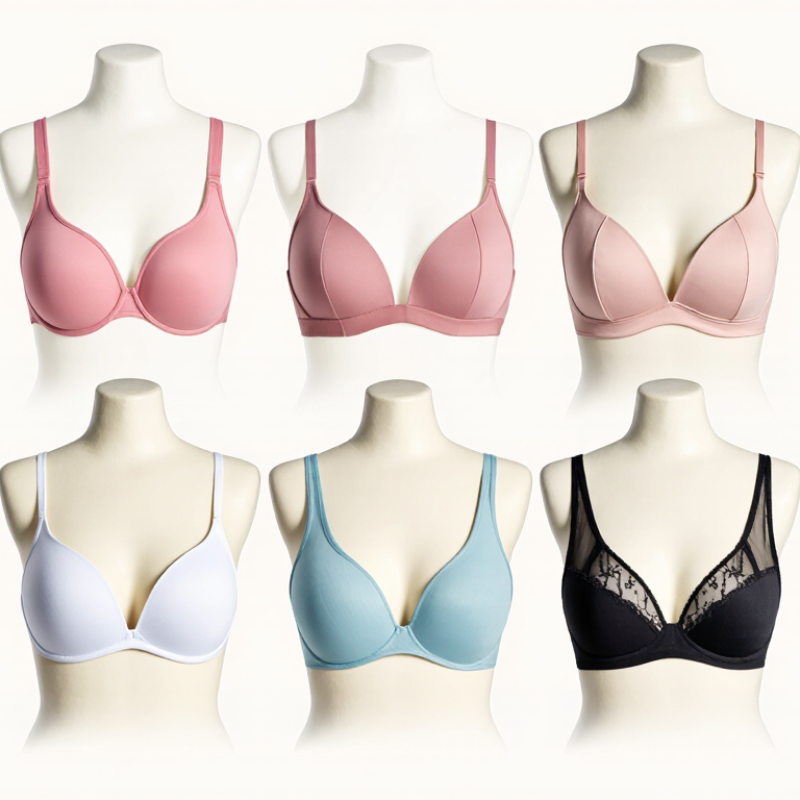
A push-up bra is designed to guide breast tissue slightly inward and upward, creating a fuller-looking shape. Its lift usually comes from angled cups, padding near the cup’s lower or outer edge, and a supportive band. The padding does not lift on its own; the cup’s shape and the bra’s fit work together. Not magic.
Padding may be foam, molded fabric, or removable inserts. A small wedge at the cup’s base can nudge the breast upward, while side padding can encourage a closer-set look. The effect varies with body shape and bra construction, so one style will not fit everyone. A band should sit level around the ribs without digging in, and the cups should not gape or press breast tissue over their edges. Fit matters.
It is easy to focus on the padded cup and overlook the band, but that can leave the bra uncomfortable or unstable. When trying one on, raise your arms and lean forward; notice whether the cups shift or the wires rub. A soft, secure fit is usually more useful than dramatic lift. Even then, comfort can change over the day, and I would not treat a mirror check as proof that the fit is right.
Cup shape, band tension, and strap placement determine whether a push-up bra feels supportive or restrictive. A firm band should sit level around the torso, not ride up when you lift your arms. Cups should hold breast tissue without cutting into the top or sides. Small details matter. Wider straps can spread pressure across the shoulders, while a stable center panel helps keep the cups aligned. Padding may add lift, but thick or rigid inserts can create heat and pressure during long wear.
Support also depends on movement, not appearance alone. A 2013 biomechanics study in the Journal of Sports Sciences reported that high-support sports bras reduced breast displacement by up to 74% during running compared with no bra. That finding concerns sports bras, so it should not be treated as a direct test of push-up styles. Still, it shows why construction matters. Look for adjustable straps, smooth seams, and a band that stays put when you bend or reach. The fit can feel different after a few hours; checking it only in front of a mirror may miss that. Comfort is personal, and even a well-made design may not suit every body.
Choosing a push-up bra starts with fit, not the amount of lift shown on the label. A University of Portsmouth breast-health survey found that 72% of women experienced breast pain during exercise. That finding concerns exercise, not everyday push-up bras, but it underlines why support and comfort deserve equal attention. Check that the band sits level around your ribs and feels firm without restricting a deep breath. The center panel should rest close to your chest, while the cups should hold breast tissue without spilling or wrinkling. Small details matter.
Think about when and how you will wear it. Light padding may suit long days, while firmer padding can create more defined cleavage under fitted clothing. Move your arms, sit down, and reach overhead during a fitting. Does the band ride up? Do the wires press into your ribs? Those are useful signals, even if the mirror looks fine. Professional bra-fitting guidance commonly recommends checking fit in more than one posture, since breasts and straps shift with movement. Sizes also vary between designs, so treat the tag as a starting point, not a verdict. I still find this easy to forget. If comfort disappears after an hour, the lift probably is not worth it.
| Push-Up Bra Style | Typical Padding | Support and Coverage | Best Suited For | Fit and Comfort Tip | Possible Trade-Off |
|---|---|---|---|---|---|
| Graduated-Padding Push-Up | Thicker toward the lower or outer cup; lighter near the neckline | Usually moderate support with a lifted, centered shape | Everyday outfits when you want visible lift without heavy padding throughout the cup | Check that the cup edge lies flat and the padding does not press into breast tissue | May feel warm or bulky in hot weather |
| Plunge Push-Up | Often concentrated at the cup base or sides | Low center gore; coverage varies from moderate to low | V-neck and deep-neckline clothing | Choose a center gore and cup shape that sit securely without the cups shifting apart | May offer less coverage at the center or upper cup |
| Demi-Cup Push-Up | Light to moderate lift padding | Lower-cut cups with partial coverage | Wide necklines and outfits that show more of the upper chest | Make sure breast tissue is fully contained when you move or raise your arms | May not provide enough coverage for some breast shapes |
| Full-Coverage Push-Up | Usually light or moderate, with shaping focused near the cup base | More cup coverage; support depends on band, straps, and construction | Those who prefer a more covered feel while still wanting some lift | Look for cups that contain breast tissue without wrinkling or cutting in at the top | Can show under low-cut tops |
| Underwire Push-Up | Varies; commonly placed along the lower or outer cup | Underwire helps define the cup shape when correctly fitted | Those who prefer structured shaping and a clearly defined lifted silhouette | The wire should rest around the breast root, not on breast tissue or against the underarm | May feel uncomfortable if the wire shape or size is a poor match |
| Wireless Push-Up | Usually light to moderate, built into the cup | Support comes mainly from the band, cup fabric, and straps rather than an underwire | Those who prefer a wire-free design for daily wear | Prioritize a snug, level band; it provides much of the bra’s support | May provide less separation or shaping than a structured underwire style |
| Strapless Push-Up | Often moderate padding with a firm band | Support relies heavily on the band and a secure fit | Off-the-shoulder, strapless, or asymmetrical outfits | Try it on without straps and check that the band stays level when you move | Can feel tighter than a regular bra, and may need readjustment |
| Convertible-Strap Push-Up | Light to moderate padding | Support varies with the strap configuration and band fit | Outfits that call for regular, crossed, or halter-style straps | Test the intended strap arrangement to confirm it stays in place and feels comfortable | Extra hooks and strap positions can take time to adjust |
| Front-Closure Push-Up | Varies from light to moderate | Support depends on the cup and band design; the front clasp is primarily a closure feature | Those who find a front fastening easier to put on or take off | Check that the clasp lies flat and does not press against the chest | Fewer adjustment options may be available than with a multi-hook back closure |
| Seamless T-Shirt Push-Up | Typically smooth, molded padding with light to moderate lift | Designed for a smooth appearance under fitted tops; support varies by construction | T-shirts and close-fitting clothes | Check the cup edge under clothing and ensure molded cups do not gape or wrinkle | Molded cups may be less adaptable to changes in breast shape or size |
How to choose: Start with a correctly fitted band and cups, then consider neckline, desired coverage, padding level, and whether you prefer underwire. Bra sizing and construction vary, so use each maker’s size chart and try the bra with the clothing you plan to wear.
A useful comparison of ten push-up bras starts with shape, not padding alone. A seamless molded style gives a smooth outline under T-shirts, while a plunge cut suits lower necklines. Underwire versions often provide a more defined lift, but the wire should sit flat against the ribs. Wireless designs feel gentler for long wear, though their lift may be softer. Small detail. A balconette shape spreads fullness across the upper cup; it may feel less secure on a narrow frame.
Convertible straps make one bra work with several necklines, but the clips can add pressure near the shoulders. Strapless styles depend heavily on a snug, level band, not tighter cups. A longline bra distributes support over a wider area and can feel stable beneath fitted clothes. Graduated padding adds more lift near the cup’s base than at its top. Front-close designs are convenient to put on, though their center panels may show beneath thin fabric. Not always ideal.
For any of the ten, check for cup gaps, digging edges, and a band that rides up when you raise your arms. Fit can vary between cuts, even in the same size. I’d treat size charts as a starting point, then reassess after moving and sitting. One honest drawback: more lift does not automatically mean more comfort.
Scores are illustrative editorial estimates on a 1–10 scale, reflecting common design trade-offs rather than laboratory tests or ratings of specific products. Fit and comfort can vary by wearer and size.
A push-up bra should lift gently without making breathing feel restricted. Measure around your rib cage and the fullest part of your bust, then compare the numbers with a reliable size guide. Sizing varies between styles, so treat the chart as a starting point. Try the bra on the loosest hook; the band should feel firm and sit level across your back. The cups should hold your breast tissue without spilling or wrinkling. Raise your arms and bend forward. Does the bra stay in place? Small details matter. Straps should stay put without digging into your shoulders, though adjusting them may take a few tries.
Care helps preserve the shape and stretch of the fabric. Fasten the hooks before washing, place the bra in a mesh laundry bag, and use cool water with a gentle detergent. Hand washing can be kinder, but I’ll admit it is easy to put off. Avoid bleach and high heat, which can weaken elastic and padding. Press water out with a towel, then lay the bra flat to dry, away from direct sunlight. Rotate between bras when possible, giving each one time to recover between wears. If the band starts riding up or the cups feel different, check the fit again; bodies and bra fabrics both change over time.
Build your system. Protect your boat. Join the movement.