What is the Best Water Filtration System for Home Use?
Choosing the best water filtration system for home use can be a daunting task. Experts recommend considering various factors, such as water quality and household needs. Dr. Emily Carter, a water quality specialist, states, "The right system can significantly improve your health and well-being."
Many homeowners struggle with understanding what makes the best water filtration system. Each household may require different features. Some systems focus on removing heavy metals, while others emphasize taste enhancement. It's essential to evaluate your specific water issues before deciding.
While countless options exist, not all are created equal. Consumers must research thoroughly. Claims may sound perfect, but performance varies. Taking the time to review expert insights can lead to better choices. Ultimately, finding the best water filtration system is about making informed decisions for you and your family.
Understanding the Importance of Water Filtration for Home Use
Water filtration is crucial for ensuring safe drinking water at home. According to the Environmental Protection Agency (EPA), contaminants can significantly affect health. Tap water often contains pesticides, heavy metals, and bacteria. These substances can lead to long-term health issues like cancer and liver damage.
A report from the CDC indicates that about 7 million cases of gastrointestinal illnesses are linked to contaminated drinking water annually. This statistic underscores the importance of investing in reliable water filtration systems. Effective filtration can reduce the presence of harmful pollutants. Research has shown that activated carbon filters can remove up to 99% of chlorine and sediment. Yet, not all systems are equally effective.
Homeowners must understand their specific water quality needs. Testing water can reveal contaminants unique to each source. Although many systems exist, finding one that matches specific contaminants is essential. Evaluating local water reports can guide the choice. Remember, filtration alone does not eliminate the need for regular maintenance and filter replacements.
Best Water Filtration Systems for Home Use
This chart illustrates the effectiveness of different types of water filtration systems measured in terms of contaminant reduction percentage. The systems compared include Activated Carbon Filters, Reverse Osmosis Systems, and UV Purifiers.
Types of Water Filtration Systems Available for Residential Use
When considering water filtration systems for home use, various options are available to homeowners. Reverse osmosis (RO) systems are popular due to their efficiency in removing contaminants. Studies reveal RO systems can eliminate about 95% of common impurities, including lead and chlorine, making water safer for consumption. However, they also waste a significant amount of water during the filtration process, which raises concerns about efficiency.
Activated carbon filters are another viable choice. They use carbon to absorb impurities and are effective at improving taste and odor. Research indicates these filters can reduce chlorine levels by over 90%. Yet, they require regular replacement to maintain effectiveness, leading to ongoing costs for homeowners.
Ultraviolet (UV) purification systems provide an alternative for those focused on disinfection. UV systems use light to kill bacteria and viruses. Reports highlight their ability to neutralize up to 99.9% of pathogens. However, they do not remove chemical contaminants, which can leave homeowners vulnerable to certain health risks. Each system has its strengths and weaknesses. Choosing the right one requires careful consideration of specific household needs and water quality.
What is the Best Water Filtration System for Home Use?
| Type |
Description |
Pros |
Cons |
Cost Range |
| Activated Carbon Filter |
Uses activated carbon to remove impurities and improve taste. |
Removes chlorine, improves taste, affordable. |
Not effective against all contaminants, needs frequent replacing. |
$25 - $150 |
| Reverse Osmosis System |
Removes a wide range of contaminants by forcing water through a semi-permeable membrane. |
Highly effective at removing contaminants, improves taste. |
Slow filtration process, can waste water. |
$150 - $600 |
| UV Water Purifier |
Uses ultraviolet light to kill bacteria and viruses. |
Effective against biological contaminants, chemical-free. |
Does not remove solids or chemicals, requires electricity. |
$100 - $300 |
| Whole House Filtration System |
Filters water at the main supply line for the entire home. |
Provides clean water throughout the home, reduces contaminants. |
Higher installation and maintenance costs. |
$500 - $3000 |
| Pitcher Filter |
Convenient pitcher design that filters water as you pour. |
Easy to use, portable, affordable. |
Limited capacity, slower filtration. |
$20 - $50 |
Key Features to Look for in a Home Water Filtration System
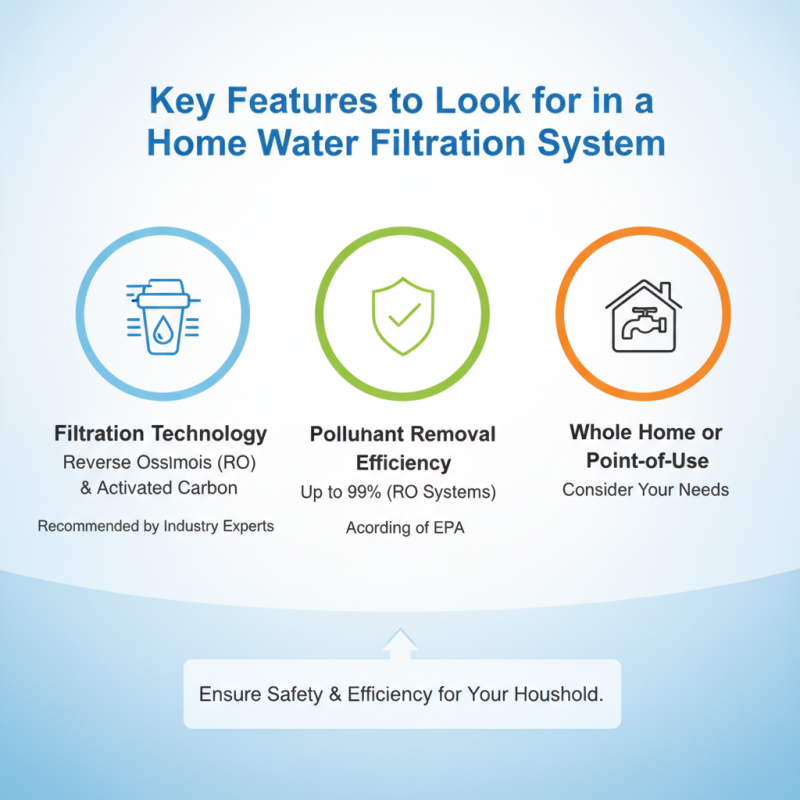
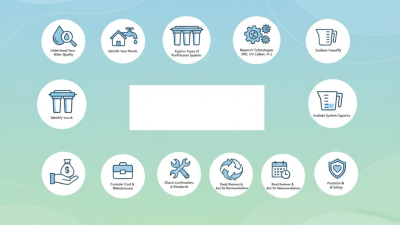
When selecting a home water filtration system, it's crucial to consider key features that ensure safety and efficiency. Start by evaluating the filtration technology used. Systems like reverse osmosis or activated carbon filters are often recommended by industry experts. According to the Environmental Protection Agency, reverse osmosis can remove up to 99% of pollutants, making it a valuable choice for many households.
Next, pay attention to the system's capacity. It's essential to know how much water it can filter per day to meet your family's needs. Many systems vary greatly, with some capable of filtering only a few gallons daily. Additionally, checking the filter replacement frequency is important. A study by the Water Quality Association suggests that regular maintenance can significantly improve a system's longevity and efficiency.
Also, consider certifications. Look for systems certified by NSF International or the Water Quality Association. These certifications verify that the systems meet specific safety and performance standards. While these features are beneficial, not all filters address every contaminant. Reflecting on whether your area's water quality issues are fully resolved by one system might lead to more effective solutions. A multi-barrier approach could be more practical for some households.
Comparing the Cost and Maintenance of Various Filtration Options
When evaluating water filtration systems for home use,
cost and maintenance play crucial roles. A basic pitcher filter may seem cost-effective.
However, the price adds up over time with replacement filters. Consider how often you will need
to change these filters. It may be frustrating to find the ideal balance between upfront costs
and recurring expenses.
More advanced systems, like under-sink filters, often require a higher
initial investment. Yet, they may provide better long-term savings. Evaluate their lifespan
and maintenance needs. Some may require professional installation or periodic servicing.
This can lead to extra costs that are easy to overlook. It’s essential to think about
whether you are comfortable handling these tasks yourself.
Installing a whole-house system can seem overwhelmingly expensive at first. It serves as a
significant upgrade for many. They typically guarantee cleaner water throughout the home.
This option might not always be practical for small spaces or limited budgets. Balancing your
needs with these costs often requires reflection. Prioritize what is essential for your
household's health and budget.
Choosing the Best Water Filtration System for Your Household Needs
When choosing the best water filtration system for your household, several factors come into play. First, assess your water quality. A recent report from the Environmental Protection Agency (EPA) indicates that nearly 60% of U.S. households have water with contaminants. These can include chlorine, lead, and bacteria. Understanding what’s in your water can direct you toward the right filtration solution.
Next, consider the type of filtration system. There are multiple options, including activated carbon filters, reverse osmosis systems, and UV purifiers. Each serves different purposes and varies in effectiveness. For example, activated carbon filters are efficient at removing chlorine and odors but may not eliminate heavy metals. On the other hand, reverse osmosis systems can remove up to 99% of dissolved solids but may waste water. Interestingly, a survey by the Water Quality Association found that 70% of consumers chose systems based solely on convenience, often overlooking filtration effectiveness.
Installation and maintenance matter too. Some systems require professional setup and frequent filter changes, which can be daunting for many homeowners. A report indicated that about 30% of users did not replace filters as recommended. This neglect can lead to poorer water quality. Each household is unique. Tailoring your choice based on specific needs and circumstances is crucial.