2026 Best Water Treatment Systems for Clean Drinking Water?
Access to clean drinking water is a fundamental necessity. Yet, millions still lack this essential resource. According to the World Health Organization, around 2 billion people depend on unsafe drinking water sources. This alarming statistic highlights the urgent need for effective water treatment systems.
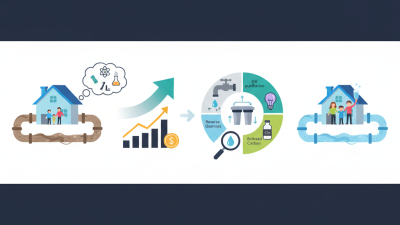
In response to this challenge, various water treatment systems have emerged, offering innovative solutions. Technologies such as reverse osmosis and UV disinfection are now widely accepted. Reports indicate that the global water treatment market is projected to reach $800 billion by 2027. This growth reflects an increasing awareness of water quality issues.
However, not all systems are created equal. Some systems struggle with efficiency and maintenance costs. A recent study found that about 30% of existing systems are underperforming. This poses a critical question: are we truly investing in the best water treatment systems available? Understanding these dynamics will be key as we look toward 2026 and beyond.
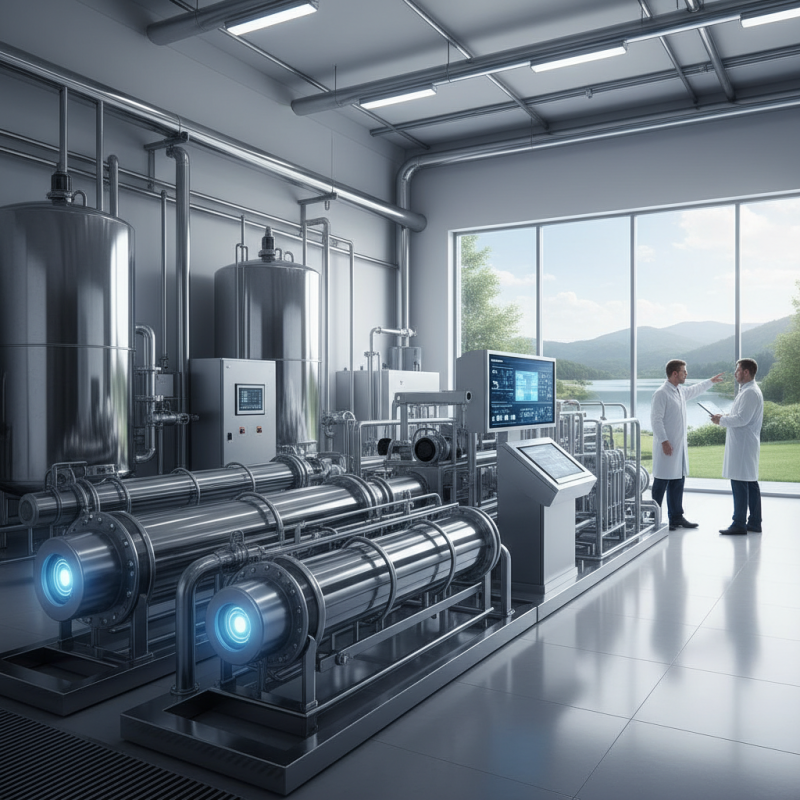
2026 Overview of Water Treatment Technologies: An Industry Perspective
As we look toward 2026, the landscape of water treatment technologies is evolving. Traditional methods are being complemented by innovative solutions that aim to provide safer drinking water. Many systems now focus on sustainability and efficiency. This shift addresses global challenges, like water scarcity and pollution. Advanced filtration techniques, such as membrane systems, play a crucial role. They can remove contaminants effectively, yet their energy consumption raises questions about long-term viability.
Emerging technologies also include ultraviolet (UV) disinfection and solar-powered systems. These methods offer cost-saving benefits while reducing chemical use. However, reliance on solar energy may not be suitable for all regions. There’s a need for balance. Many communities still depend on outdated systems that require upgrades. Awareness of these gaps is crucial for improvement. As investments in research increase, real-world applications must follow suit. What works in a lab may falter in practice, illustrating the necessity for ongoing evaluation.
Sustainability often means prioritizing community needs. Engaging the public is critical to ensure effective implementation. Solutions should not only be high-tech but also accessible. Local preferences and existing infrastructure need consideration for success. The path ahead is promising, yet it is filled with uncertainties.
Key Contaminants in Drinking Water and Effective Treatment Solutions
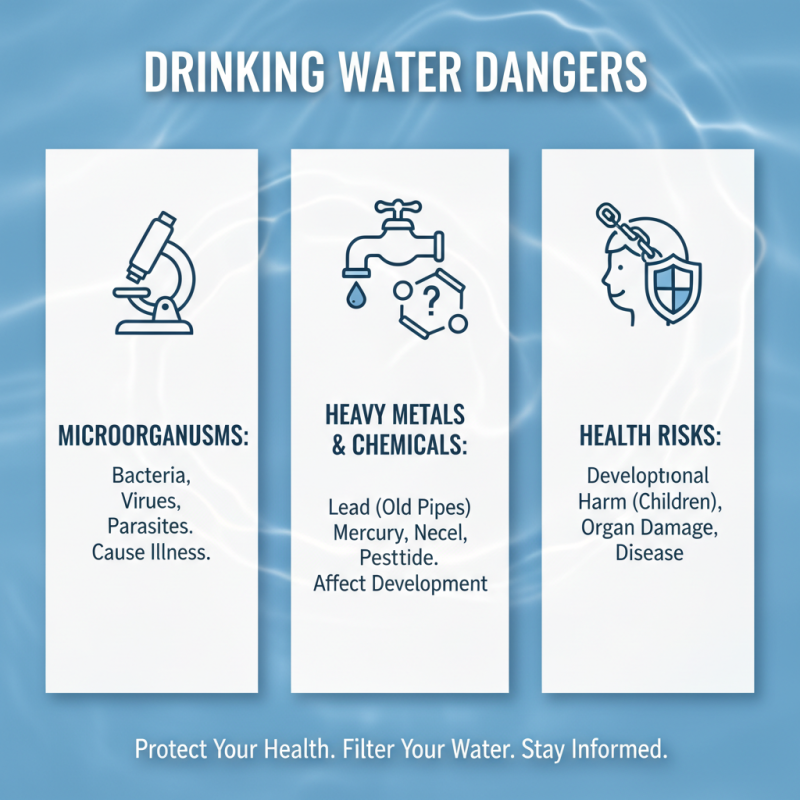
Drinking water is crucial for health. However, various contaminants can compromise its safety. Microorganisms, heavy metals, and chemicals can pose serious risks. For instance, lead from old pipes is a notable concern. Even low levels of lead can affect children’s development. It’s alarming how something as simple as water can hold such dangers.
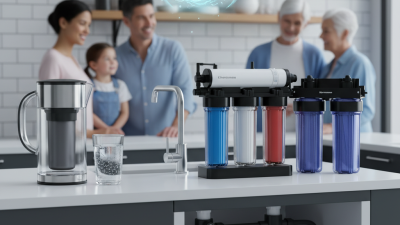
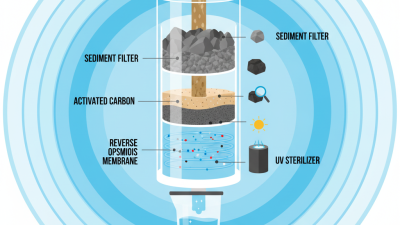
Effective treatment solutions are available. Filtration systems can remove many common pollutants. Activated carbon filters are popular for improving taste and odor. They can reduce harmful chemicals, but they don’t tackle everything. Some contaminants require more specialized treatments like reverse osmosis. This process can eliminate small particles but may waste water in the process. It's a trade-off some might overlook.
Regular testing is essential to ensure water quality. Homeowners often underestimate the importance of monitoring their drinking water. Neglecting this can lead to prolonged exposure to harmful substances. Simple actions like installing a water filter can make a difference. But, without awareness and understanding, these solutions may go unutilized. It's a challenge that needs addressing.
Comparative Analysis of Top Water Treatment Systems: Features and Costs
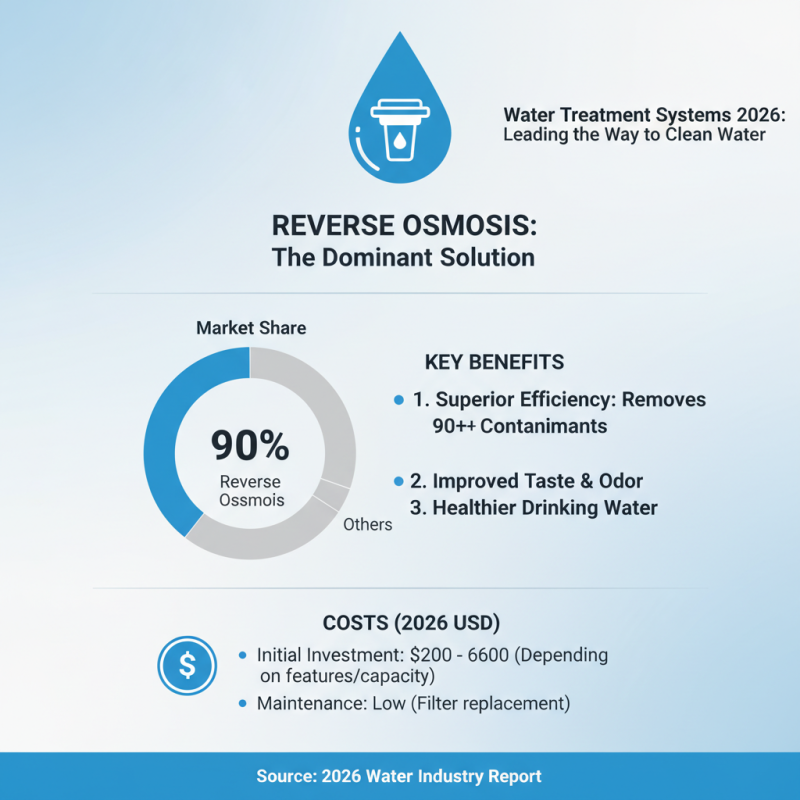
Water treatment systems are essential for ensuring clean drinking water. In 2026, several systems stand out in performance and cost. A recent industry report shows that reverse osmosis systems dominate the market due to their efficiency. These systems can remove 90% or more of harmful contaminants. Their initial costs range from $200 to $600, depending on features and capacity.
UV treatment systems are gaining popularity too. They effectively kill bacteria and viruses without chemicals. According to a 2023 analysis, the average cost for a UV system is around $150 to $400. Users appreciate their eco-friendliness, but maintenance can be an issue. Bulb replacements are necessary every 12 months, which adds to ongoing costs.
Some consumers opt for activated carbon systems. They are user-friendly and remove chlorine and odors effectively. A report indicates prices typically range from $50 to $300. However, they may require frequent filter changes, which can be inconvenient. Each system has distinct benefits and drawbacks that require careful consideration. Not all households will find one solution ideal.
Regulatory Standards for Drinking Water Quality: An Industry Overview
Ensuring clean drinking water is a vital public health concern. Regulatory standards play a key role in maintaining water quality across various regions. According to the Environmental Protection Agency (EPA), up to 90 contaminants can affect drinking water, including heavy metals and harmful microorganisms. This highlights the need for stringent oversight and regular testing.
The Safe Drinking Water Act (SDWA) establishes legal limits for these contaminants. It mandates that public water systems meet set performance levels. However, many smaller systems struggle to comply due to limited resources. A study showed that nearly 10% of these systems violated regulations at least once in the past year. This discrepancy raises questions about access to clean water for all communities.
Moreover, public awareness is often lacking. Many consumers aren't aware that their water quality can vary significantly. Regular testing and transparency are essential for building trust. When communities remain uninformed, they may unknowingly consume unsafe water. The challenge lies not just in regulations, but also in public education and accessible resources for water testing. The journey toward clean drinking water requires ongoing commitment and community involvement.
2026 Best Water Treatment Systems Analysis
This chart illustrates the average removal efficiency of various contaminants by the best water treatment systems, measured in percentage. The systems are evaluated based on their ability to treat common pollutants found in drinking water.
Future Trends in Water Treatment: Innovations to Ensure Safe Drinking Water
In the quest for clean drinking water, innovation is key. New technologies are emerging to address water quality issues around the globe. Smart sensors now monitor water sources in real-time. These devices can detect contaminants quickly. They ensure safety, but they come with a price. Not every region can afford such solutions.
Another trend is the use of advanced filtration systems. These systems employ nanotechnology to remove impurities. They are effective but still require maintenance and power. This raises questions about sustainability. Can we create systems that are both efficient and eco-friendly? Moreover, not every household has access to these systems. Access remains a significant barrier for many communities.
Lastly, public awareness is growing. People are becoming more educated about water quality. They demand better solutions. However, there's a gap between awareness and action. Are governments doing enough to meet this demand? Investment in infrastructure is crucial. But will we see real change soon?
2026 Best Water Treatment Systems for Clean Drinking Water
| System Type |
Technology Used |
Capacity (Liters/Day) |
Maintenance Frequency (Months) |
Typical Cost ($) |
| Reverse Osmosis |
Membrane Filtration |
500 |
12 |
300 |
| UV Purification |
Ultraviolet Light |
1000 |
6 |
200 |
| Distillation |
Heat Evaporation |
300 |
24 |
400 |
| Activated Carbon |
Adsorption |
800 |
12 |
150 |
| Ceramic Filters |
Porous Media |
200 |
18 |
100 |