China Top Faux Wood Wall Panels Manufacturer and Supplier
China’s top Faux Wood Wall Panels manufacturer and supplier should offer more than a convincing grain pattern. Buyers also need clear specifications, consistent quality, and practical guidance for installation. Faux Wood Wall Panels can bring warmth to a room without using solid timber, but appearance alone is not enough. Check the panel’s core, surface finish, dimensions, and recommended fixing method. Ask how it performs in the intended space, especially where humidity or frequent cleaning may matter.
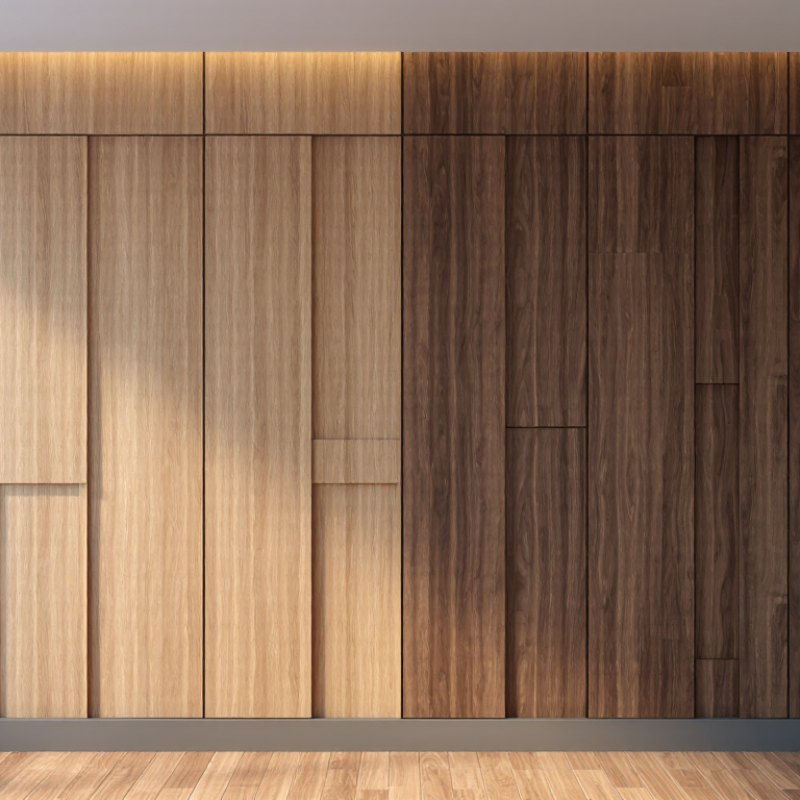
Design reformer William Morris offered a useful principle: “Have nothing in your houses that you do not know to be useful, or believe to be beautiful.” It is not a product specification. Still, it captures a real choice: a wall finish should look right and serve the room. A matte oak effect may suit a quiet bedroom, while a darker walnut pattern can add weight to a reception area. Samples help. View them in daylight and under warm indoor lighting, because color can shift noticeably.
A reliable supplier should explain what its panels can—and cannot—do, and provide installation details that match the product. Compare sample boards with the full specification before ordering. Small differences matter. Grain repetition, edge profiles, and panel thickness can change the finished wall more than a catalog image suggests. No finish is perfect for every project. Even a careful choice may look different once installed, so plan a sample review and confirm site conditions early.
What Faux Wood Wall Panels Are and How They Are Made
Faux wood wall panels are wall coverings designed to suggest the color, grain, and warmth of timber without using solid boards throughout. They may be made from PVC, wood-plastic composite, or other engineered substrates. The exact feel varies: some panels are light and hollow, while others have a denser, more rigid core. Look closely. Printed grain can appear convincing from across a room, yet repeating patterns may become visible up close. Embossed surfaces add texture, but they do not make every panel feel like real wood.
Production depends on the panel material. A common process begins by mixing and shaping the substrate through extrusion or molding. The surface may then receive a printed wood pattern, a laminated decorative film, or a coating. Heat and pressure help bond these layers; rollers or patterned tools can add grooves and grain-like texture. Edges are trimmed to size, and workers check dimensions, surface adhesion, color consistency, and visible defects. Small differences can still occur between batches, so sample panels are useful when matching an existing room. Installation conditions matter too: an uneven wall can make seams stand out, even when the panels are well made.
Key Materials, Designs, and Performance Features
Faux wood wall panels bring timber-like warmth to interiors without the routine care of solid boards. Their performance depends on the core, surface layer, and installation conditions—not appearance alone. Common cores include PVC, wood-plastic composite, and engineered wood. Each suits different spaces. Details matter. PVC and WPC panels may suit humid interiors, while engineered-wood panels are generally better for dry rooms unless product testing confirms otherwise.
Design choices include slim vertical slats, wide planks, and embossed grain patterns. Matte finishes can soften glare, while deeper grooves create stronger shadow lines. Color samples should be checked under the room’s actual lighting; a warm oak tone may look much cooler beside daylight.
Pattern consistency matters, too. Repeated grain can look artificial across a large wall, so reviewing several panels together is useful. For performance, check the panel’s stated moisture tolerance, surface-cleaning guidance, and any tested fire or acoustic ratings. These features vary by construction and should not be assumed from appearance.
A reliable supplier can provide specifications, installation instructions, and sample pieces for comparison. Even then, samples can mislead slightly: a small piece cannot show how seams and grain will read across an entire room.
How to Evaluate a Chinese Manufacturer and Supplier
China Top Faux Wood Wall Panels Manufacturer and Supplier: How to Evaluate a Chinese Manufacturer and Supplier
A reliable evaluation begins with the panel, not the sales presentation. Ask for a current technical data sheet showing core material, thickness, weight, surface finish, and installation method. Then compare those details with samples from different production batches. Look closely at corners, printed grain, edge seals, and color consistency under daylight. Small differences matter once panels cover an entire room. Request independent test reports for relevant fire, moisture, and emissions requirements. Check that each report identifies the tested product and matches the specification being quoted. A certificate alone is not enough.
Manufacturing quality also has a wider context. The UNEP and Global Alliance for Buildings and Construction Global Status Report for Buildings and Construction 2023 estimated that buildings and construction accounted for 37% of global energy- and process-related CO2 emissions in 2022. This makes material composition, service life, and documented sourcing useful questions for buyers. Ask how the supplier tracks batch numbers, handles defects, and protects panels during shipping. Clarify lead times, replacement procedures, and who pays for damaged goods. A factory visit can reveal storage conditions and production controls, but it cannot replace records or testing. I would not assume a polished showroom proves consistent output. Some details are easy to miss. Request written answers, compare them against samples, and keep the approved specification attached to the order.
Manufacturing Standards, Customization, and Quality Control
For a China-based faux wood wall panel manufacturer and supplier, dependable output begins with written production controls. Incoming resin, decorative film, and backing boards should be checked against approved specifications. Teams can record panel thickness, width, surface consistency, and batch numbers before production moves forward. Small checks matter.
Customization should be practical, not just visual. Buyers may request panel lengths, edge profiles, embossing depth, color tones, or specific performance options. A signed sample and drawing help both sides confirm what “oak grain” or “warm walnut” means. Still, screen colors can mislead; review a physical sample under the project’s lighting. Agree on dimensional and color tolerances before mass production.
Quality control should continue after pressing and finishing. Inspect representative panels for scratches, delamination, uneven coating, warped edges, and joint fit. Adhesion or moisture checks can be documented through a consistent sampling plan, with results linked to each batch. Packaging deserves attention, too: corner protectors and dry, stable storage can reduce transit damage. No process removes every variation. Suppliers should explain limits plainly, share inspection records, and investigate recurring defects rather than dismissing them as normal.
Sourcing, Shipping, and Installation Considerations
Sourcing faux wood wall panels starts with the project’s actual conditions, not just a catalogue photo. Ask suppliers for panel dimensions, weight, surface-layer details, fire-test documentation, and installation instructions. Request samples from the intended production batch; color and texture can vary slightly between batches. Check whether the panels suit the room’s humidity and wall substrate. Small details matter. A sample still cannot show every production variation, so confirm tolerances in writing.
Shipping needs early planning. The UN Trade and Development report Review of Maritime Transport 2024 states that over 80% of world trade by volume moves by sea. For panel orders, confirm carton dimensions, gross weight, pallet count, and the loading plan before booking freight. Moisture-resistant wrapping and protected corners help reduce transit damage. Leave time for inspection on arrival. A delayed inspection can make replacement panels awkward to arrange.
Installation depends on the panel material and the condition of the wall. Check that the substrate is dry, clean, and reasonably flat; uneven walls can leave visible gaps. Follow the supplier’s guidance on acclimation, adhesive, mechanical fasteners, and expansion clearance. Measure twice, then test-cut one panel. The US EPA estimated that construction and demolition activities generated 600 million tons of debris in 2018. Careful layout can limit offcuts, though real rooms rarely match a perfect plan.
China Faux Wood Wall Panels: Freight Planning Ranges
Indicative international freight transit times from China, in days. Ranges are for planning only; routes, schedules, customs clearance, and handling can change actual delivery times.
Confirm the shipping route and delivery terms with your supplier before ordering. Allow additional time for production, export packing, customs, and final delivery, and coordinate installation with the panels’ arrival and site readiness.