China Best 430 Stainless Steel Strip Supplier?
Choosing the China best 430 Stainless Steel Strip supplier requires more than comparing prices. Buyers need stable chemistry, consistent thickness, clean edges, and dependable delivery. In practical production, a strip may pass inspection yet fail during stamping because its temper is unsuitable. That detail matters.
A reliable supplier should explain its manufacturing process clearly. Ask about melting sources, cold rolling, annealing, slitting, surface finishing, and packing. Useful documentation includes mill test certificates, dimensional reports, heat numbers, and inspection records. Traceability should continue from the coil to the final shipment. It builds confidence.
Experience also matters. An established manufacturer can recommend suitable widths, thickness tolerances, hardness levels, and surface finishes for kitchen equipment, automotive parts, medical tools, or electrical components. However, experience alone proves little. Samples, test data, and consistent communication provide stronger evidence.
Look closely.
A professional supplier should welcome questions about ASTM, EN, or other applicable specifications. It should also clarify whether its stated tolerances reflect actual production capability or only catalogue ranges. This distinction is easy to miss. It can affect forming performance, waste, and total cost.
The best supplier may not be the cheapest one. It should balance material quality, production control, inspection discipline, packaging, and after-sales support. Buyers should review recent samples and confirm requirements before placing a large order. Even careful evaluations have limits, and supplier performance may change over time. Regular audits remain sensible.
This guide examines how to evaluate Chinese manufacturers of 430 Stainless Steel Strip. It focuses on practical evidence, not promotional claims.
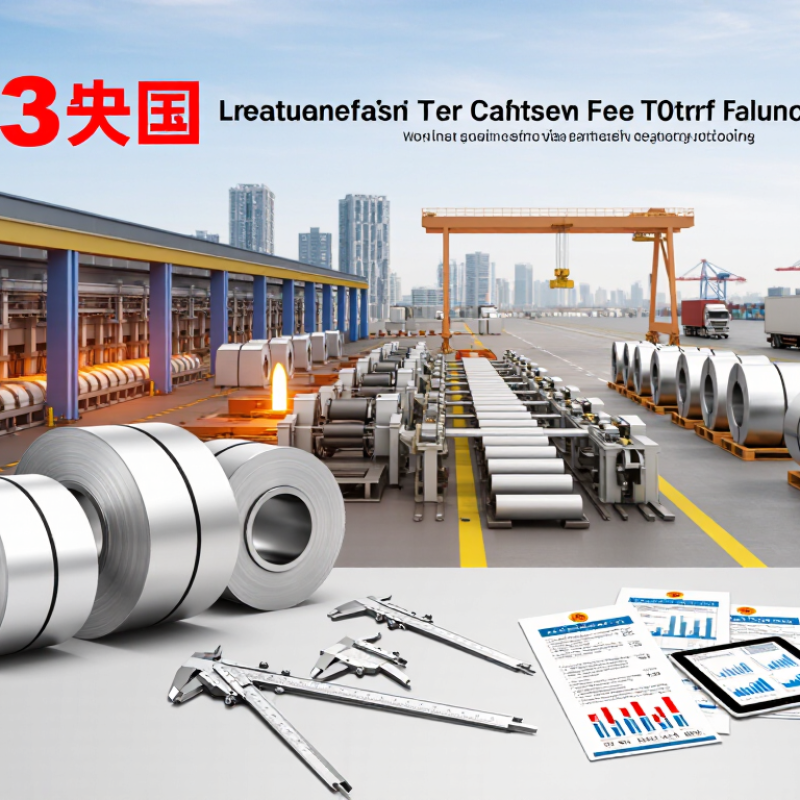
What Is 430 Stainless Steel Strip?
430 stainless steel strip is a ferritic stainless steel containing about 16–18% chromium and very little carbon. ASTM A240/A240M chemistry limits support its typical corrosion resistance, magnetic response, and practical heat tolerance. Unlike austenitic grades, 430 strip is normally attracted to a magnet.
Its surface often appears bright, brushed, or lightly reflective after cold rolling and finishing. This makes it useful for appliance panels, kitchen equipment, trim, exhaust components, and indoor architectural details. World Stainless reported approximately 58.4 million tonnes of crude stainless steel production in 2023, showing the scale of the market, but that figure covers every stainless family, not 430 alone.
430 offers lower material cost than many nickel-bearing grades. However, that advantage can mislead buyers. Its formability is moderate, and deep drawing may produce cracking if tooling, edge quality, or annealing is poorly controlled. Chloride-rich environments can also expose staining sooner than expected. A supplier should provide chemical analysis, thickness tolerance, hardness, surface finish, and mill test documentation. I would also check coil shape and slitting burrs before production; small edge defects can become large failures during stamping. The common assumption that “magnetic means strong” is incomplete. Magnetic behavior identifies its ferritic structure, not its total performance. Temperature, cleaning chemicals, and forming direction still matter.
| Category | Specification | Typical or Standard Information |
|---|---|---|
| Material Overview | Material designation | 430 stainless steel strip; a ferritic chromium stainless steel grade. |
| Material Overview | UNS designation | UNS S43000. |
| Material Overview | European designation | EN 1.4016 / X6Cr17. |
| Material Overview | Japanese designation | JIS SUS430. |
| Chemical Composition | Chromium (Cr) | 16.00–18.00% by mass, according to common ASTM Type 430 chemistry requirements. |
| Chemical Composition | Carbon (C) | Maximum 0.12% by mass. |
| Chemical Composition | Manganese (Mn) | Maximum 1.00% by mass. |
| Chemical Composition | Silicon (Si) | Maximum 1.00% by mass. |
| Chemical Composition | Phosphorus (P) | Maximum 0.040% by mass. |
| Chemical Composition | Sulfur (S) | Maximum 0.030% by mass. |
| Chemical Composition | Iron (Fe) | Balance of the composition. |
| Mechanical Properties | Tensile strength | Minimum approximately 450 MPa for annealed material under common ASTM A240 requirements. |
| Mechanical Properties | Yield strength | Minimum approximately 205 MPa at 0.2% offset for annealed material under common ASTM A240 requirements. |
| Mechanical Properties | Elongation | Minimum approximately 22% in 50 mm for annealed material under common ASTM A240 requirements. |
| Physical Properties | Density | Approximately 7.70 g/cm³. |
| Physical Properties | Melting range | Approximately 1,425–1,510°C. |
| Physical Properties | Magnetic behavior | Magnetic in both annealed and cold-worked conditions because of its ferritic structure. |
| Physical Properties | Thermal conductivity | Approximately 26 W/m·K at 100°C; values vary with temperature and product condition. |
| Corrosion Resistance | General performance | Good resistance to atmospheric corrosion and oxidation in mild environments. |
| Corrosion Resistance | Environmental limitation | Less resistant than 304 stainless steel in chloride-containing, marine, acidic, or highly humid environments. |
| Heat Resistance | Service suitability | Suitable for moderate-temperature applications, but prolonged exposure at elevated temperatures may affect oxidation resistance and mechanical performance. |
| Formability | Cold forming | Moderate formability; generally suitable for bending and simple forming, but less formable than austenitic grades such as 304. |
| Weldability | Welding characteristics | Can be welded using common stainless steel processes, although grain growth and reduced ductility in the heat-affected zone may require process control. |
| Surface Finishes | Common finishes | 2B, BA, No. 3, No. 4, brushed, and polished finishes, subject to the applicable product specification. |
| Applicable Standards | ASTM standards | ASTM A240 for stainless steel plate, sheet, and strip; ASTM A480 for general requirements and dimensional tolerances. |
| Applicable Standards | European standard | EN 10088-2 for stainless steel flat products for general purposes. |
| Typical Applications | Automotive components | Decorative trim, exhaust-related components, and selected interior or low-corrosion automotive parts. |
| Typical Applications | Appliances and kitchen equipment | Appliance panels, sinks, cookware components, shelving, and kitchen equipment used in mild environments. |
| Typical Applications | Industrial components | Fasteners, brackets, reflectors, architectural trim, and fabricated parts requiring magnetic stainless steel. |
| Selection Considerations | Advantages | Cost-effective chromium stainless steel, magnetic, resistant to mild atmospheric corrosion, and available in multiple strip thicknesses and surface finishes. |
| Selection Considerations | Limitations | Not recommended as a direct substitute for higher-alloy grades where strong chloride resistance, high formability, or severe chemical resistance is required. |
| Quality Documentation | Recommended inspection data | Request a material test certificate showing chemical composition, mechanical properties, dimensions, surface condition, heat number, and the governing standard. |