Choosing the best Safety Guard Gate from China is not just a price comparison. The right gate must match the opening, the equipment, and the way people move through the work area. A few millimeters can matter: measure the clear opening, mounting surface, and swing path before requesting a quote. Then check the frame material, weld quality, hinge design, latch, and finish. Ask for close-up photos, drawings, and a sample when practical. Details matter.
Former OSHA administrator and occupational-health researcher Dr. David Michaels is known for emphasizing hazard prevention. A practical paraphrase of that principle is: “Control the hazard before relying on worker behavior.” Apply it when reviewing gate designs. Look for a gate that closes reliably, resists the expected impacts, and works with the machine’s access and stopping arrangements. Do not assume that a low price, polished catalog, or supplier certificate proves suitability. Request test records and clarify what each document covers.
A careful China supplier review should include factory experience, material specifications, production checks, packaging, lead time, and after-sales support. Confirm dimensions and finish in writing. Ask who inspects the gate before shipment, and how defects are handled. If a drawing looks unclear, pause and request a revision. It can feel inconvenient. It is cheaper than correcting a gate that arrives too wide, binds at the hinge, or leaves an unsafe gap. This guide explains how to compare suppliers and verify the details that matter before placing an order.
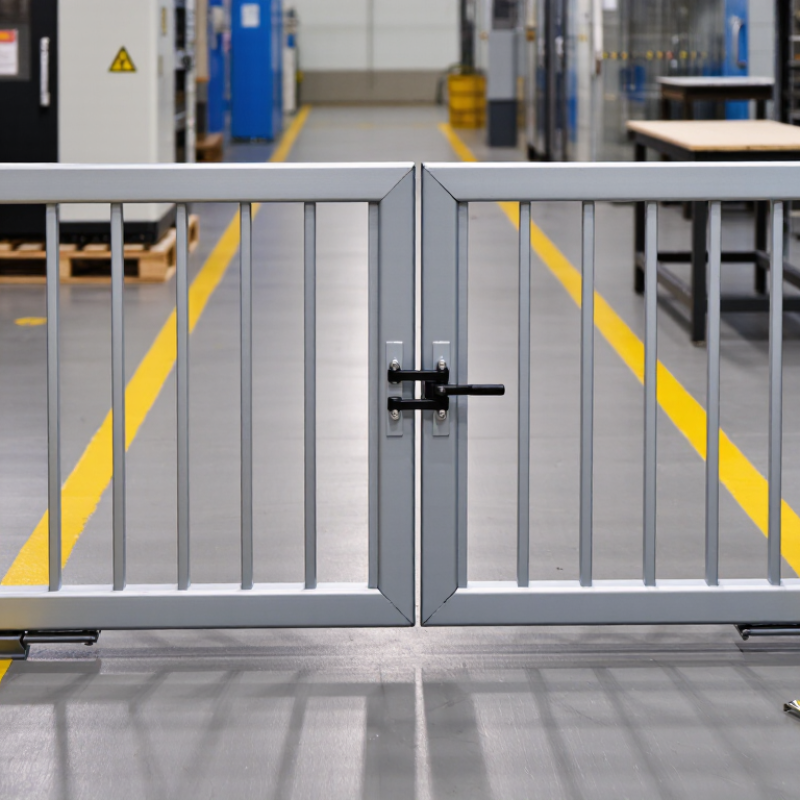
Safety guard gates create controlled access to hazardous or restricted work areas. The right type depends on how people and materials move through the opening. Swing gates suit walkways and maintenance access, where there is room for the panel to open. Sliding gates work better in narrow aisles. Lift-up gates can serve loading points, but operators need clear space above them.
Mesh-panel gates provide visibility around conveyors and automated equipment. Solid panels may help contain splashes or small flying debris, when designed for that purpose. For robot cells, a gate may be part of a larger guarded enclosure, so its interlocking and access arrangement should match the equipment’s risk assessment. Details matter. A gate that looks suitable in a drawing may be awkward beside a real machine.
Tips: Before sourcing from China, share opening dimensions, mounting details, operating frequency, and site conditions. Ask for drawings, material and finish specifications, and clear information about replacement parts. Check how the gate behaves during routine access—not only during installation. Small gaps matter. And the best choice may not be obvious until operators try it.
Before comparing safety guard gates from China, define the hazards and people in each work area. Walk the route operators actually use, not just the path shown on a floor plan. Note nearby machines, moving loads, wet floors, and narrow passages. A busy loading bay has different needs from a quiet inspection station. Small details matter.
Describe what the gate must prevent and how workers will use it. For a machine enclosure, record the required opening direction, access frequency, and safe distance from moving parts. If staff carry tools or materials through the opening, check the clear width and height with those items in hand. Do not guess. Also specify whether the gate needs to close automatically, and how its condition will be checked during routine maintenance. Confirm that the design can meet applicable local safety requirements.
Put these details into a simple written specification, with measurements, site photos, and the expected operating conditions. Ask suppliers for drawings, material information, and relevant test or inspection records. The first draft is rarely complete; a shift change or a new cart can reveal an overlooked access point. Revisit the list with workers who use the area every day.
| Facility Requirement | Information to Define | Practical Selection Guidance | What to Confirm with the Supplier |
|---|---|---|---|
| Hazard being controlled | Identify hazards such as moving machinery, robot cells, conveyors, vehicle routes, or elevated platforms. | Choose a gate and guarding arrangement that prevents access to the hazard during operation. A gate alone may not provide adequate protection if openings or reach-over access remain. | Request drawings showing the gate within the complete guarded area, including adjacent fencing, openings, and access points. |
| Required safety function | Determine whether the gate is a physical barrier, an interlocked access point, or part of a controlled entry system. | Where access must stop or prevent hazardous motion, assess whether a safety-rated interlock and suitable machine control are required. The required performance level depends on the machine risk assessment. | Confirm the proposed interlock type, actuator arrangement, locking function if needed, and compatibility with the machine’s safety control system. |
| Opening size and access route | Record clear opening width and height, approach direction, operator access needs, and any materials moved through the opening. | Size the opening for the actual task and load while avoiding unnecessary gaps. Check that the gate does not obstruct walkways or create pinch points when opened. | Request dimensioned drawings and confirm clear opening dimensions after installation, not just the overall gate size. |
| Opening direction and movement | Specify whether the gate should swing, slide, or lift, and note available clearance and nearby equipment. | Select a movement type that suits the space and traffic flow. Consider door stops, hinges or tracks, closing behavior, and safe access during maintenance. | Confirm the opening direction, mounting method, travel limits, and whether the gate can be secured or monitored in the required position. |
| People and traffic flow | Estimate how often the gate is used and whether pedestrians, carts, forklifts, or production materials pass through. | Frequent access may require a design that is easy to operate and durable under repeated cycles. Separate pedestrian access from vehicle traffic where the layout and risk assessment call for it. | Ask for the rated operating-cycle information, suitable hardware, and any recommended inspection or maintenance intervals. |
| Installation environment | Note indoor or outdoor use, temperature range, moisture, dust, washdown, chemicals, and corrosive exposure. | Choose materials and finishes suited to the environment. Stainless steel may be appropriate for some washdown or corrosive settings; coated steel may suit many dry indoor applications. | Confirm material grade, coating or finish, corrosion resistance, and the environmental limits of electrical components. |
| Mounting surface and structure | Identify whether the gate attaches to a machine frame, floor, wall, or modular guarding system, and verify the supporting structure. | Mounting points must withstand expected use and loads. Check floor level, fixing type, edge distances, and whether the existing structure is suitable. | Provide site measurements and request mounting details, fixing recommendations, and installation tolerances. |
| Applicable safety requirements | Identify the destination market, applicable regulations, machine standards, and the facility’s risk-assessment requirements. | Requirements vary by application and jurisdiction. For example, machinery guarding and interlocking are addressed by standards such as ISO 14120 and ISO 14119; confirm which editions and local rules apply. | Request relevant technical documentation and declarations, and have the final machine installation assessed by a qualified safety professional. |
| Verification before purchase | Define required drawings, samples, inspection records, functional tests, and acceptance criteria. | Check dimensions, operation, guard gaps, latching, interlock function, and finish against the approved specification before shipment and after installation. | Agree on inspection points, test methods, documentation, packaging, and how design changes will be approved. |
Note: Select a guard gate as part of the facility’s overall risk-reduction system. Final design, installation, and validation should be based on the machine risk assessment and applicable local requirements.
When sourcing a safety guard gate from China, compare materials against the site conditions, not just the quoted price. Powder-coated steel can suit frequent use and resist everyday impacts, but damaged coating may expose the metal to corrosion. Aluminum is lighter and easier to handle, though its feel and rigidity depend on the design and construction. Stainless steel may suit damp or washdown areas, but it can raise cost without adding value in every setting. Details matter.
Gate design affects how people move around equipment. A swing gate needs enough clearance and a hinge arrangement that does not create a pinch point. Sliding designs save swing space, but their tracks need room and regular cleaning. Check that the opening direction fits the workflow, and examine latch position, edge gaps, and floor clearance. Self-closing hinges can help keep access points shut. For hazardous areas, an interlock may be appropriate, but only when it matches the machine and the risk assessment.
Ask suppliers for dimensioned drawings, material specifications, mounting details, and relevant test records. Confirm the gate fits the actual opening, including posts, uneven floors, and nearby cables. A polished catalog is not enough. I would also check replacement-part availability and how the latch feels during repeated operation; a gate can look robust yet become awkward in daily use. There is no perfect choice, and a lighter gate may be easier to use but less reassuring in a high-impact location. Revisit that trade-off with the people who use the equipment.
When assessing a Chinese safety-gate manufacturer, inspect the production process, not just the catalogue. Ask for material certificates, weld procedures, coating records, and batch traceability. Request drawings and test results for the exact gate model, including latch operation, opening force, and anchorage. For machinery applications, check relevant editions of ISO 14120, ISO 14119, and ISO 13857. Their applicability depends on the risk assessment and gate design.
ISO’s 2022 Survey recorded more than 1.26 million ISO 9001 certificates worldwide. That is useful context, not proof of product performance. Confirm that a certificate covers the actual factory and production scope. The U.S. Bureau of Labor Statistics counted 5,283 fatal work injuries in 2023; this figure is not gate-specific, but it shows why guarding evidence matters. Ask whether test records identify the sample, method, and date. Paperwork can still leave blind spots. I would not treat a polished audit as the final answer; a site visit or independent inspection may reveal gaps between documented procedures and daily practice.
Choosing the best safety guard gate from China starts with the hazard, not the catalog photo. Identify the access point, traffic direction, and task performed behind the gate. Measure the opening, mounting surface, and available swing or sliding clearance. A five-millimeter mismatch can matter. Check the required gate height, mesh or panel gaps, latch position, and whether an interlock is needed. The U.S. Bureau of Labor Statistics recorded 2.6 million nonfatal workplace injury and illness cases in private industry in 2023, or 2.4 cases per 100 full-time equivalent workers. This figure, from its 2023 Survey of Occupational Injuries and Illnesses, is a reminder to assess actual exposure rather than buy by appearance alone.
Installation details should be agreed before shipment. Ask for dimensioned drawings, anchor locations, installation instructions, and confirmation of the floor or frame material. A gate that fits the drawing but blocks a pallet route is still a poor choice. Check that the latch remains reachable and that the gate closes reliably after repeated cycles. Local safety requirements vary, so have a qualified site professional verify the design against applicable rules; a supplier’s certificate does not replace that review. Support matters, too. Confirm spare-part availability, drawing revisions, response times, and whether remote installation guidance is included. These details are easy to overlook when comparing quotations. I would also ask what happens if the opening measurements change after production starts; the answer may expose a gap in the supplier’s process.
Build your system. Protect your boat. Join the movement.