A Salt Block Hydraulic Press may look simple, but choosing one involves more than comparing pressure ratings. The press must suit the blocks you actually make, including their dimensions, density, and expected production volume. A frame that flexes under load or a platen that is too small can cause uneven results. Small details matter. Control placement, guarding, and access for routine cleaning also affect daily work.
This guide outlines seven practical points to check before choosing a machine. It covers pressing force, frame construction, platen size, hydraulic controls, operating speed, maintenance access, and supplier support. Ask for documented specifications, and compare them with your own process rather than relying on a headline capacity. If possible, review a demonstration using a similar salt mixture and block size. Results can vary with moisture, particle size, and the mold, so one successful sample is not a guarantee. That part is easy to overlook. A careful buyer should also confirm how pressure is adjusted and what routine service the system requires. These checks will not remove every uncertainty, but they can help you avoid a press that is powerful on paper and awkward in practice.
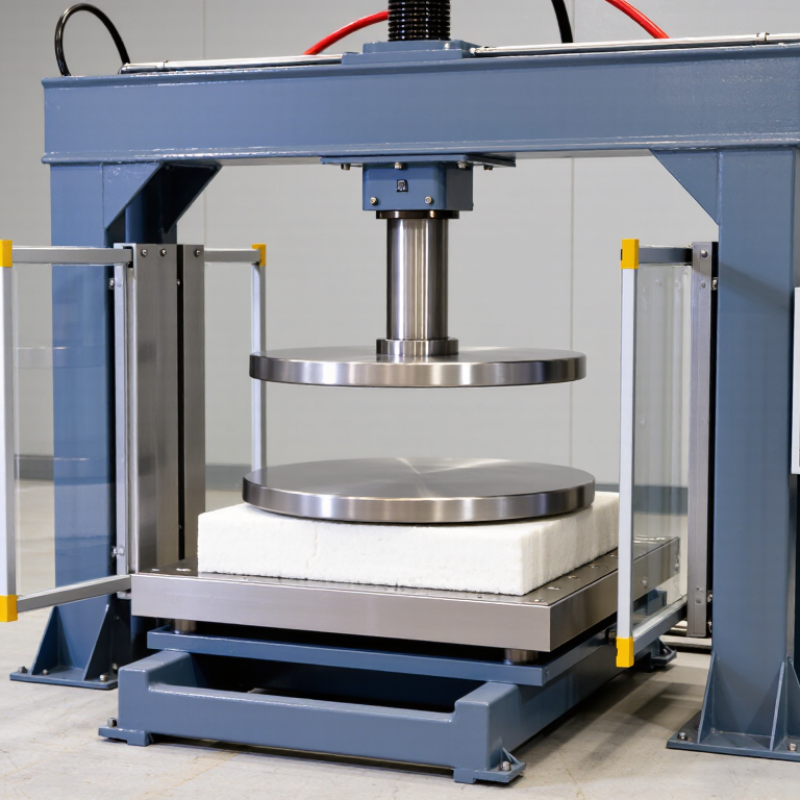
Before comparing presses, define the block’s finished length, width, thickness, and weight. A 100 mm block and a 250 mm block place very different demands on the die, feeding system, and frame clearance. Measure several samples, not just one. Salt granules and moisture can vary between batches, so allow room for adjustment. The USGS Mineral Commodity Summaries 2024 estimated global salt production at 270 million metric tons in 2023. That figure describes a vast raw-material market, not your plant’s required output; size the press around actual orders and schedules.
Translate demand into a production rate. Divide the required daily quantity by planned operating hours, then account for blocks per cycle, cycle time, and expected rejects. For example, a press making four blocks every 30 seconds has a theoretical rate of 480 blocks per hour. Real output will be lower when loading, cleaning, and changeovers are included. Plan for those pauses. They are easy to underestimate.
Match press force and platen area to the block dimensions and the material’s compaction needs. Ask for test data using your own salt blend, target density, and moisture range; a catalogue rating alone cannot predict finished-block quality. Check die-change time, hopper capacity, and space for safe handling. I would recheck the output calculation after a production trial, too. Real batches can surprise you.
Choosing a salt block hydraulic press starts with the material, not the largest force rating. Salt crystals vary in size, moisture, and binder content, so identical settings can produce different blocks. Estimate the force needed for your die area, then confirm the press can deliver it consistently.
Hydraulic pressure and pressing force are related, but they are not interchangeable; die area matters.
Not always.
Pushing harder may crack edges, create uneven density, or overload tooling instead of improving strength. Dry, free-flowing salt may need a different pressure profile than a damp, fine-grained blend.
Look for a readable pressure gauge and adjustable pressure controls, plus a repeatable way to set stroke and dwell time. Begin with conservative settings and make small changes while checking block dimensions, surface cracks, and handling strength.
Record each batch’s moisture, particle size, force, and hold time; otherwise, a good result is hard to reproduce. Follow the press’s rated limits and tooling guidance, and keep guards in place during trials.
One detail is easy to miss: a pressure reading alone does not prove uniform compaction across a wide die.
Inspect blocks from several positions. A small trial can reveal more than a confident guess.
A salt block hydraulic press handles repeated, concentrated loads, so frame strength deserves more than a quick visual check. Inspect welds for consistent beads and look for distorted uprights or gaps near joints. Ask for the rated working load and a drawing that shows how force travels from the cylinder to the bed. Numbers matter. A heavy frame can still flex if its crossmembers are poorly placed or its base is too narrow.
Platen design affects pressure distribution and block consistency. Check that the upper and lower platens remain parallel across their full faces; a feeler gauge can help reveal uneven gaps. Their surfaces should be flat, well supported, and sized for the intended mold, with room for safe loading. Consider replaceable wear plates if salt residue may cause abrasion. Small details count. A polished surface alone does not guarantee even compression; alignment and support matter more.
Build quality also shows in less obvious parts: cylinder mounts, pins, hose routing, guards, and service access. Look for secure fasteners, protected hydraulic lines, and clear inspection instructions. Ask how the press is tested under load and how often seals and fluid need attention. If possible, observe a slow cycle and watch for platen drift or listen for knocking. A neat finish proves little, so have a qualified technician verify critical checks before purchase.
Evaluate frame strength, platen design, and overall build quality.
Suggested comparison weights add up to 100 points. Give the greatest attention to frame strength and platen design, then compare pressure control, construction, safety features, serviceability, and footprint. These are buyer-priority guidelines, not measured industry statistics.
When choosing a salt block hydraulic press, inspect the safety system at the machine, not just its brochure. Look for fixed guards around pinch points, an accessible emergency stop, and interlocks that halt motion when a guard opens. Test the controls with the operator standing in the normal working position. They should be clear, responsive, and difficult to activate accidentally. The U.S. Bureau of Labor Statistics recorded 5,283 fatal work injuries in 2023; that figure covers all industries, but it underlines why hazard controls deserve close attention.
Check whether pressure, stroke, and cycle settings are visible and adjustable without reaching into the work area. Useful displays show faults plainly, rather than relying on small warning lights. Ask how the press behaves after a power interruption, and whether restart requires a deliberate operator action. A touchscreen can look impressive. It is not a safety feature by itself. In practice, controls that are easy to understand may matter more than a long list of options.
Automation can reduce repetitive handling, but only when loading and unloading are guarded and the operator can stop the cycle quickly. The International Federation of Robotics reported about 4.28 million industrial robots in operation worldwide in 2023, up 10 percent from 2022. That growth shows wider adoption, not guaranteed safety. Request a live demonstration using the intended block size and workflow. Watch where hands go during setup. I would also ask for maintenance instructions; this is easy to overlook, and it can make a good system harder to use safely.
7 Tips for Choosing a Salt Block Hydraulic Press?
Compare Maintenance Needs, Supplier Support, and Total Cost of Ownership
A press price is only one part of the decision. Check how often the hydraulic fluid, filters, seals, and hoses need inspection or replacement. Ask whether routine service can be completed with standard tools, and whether key components are easy to reach. Salt dust and damp production areas can make cleaning and corrosion protection especially important. Small details matter.
Ask suppliers for a maintenance schedule, parts list, and realistic lead times for common wear items. Confirm what training, installation guidance, and troubleshooting support are available after delivery. A quick answer during commissioning can prevent a minor setup issue from becoming a day of lost production. Get support terms in writing, not just in a sales conversation.
Estimate total ownership costs across the expected service life. Include electricity, planned maintenance, replacement parts, operator time, installation, and likely downtime. Compare these costs using the same production rate and operating hours for each press. A cheaper machine may need more frequent service; a higher-priced one may not pay back if your line runs only occasionally. The calculation is imperfect, and forecasts can miss real-world delays. Still, a simple cost sheet is more useful than judging by purchase price alone.
Build your system. Protect your boat. Join the movement.