Choosing a Steel Pipe Making Machine in 2026 means matching equipment to the pipe you actually plan to sell. Diameter range, wall thickness, steel grade, and production volume all matter. So do floor space, operator skills, and the time required to change rolls. A fast line can still disappoint if setup takes too long or finished pipes need frequent correction.
The World Steel Association’s October 2024 Short Range Outlook projected global steel demand at 1.75 billion tonnes in 2024 and 1.77 billion tonnes in 2025. These figures describe steel demand, not pipe-machine sales, but they signal why manufacturers should assess capacity carefully. Ask suppliers for production data on comparable materials and sizes. Check weld consistency, forming accuracy, changeover time, energy use, and service support. Request a witnessed trial, if possible. Small details matter.
W. Edwards Deming, a recognized manufacturing quality expert, wrote, “It is not enough to do your best; you must know what to do, and then do your best.” That principle applies to machine selection: define measurable requirements before comparing quotations. This guide examines the practical checks that help buyers judge a Steel Pipe Making Machine—from forming and welding performance to automation, maintenance, and total operating cost. Not every plant needs the most automated line. The right choice depends on verified production needs, not impressive specifications alone.
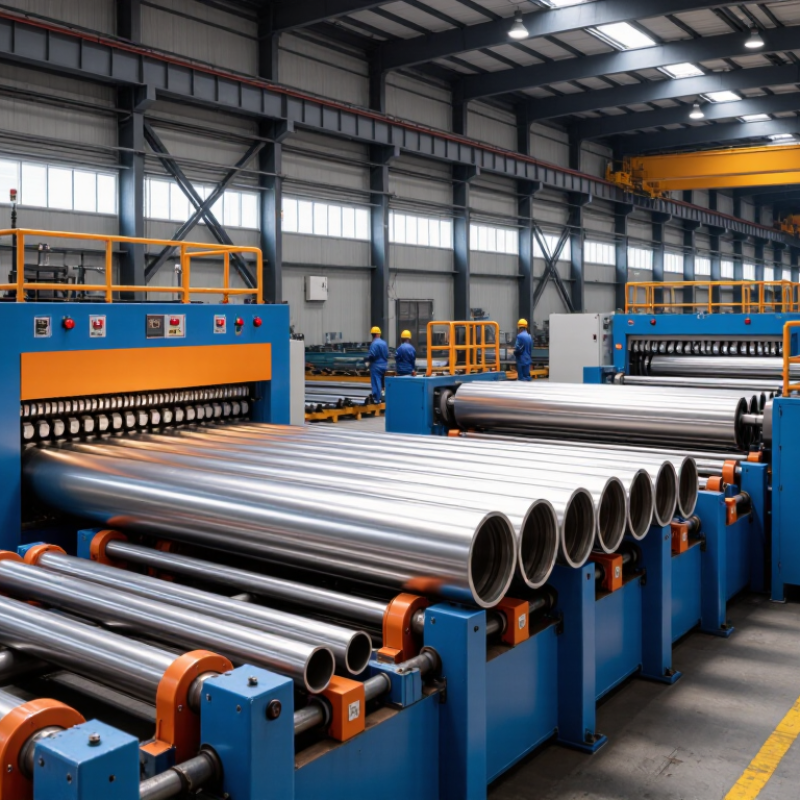
Start with the pipe. Round, square, and rectangular products use different forming and sizing setups. List the required outside dimensions, wall thicknesses, steel grades, and tolerance ranges. A line built for one narrow size range may struggle with frequent product changes. Check the changeover process, not just the machine’s maximum capacity.
Estimate realistic production volume by shift and by year. Compare expected demand with usable output, allowing time for setup, maintenance, and coil changes. A high rated speed looks impressive, but it does not guarantee steady production. Forecasts are rarely exact. Leave room for demand changes, but avoid paying for capacity that will sit idle.
Define quality in measurable terms: dimensional accuracy, straightness, weld consistency, and surface condition. Ask how the line controls forming, welding, sizing, and cut-off, and what inspections are available during production. Match these checks to the customer’s specifications. Quality depends on more than equipment; incoming material, tooling, and operator training matter too. One detail is easy to overlook: a machine may meet a target on a sample run, yet need adjustment during longer shifts. Verify performance with representative materials and product sizes before making a final decision.
A steel pipe machine should match the pipe size, material, and production target. ERW lines form strip through successive rolls, then weld the edges. They suit steady production of common pipe sizes. Spiral forming shapes a continuous strip into larger-diameter pipe, while UOE systems press plate through several forming stages. These routes differ in tooling, floor space, and changeover time. Seamless pipe equipment uses a different process, typically piercing and rolling a heated billet. It avoids a welded seam but involves distinct equipment and operating demands.
Compare forming methods against your actual product range, not just the machine’s maximum capacity. Check diameter and wall-thickness ranges, steel grades, speed, and achievable tolerances. Ask how long a size change takes, and what tooling must be replaced. Inspect weld monitoring, sizing stands, and cut-off accuracy; a fast line can still create scrap if these steps drift. I still find changeover time easy to underestimate. Request sample production data for pipe sizes close to your everyday orders, and verify that measurements are documented.
Tips: Bring drawings and target tolerances to supplier discussions. Ask to see a trial run, including weld inspection and final measurement. Confirm operator training and spare-part availability. A neat machine layout helps, but it cannot compensate for a process that does not fit your products.
Typical commercial pipe outside-diameter ranges by manufacturing process
ERW is commonly used for smaller-to-medium diameters; LSAW and SSAW processes serve larger diameters. Seamless pipe is made by piercing and rolling a solid billet rather than forming and welding strip. Ranges shown are indicative commercial ranges, not fixed machine limits; actual capabilities vary by mill, product specification, and wall thickness.
Start with the pipe range your customers actually need, not the largest capacity in a brochure. Record target diameters, wall thicknesses, steel grades, and expected shifts per week. A line rated for high output may struggle with frequent size changes or inconsistent incoming strip. Compare its usable speed with your real production mix. Numbers can mislead.
Automation should reduce handling and variation without making routine adjustments difficult. Check how operators load coils, set roll positions, monitor welding, and respond to alarms. Ask how long a size change takes, and whether one operator can safely manage the line. More automation is not always better. Consider training time, maintenance skills, and access to replacement controls.
Review technical specifications against your products: forming range, welding method, cutting accuracy, line speed, and stated tolerances. Confirm which steel grades and thicknesses have been tested, and request sample pipes from a comparable setup. Inspect weld consistency, straightness, and cut ends under normal operating conditions. Test cuts matter. Also measure the floor space, power supply, and material flow required; these details are easy to overlook during a machine demonstration. A written acceptance plan can clarify performance targets, though it may not capture every production problem.
How to Choose a Steel Pipe Making Machine in 2026?
Evaluate Suppliers, Total Cost, Service, and Compliance
A machine’s advertised speed tells only part of the story. Ask suppliers for trial-run data using material grades and pipe sizes close to your production plan. Check weld consistency, changeover time, scrap rates, and the operator skills required. Request references from plants with similar output needs, and speak with the people who actually run the equipment. Details matter.
Compare the total cost, not just the purchase price. Include tooling, installation, training, energy use, maintenance, and likely downtime. Ask which wear parts need regular replacement and how quickly they can be delivered. A lower quote may become expensive if a critical roller takes weeks to arrive. Build a simple cost estimate over several years, but treat projections as estimates, not promises.
Service quality deserves specific questions. Who handles commissioning? Is remote troubleshooting available, and what response time is stated in writing? Confirm that manuals, electrical drawings, and training materials match the delivered machine. Check applicable safety and technical requirements in the country where it will operate, and request relevant conformity documents before signing. I would still leave room for doubt: a polished demonstration cannot reproduce every production shift or material variation. Ask for acceptance tests with clear, measurable criteria.
Use this weighted scorecard to compare proposals on the same basis. Weights are suggested buyer-assigned priorities, not industry standards; adjust them to suit your product, market, and project.
| Evaluation Dimension | Weight | What to Evaluate | Evidence to Request or Verify | Score (1–5) | Weighted Points |
|---|---|---|---|---|---|
| Technical fit and product range | 15% | Confirm the proposed line covers your required pipe outside diameters, wall thicknesses, steel grades, lengths, and end-finishing needs. Check tooling and change parts for each product size. | Written product-range matrix; machine layout; tooling list; sample production plan; confirmation of any excluded sizes or operations. | — | — |
| Output and production performance | 12% | Compare guaranteed saleable output, not just the forming line’s maximum speed. Account for pipe size, wall thickness, material, cut length, changeovers, and planned operating hours. | Performance guarantees with test conditions; trial-run records; cycle-time assumptions; acceptance-test procedure defining acceptable product and measurement method. | — | — |
| Pipe quality and process control | 12% | Assess forming stability, weld consistency, sizing accuracy, cut-length control, and the inspection equipment included. Specify product requirements separately from machine capabilities. | Process description; inspection and testing plan; sample pipe measurements; calibration records for supplied instruments; documented quality limits. | — | — |
| Total cost of ownership | 15% | Compare the complete cost over your chosen evaluation period, including purchase, freight, installation, tooling, utilities, labor, maintenance, consumables, downtime, and end-of-life costs. | Itemized quotation; exclusions list; utility consumption assumptions; recommended spare-parts list; maintenance schedule; written warranty terms. | — | — |
| Service and spare-parts support | 10% | Evaluate installation and commissioning, operator training, remote support, technician availability, spare-parts lead times, and service coverage at your plant location. | Proposed service-level agreement; support hours and escalation path; training plan; spare-parts availability and lead-time commitments; service references. | — | — |
| Safety and regulatory compliance | 10% | Identify the legal requirements for the installation country and intended use. Review machine risk assessment, guarding, emergency stops, electrical safety, and required conformity documentation. | Applicable declarations and technical documents; risk assessment; electrical schematics; safety-device list; independent inspection reports where required. Verify the applicable rules and standards for the destination market. | — | — |
| Supplier capability and quality system | 10% | Assess relevant machine-building experience, engineering capacity, production controls, project management, and the supplier’s ability to deliver the full agreed scope. | Quality-management-system certificate and scope, if claimed; manufacturing and inspection procedures; project team details; factory audit or documented assessment. | — | — |
| Delivery, installation, and commissioning | 6% | Check the project schedule, buyer responsibilities, shipping scope, site requirements, installation duration, and acceptance milestones. | Project schedule; delivery terms; installation checklist; utility and foundation requirements; commissioning plan; clearly defined factory and site acceptance tests. | — | — |
| References and demonstrated results | 5% | Seek evidence from installations with comparable pipe sizes, materials, process requirements, and operating conditions. Confirm that references relate to the proposed configuration. | Customer references where available; redacted commissioning or acceptance records; production examples; reference-site visit or remote review. | — | — |
| Contract clarity and risk allocation | 5% | Check scope boundaries, payment milestones, performance remedies, warranty coverage, change control, documentation, and ownership of tooling or software. | Draft contract; technical annex; acceptance criteria; warranty and remedy clauses; change-order procedure; list of buyer-supplied items. | — | — |
| Total | 100% | Calculate weighted points as: criterion weight × score ÷ 5. Add the weighted points for a total score out of 100. | — | — | |
| Total Cost of Ownership Worksheet | ||
|---|---|---|
| Cost Category | Include in Comparison | Calculation or Evidence |
| Initial equipment cost | Machine, included tooling, automation, inspection equipment, and documented optional items. | Use itemized supplier quotations; list excluded equipment separately. |
| Freight and import costs | Packing, transport, insurance, duties, taxes, and port or handling charges as applicable. | Confirm delivery terms, shipping scope, and destination-specific charges. |
| Installation and start-up | Foundations, utilities, rigging, installation labor, commissioning, and training. | Separate supplier charges from buyer-provided labor and site work. |
| Operating costs | Electricity, compressed air, cooling, labor, consumables, and scrap or rework. | Compare using the same production mix, operating hours, and utility-price assumptions. |
| Maintenance and downtime | Planned maintenance, wear parts, service visits, spare-parts inventory, and production lost during stoppages. | Use the supplier’s maintenance schedule and written parts and service lead-time assumptions. |
| End-of-life costs | Decommissioning, removal, disposal, or residual value where relevant. | Include only costs or credits supported by project assumptions or quotations. |
| Evaluation-period total | Initial costs + operating costs + maintenance and downtime + end-of-life costs. | Use the same evaluation period, currency, production assumptions, and discounting method for every proposal. |
Scoring guide: 1 = does not meet the documented requirement; 2 = significant gaps; 3 = meets the requirement with acceptable evidence; 4 = exceeds the requirement with strong evidence; 5 = clearly exceeds the requirement and is fully verified. Treat missing or unverified evidence as a risk, not as a confirmed capability. Pipe product standards and machine safety requirements depend on the product specification and destination market; confirm the applicable editions and legal requirements before placing an order.
How to Choose a Steel Pipe Making Machine in 2026?
Plan Installation, Operator Training, and Production Testing
Plan installation before the machine arrives. Confirm floor capacity, anchor positions, electrical supply, compressed air, cooling water, and coil-handling space. Request a layout drawing and utility requirements, then check them against the actual workshop. Drawings can look tidy. Real production bays rarely do. Leave room for maintenance access and forklift movement, not just the machine footprint.
Tips: Train operators on roll changes, weld monitoring, threading, and emergency stops using your planned pipe sizes. Keep a setup checklist beside the line. Record adjustments and defects each shift. Hands-on practice matters more than slides. Short sessions help.
Before handover, run production tests with representative steel coil. Agree on checks for diameter, wall thickness, straightness, cut length, seam quality, and output speed. Keep test records, including scrap and machine settings. If results vary, pause and check alignment or forming adjustments instead of relying on one good sample. Training and testing often take longer than expected; schedules can be optimistic, so allow room for another run.
Build your system. Protect your boat. Join the movement.