How to Choose an 11 A Side Football Pitch in 2026?
Choosing an 11 A Side Football Pitch in 2026 means balancing performance, safety, budget, and long-term upkeep. A glossy surface sample can look convincing indoors. The real test comes under boots, in changing weather, and after repeated play. Sports-turf researcher Dr. Andy McNitt’s work offers a useful perspective: match the surface to its intended use and the maintenance it can realistically receive. Put simply, choose for everyday conditions, not just launch day.
Start with the basics. Measure the available footprint, including run-off space, access routes, and room for lighting or fencing. Consider who will use the pitch, how many hours it will host weekly, and whether games continue through winter. Natural grass, hybrid systems, and artificial turf each bring different demands. Drainage matters. So does reliable ball roll. Ask suppliers for clear specifications, independent test data, and examples of comparable installations. A brochure alone is not evidence.
The right choice is rarely the most expensive option by default. It is the one that fits local weather, player needs, maintenance capacity, and realistic operating costs. Small details count: a muddy goalmouth, uneven seams, or poor evening visibility can change the experience quickly. This guide will help you compare those details before committing. Some trade-offs remain. Be ready to question assumptions, including your own.
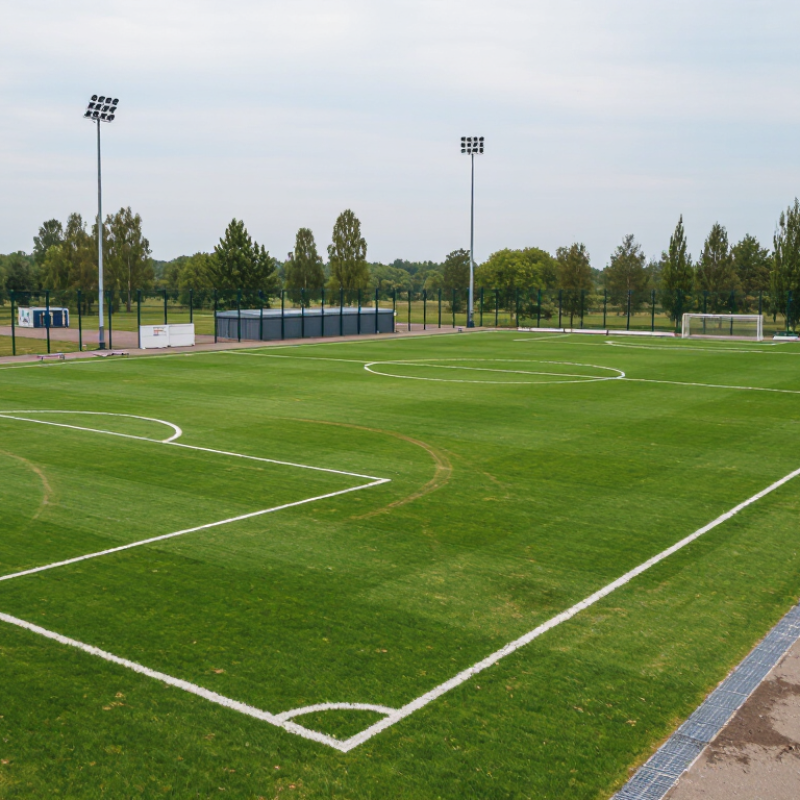
Define Your Team’s Needs and Match Requirements
Before comparing 11-a-side pitches, define how your team actually plays. List the competition level, expected player numbers, training schedule, and match format. A team that presses high needs room to stretch play; a developing squad may value safe run-off space and clear sightlines more. Ask whether the pitch will host official fixtures, because competition rules can narrow your options. FIFA’s 2024/25 Laws of the Game set general field dimensions at 90–120 metres long and 45–90 metres wide. For international matches, the range is tighter: 100–110 metres by 64–75 metres. Those are permitted limits, not proof that every size suits your team. Details matter.
Turn those needs into a practical checklist. Measure the usable playing area, then check surface condition, drainage, lighting, changing facilities, and access for players and officials. FIFA’s Stadium Guidelines identify 105 by 68 metres as the recommended pitch size for top-level football; treat it as a useful benchmark, not a universal requirement. Ask the venue for its measured dimensions and maintenance schedule, rather than relying on a listing. If possible, visit during a wet evening or a busy training slot. A tidy pitch can still feel cramped once players, goals, and touchlines are in place. Recheck your priorities after the visit; teams sometimes discover that convenient booking times matter more than a few extra metres.
How to Choose an 11-a-Side Football Pitch in 2026?
Define your team’s needs and match requirements by checking the permitted pitch dimensions for your competition.
The chart shows permitted pitch-dimension ranges in metres: general matches allow a length of 90–120 m and a width of 45–90 m; international matches allow a length of 100–110 m and a width of 64–75 m. Confirm the exact requirements with your competition organiser before booking.
Check Pitch Dimensions, Surface, and Field Markings
When choosing an 11-a-side pitch in 2026, measure the usable playing area, not the surrounding run-off. IFAB’s Laws of the Game allow adult pitches from 90–120 metres long and 45–90 metres wide. For international matches, the permitted range narrows to 100–110 by 64–75 metres. FIFA’s Football Stadiums Guidelines use 105 by 68 metres as a planning reference. That familiar size suits many competitive settings, but it may not fit every site. Check the dimensions against your league’s rules before booking.
Walk the surface after rain, and inspect it again when dry. Look for standing water, loose infill, worn goalmouths, or a sudden change in grip. FIFA’s Quality Programme for Football Turf assesses factors such as ball rebound, roll, and player-surface interaction; these tests show why appearance alone can mislead. Markings matter too. IFAB limits line width to 12 centimetres, and lines must be clear and consistent. Check that the penalty area, centre circle, and touchlines are visible from the touchline. Measure them if they look uneven. Small errors add up. One practical detail is easy to miss: painted lines should contrast with the playing surface without creating a slippery strip. I would still recheck after maintenance.
Evaluate Location, Access, and Available Facilities
Choosing an 11-a-side pitch starts with how players will reach it. Check travel times from your team’s usual meeting point, not just the venue’s postcode. Visit during a busy evening if possible. Look for safe pedestrian routes, clear signs, nearby public transport, and enough parking for players and spectators. A short walk from the bus stop matters when players carry kit bags. It matters more after a late match.
Inspect the facilities in person. Are changing rooms open when your booking starts? Check the toilets, showers, drinking-water access, and space for storing bags. Look at the pitch markings, goals, surface, and floodlights. Ask how drainage performs after heavy rain, and whether another group can use shared facilities at the same time. Small details count. A clean changing room is useful, but reliable access is better.
Compare what the booking includes with what costs extra. Confirm arrival times, cancellation terms, and who to contact if the lights fail. If possible, watch a game there and notice how players move between the pitch and facilities. A venue may look ideal online, yet feel awkward on a cold, wet evening. I would not ignore that impression; it can reveal a real inconvenience.
Compare Safety Standards, Lighting, and Maintenance
How to Choose an 11 A Side Football Pitch in 2026?
A good pitch should feel predictable underfoot, not slick after rain or loose beneath a planted boot. FIFA’s Quality Programme for Football Turf assesses factors such as shock absorption, surface deformation, and rotational resistance. Ask for recent test results, then inspect seams, goal areas, and drainage after wet weather. A certificate cannot show today’s worn patch.
Lighting matters for visibility and evening bookings. EN 12193:2018 gives football lighting classes maintained average levels of 500 lux, 200 lux, and 75 lux for Classes I, II, and III. Match the class to your use, and check for dark corners and glare from a player’s viewpoint. Maintenance matters too: look for a written schedule covering brushing, infill checks, debris removal, and repairs. Some venues provide polished paperwork but miss small defects. That should give you pause.
Tips: Visit during play, if possible. Check whether lights flicker, drains hold puddles, or worn goalmouths feel uneven. Ask when the surface was last professionally tested.
Review Costs, Booking Terms, and Pitch Availability
For an 11-a-side pitch in 2026, compare the full hire cost, not just the headline hourly rate. Ask whether lighting, changing rooms, equipment, and cleaning are included. A two-hour evening slot may cost more if floodlights are charged separately. Check for extra fees before confirming. Small charges add up.
Read the booking terms carefully. Find out how much notice is needed to cancel, whether a deposit is refundable, and what happens if bad weather makes the pitch unsafe. Ask whether your group can move the booking or receive credit. Get the answer in writing. Do not assume a verbal promise covers every situation; I would make that check even when the venue seems straightforward.
Availability can change with the season, school holidays, and local league schedules. Contact venues early for popular weekend times, then ask about nearby alternatives if your preferred slot is taken. Confirm the pitch surface, lighting, and access arrangements match your players’ needs. If possible, inspect the surface before paying, noting worn goalmouths or uneven patches. A quick visit helps, though it cannot predict every match-day problem.