How to Choose the Best Water Filter System for Home Use?
When considering a water filter system for home use, expertise is crucial. Mark Johnson, a water quality specialist, emphasizes, "Clean water is the foundation of health." Many homeowners overlook the importance of filtering their water. This can lead to various health issues. Understanding your options can feel overwhelming.
Choosing a water filter system for home use requires careful thought. Not all systems are created equal. Some focus on taste, while others prioritize contaminant removal. Picking the right one may depend on your local water quality. It's essential to know what you're filtering out. Homeowners often ignore specific contaminants that can affect health.
Research shows that many families are unaware of the contaminants present in their tap water. A reliable water filter system can address these concerns effectively. However, navigating through brands and technologies can be confusing. One must evaluate effectiveness and cost. Making an informed choice is vital for your family's safety. Taking time to reflect on your specific needs can lead to the best solution.
Understanding the Types of Water Filter Systems Available for Home Use
When it comes to choosing a water filter system for home use, understanding the types available is essential. Various systems exist to meet different needs. The most common types include activated carbon filters, reverse osmosis systems, and UV filters. Each offers unique benefits and limitations.
Activated carbon filters remove chlorine and improve taste. However, they may not eliminate all contaminants. Reverse osmosis systems are more comprehensive. They can filter out lead, arsenic, and other harmful substances. But they often require more maintenance and can waste water. UV filters use light to kill bacteria and viruses. They are effective but do not remove chemicals or sediment.
Homeowners should assess their specific water quality needs. Testing water can provide insights into impurities present. Reflecting on these details can help in decision-making. It might be tempting to choose a popular option, but understanding the real differences is crucial. Remember, a poorly chosen system can lead to ongoing issues. Focus on what truly suits your household’s water needs.
Evaluating Your Water Quality and Filtration Needs
When selecting a water filter system for home use, understanding your water quality is essential. Many households overlook testing their water. The EWG (Environmental Working Group) notes that in the U.S., nearly 77 million people are exposed to harmful contaminants. These include lead, chlorine, and bacteria, which can significantly impact health. Consider obtaining a water quality report from your local supplier to identify potential issues.
Tips:
Conduct regular testing. A simple home test kit can provide immediate results. Knowing your water's pH level and contamination can guide your choice.
Next, assess your filtration needs. If your water contains sediments and chlorine, a multi-stage filter may be effective. For well water users or areas with potential lead issues, an activated carbon filter is crucial. A study by the Water Quality Association highlights that granular activated carbon effectively reduces more than 80% of chlorinated compounds.
Tips:
Look for labels confirming NSF/ANSI certifications. These ensure the system meets safety and efficacy standards.
Finally, remember that even the best systems require maintenance. Filters need regular replacement to prevent bacterial growth. The CDC states that about 50% of households do not change their water filter as recommended. This negligence can lead to more contaminants being present. A little upkeep ensures your family has access to clean water.
Comparing Cost and Maintenance Requirements of Various Systems
When selecting a water filter system, maintenance and cost are crucial. According to the Water Quality Association, around 50% of homeowners overlook these aspects. This often leads to unexpected expenses.
Consider a reverse osmosis system. It can cost between $150 to $600 upfront. However, its maintenance may reach $200 annually due to filter changes and potential repairs. This option may seem effective, but reflect on your long-term budget.
In contrast, pitcher filters generally cost $20 to $50. They require filter replacements every two to three months, totaling about $100 per year. While they are easier to maintain, their filtering capacity often falls short. Understanding these trade-offs helps homeowners make informed decisions.
How to Choose the Best Water Filter System for Home Use? - Comparing Cost and Maintenance Requirements of Various Systems
| Filter Type |
Initial Cost ($) |
Annual Maintenance Cost ($) |
Filter Lifespan (Months) |
Removal Capability |
| Activated Carbon Filter |
50 |
20 |
6 |
Chlorine, Sediments |
| Reverse Osmosis System |
300 |
120 |
24 |
Heavy Metals, Nitrates |
| Ultraviolet (UV) Filter |
200 |
30 |
12 |
Bacteria, Viruses |
| Water Distiller |
150 |
50 |
36 |
Dissolved Solids, Minerals |
| Gravity Filter |
60 |
25 |
12 |
Chlorine, Fluoride |
Exploring Additional Features and Technologies in Water Filters
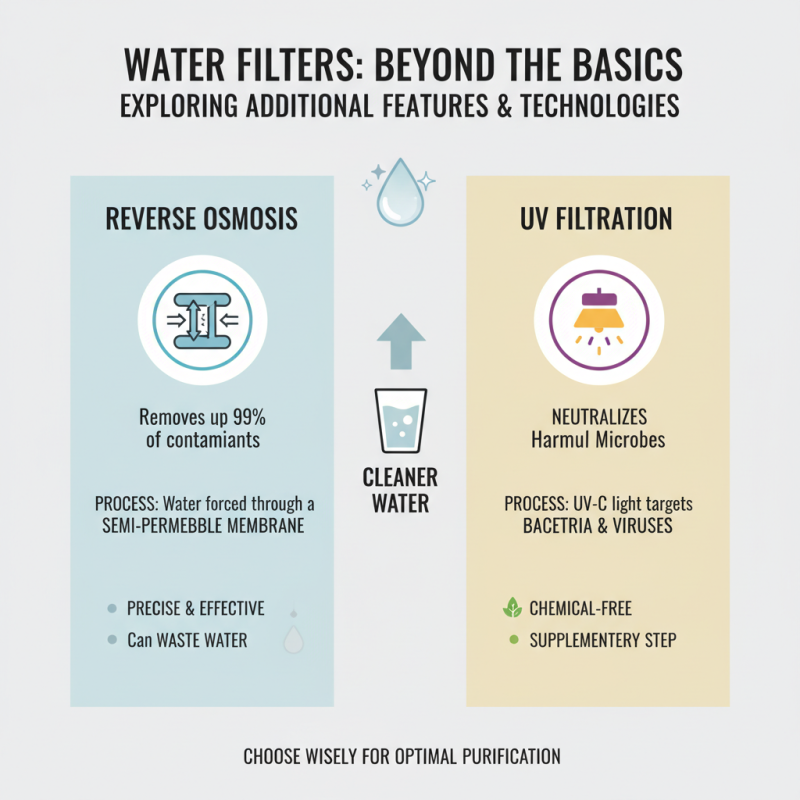
When selecting a water filter system, it’s essential to consider the additional features and technologies available. Various methods enhance water purification, such as reverse osmosis and UV filtration. Reverse osmosis systems can remove up to 99% of contaminants. This process forces water through a semi-permeable membrane. It's precise and effective but can waste some water in the process.
UV filtration offers another innovative solution. It uses ultraviolet light to eliminate bacteria and viruses. This technology does not require any chemicals and maintains essential minerals in water. However, it needs electricity to operate. Users should also consider filter lifespan. Some systems require frequent replacements, adding to long-term costs.
Look for systems with removable and replaceable filters. This feature can aid in maintenance and ensure consistent water quality. Additionally, consider units that offer multiple filtration stages. Such systems often provide a more thorough cleaning process, addressing various contaminants. But remember, while these technologies are impressive, they can come with complexity. With more options available, it’s crucial to assess personal needs carefully.
Assessing Brand Reputation and Consumer Reviews for Water Filters
When choosing a water filter system, brand reputation matters. Consumers often rely on reviews to make informed choices. Look for filters that have consistently high ratings from users. Pay attention to comments about durability, effectiveness, and ease of use. Real feedback is invaluable.
Check independent review sites. They can provide a broader perspective. Be cautious of overly positive reviews; they might not reflect reality. Look for common praises and complaints. This can help reveal the product’s strengths and weaknesses. A well-reviewed filter typically meets various needs.
Remember, no filter is perfect. Some users find certain contaminants are not fully removed. Others may experience maintenance issues. Reflect on your specific needs and preferences. This process ensures you choose a filter that genuinely meets your home’s water quality requirements.
Water Filter System Consumer Ratings
This chart shows the consumer ratings for different attributes of water filtration systems. Ratings are based on a scale of 1 to 5, with higher values indicating better performance in areas such as filtration speed, taste improvement, ease of installation, maintenance cost, and durability.