How to Choose Round Counter Stools in 2026?
Choosing Round Counter Stools in 2026 means balancing comfort, clearance, durability, and the look of your kitchen. A stool may seem like a small purchase. It still affects how people gather around an island every day.
The 2024 Houzz U.S. Kitchen Trends Study reported that median spending on major kitchen remodels reached $55,000 in 2023, up from $53,000 in 2022. That figure covers entire remodels, not stool sales, but it shows why buyers should consider seating as part of a larger kitchen plan. Measure your counter height and available floor space before comparing styles. A seat that swivels beautifully can still block a drawer or crowd a walkway. Details matter.
Interior designer Nate Berkus has said, “Your home should tell the story of who you are, and be a collection of what you love.” That idea applies to counter seating, too: choose a finish and shape that feel at home in your space, not just fashionable in a product photo. Then test the practical details. Does the footrest support your legs? Can guests sit comfortably for a full meal? Will the fabric handle crumbs and daily use? A matching set can still feel wrong. It is easy to overlook that.
This guide compares Round Counter Stools by height, materials, comfort, maintenance, and fit. It also considers trade-offs, because no single stool works for every counter or household. Measurements help; sitting in the stool helps more.
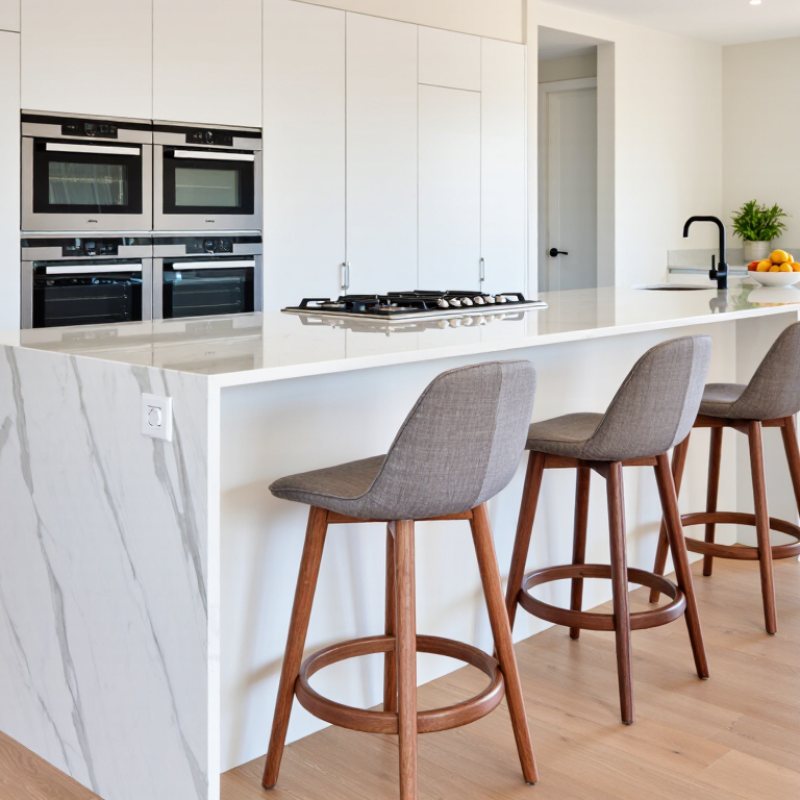
Understanding Round Counter Stools and Their Uses
Round counter stools suit kitchen islands, breakfast bars, and compact dining corners where a full chair feels bulky. Their curved seats soften hard countertop lines, while a small footprint can help people move around tight spaces. Small rooms benefit. Yet a round seat does not automatically save space; a wide pedestal base may obstruct knees or traffic.
Check counter height before choosing a stool. Standard counters are often 36 inches high, and a seat around 24 to 26 inches usually leaves comfortable legroom. The National Kitchen & Bath Association’s Kitchen Planning Guidelines recommend 24 inches of seating width per person and 15 inches of knee clearance at a 36-inch counter. Treat those figures as planning guidance, not a guarantee: overhangs, aprons, and body size change the feel.
Round stools work well for quick meals, casual conversation, and flexible seating that can be moved aside. A swivel seat helps when turning toward a nearby cook, but it can bump adjacent stools. Measure the base, not just the seat. Try the layout with taped floor marks before buying; I have seen a tidy-looking row feel crowded once bags and elbows arrive. Some details are easy to miss.
| Selection factor | Practical guideline | How it affects your choice |
|---|---|---|
| Counter height | For a typical 36-inch (91 cm) counter, look for a seat about 24–27 inches (61–69 cm) high. | Measure from the floor to the underside of the counter, then allow room for legs and comfortable seating. Counter heights vary, so measure your own surface. |
| Bar-height surfaces | For a 40–42-inch (102–107 cm) bar-height surface, a seat around 28–32 inches (71–81 cm) is commonly suitable. | Do not assume a stool described as “counter height” will fit a taller bar. Compare the seat height with the actual surface height. |
| Seat-to-counter clearance | A gap of roughly 9–12 inches (23–30 cm) between the seat and the counter underside is a useful starting point. | This clearance helps provide space for thighs and easier movement. Adjust for the counter’s thickness and the seated person’s comfort. |
| Seat diameter | Round seats around 14–16 inches (36–41 cm) across suit compact areas; 16–18 inches (41–46 cm) can offer more sitting room. | Check the full stool footprint, including legs or a base, not just the seat. A larger seat can reduce the number of stools that fit. |
| Spacing between stools | Allow about 24–30 inches (61–76 cm) from the center of one seat to the center of the next as a planning range. | Wider spacing can make it easier to sit, stand, and eat, especially when stools have arms or broad bases. |
| Backrest | Backless stools take up less visual and physical space. Low- or full-back stools provide more support but need extra clearance. | Choose based on how long people will sit and whether the stools can tuck beneath the counter when not in use. |
| Swivel seat | A swivel can make it easier to turn toward the counter or conversation without moving the stool base. | Check that the seat can rotate without hitting walls, cabinetry, or neighboring stools. A fixed seat may suit tighter layouts. |
| Footrest | A footrest gives seated users a place to rest their feet, particularly when the stool is tall. | Look for a stable, comfortably positioned footrest. On metal models, a protective finish can help limit visible wear from shoes. |
| Base stability | Check that the stool sits level and has a sturdy base with secure joints and appropriate floor-contact points. | A broad base may improve stability but can occupy more floor space. Choose a design suitable for the user and intended setting. |
| Upholstery and upkeep | Wipe-clean surfaces are convenient for frequent meals; fabric can add softness but may need more careful cleaning. | Consider spills, pets, children, and the manufacturer’s care instructions before choosing a seat material. |
| Room to move | Plan enough space behind occupied stools for people to pass; about 36 inches (91 cm) is a common minimum planning target, with more space preferable in busy walkways. | Measure with the stool pulled out and in use. Doorways, appliances, and traffic routes may require additional clearance. |
| Best-use match | Compact backless stools suit smaller counters; stools with backs or padded seats can be more comfortable for longer sitting. | Match the design to the main use—quick meals, everyday dining, entertaining, or occasional seating—rather than appearance alone. |