How to Choose the Right Abrasive Flap Disc?

Choosing the right Abrasive Flap Disc starts with the workpiece, not the product label. Steel, stainless steel, aluminum, and painted surfaces demand different abrasive grains and backing designs. A disc that removes welds quickly may leave deep scratches on thin sheet metal. Fit matters. So does control.

Industry reports show why this choice deserves more attention. Grand View Research’s recent coated abrasives market analysis identifies metal fabrication, automotive production, and machinery manufacturing as major demand sectors. MarketsandMarkets also reports continued growth in abrasive products, supported by industrial maintenance and infrastructure investment. These reports describe market direction, not workshop reality. The operator still needs to check disc diameter, grit, maximum RPM, angle grinder compatibility, and intended application.

Professional guidance from FEPA and OSHA emphasizes correct mounting, rated speeds, guarding, and personal protective equipment. Those points are practical, not decorative. A 40-grit zirconia flap disc can remove a weld aggressively, while an 80-grit ceramic disc may provide a cleaner finishing path. Aluminum often needs a suitable non-loading abrasive. Stainless steel requires contamination control, especially when carbon-steel tools were used nearby.

No selection guide is perfect. Actual results depend on pressure, angle, machine power, and operator technique. A disc may perform differently after only a few minutes on a hot workpiece. Therefore, this guide compares abrasive grain, grit, flap density, backing material, and service life. It also questions a common assumption: the fastest-cutting disc is not always the most economical choice. Sometimes, a slightly slower disc produces fewer rework marks, less heat, and a safer, more predictable finish.
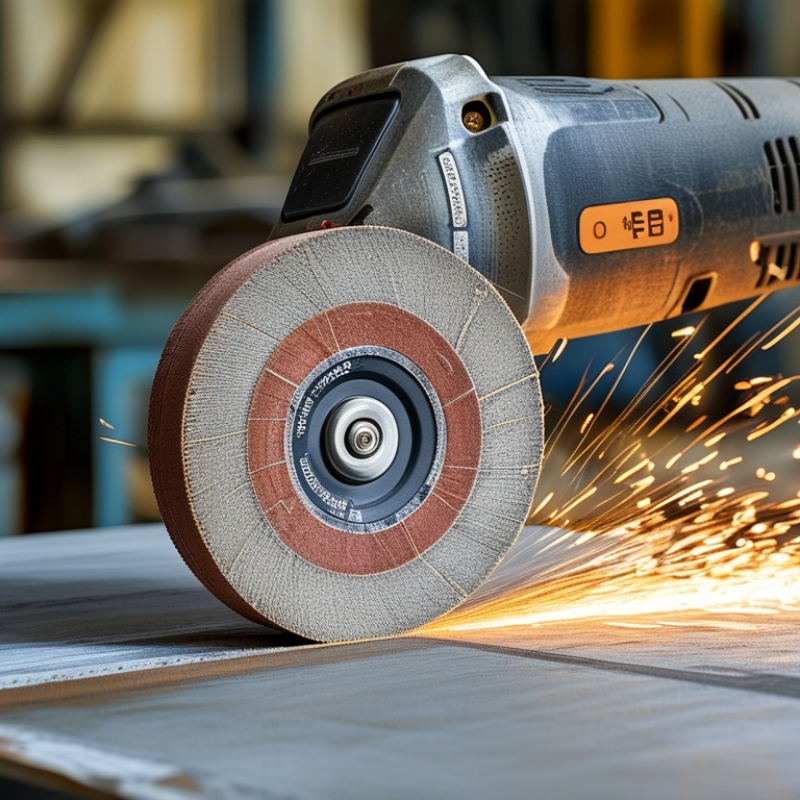
How to Choose the Right Abrasive Flap Disc?

Understanding Abrasive Flap Disc Construction and Applications

How to Choose the Right Abrasive Flap Disc?

Understanding abrasive flap disc construction starts with the backing, abrasive grain, and flap layout. Flaps overlap like roof shingles, exposing fresh grain as the disc wears. This design supports controlled grinding, blending, and surface finishing. Fiberglass backings suit general metalwork, while plastic or fiber backings can offer better flexibility. However, flexibility is not always better. It may reduce edge control on tight corners. Grain type also matters. Zirconia suits heavy stock removal, while ceramic grain often supports demanding stainless steel work. Always match the disc diameter, bore, and maximum RPM with the grinder.

Application changes the correct choice. A 40-grit disc removes weld discoloration and sharp edges quickly. An 80-grit disc leaves a finer transition before painting or coating. In practical shop testing, excessive pressure can flatten the flaps and create heat marks. That mistake is common, even among experienced operators. The U.S. Bureau of Labor Statistics reported 2.7 nonfatal injury and illness cases per 100 full-time manufacturing workers in 2023. This figure does not prove disc selection caused injuries, but it supports careful process control. Use guarding, eye protection, hearing protection, and suitable respiratory protection.

Tips: Keep the disc moving. Let the abrasive cut. Inspect flaps before use, and discard damaged discs. A slight cutting angle usually improves contact. Still, real surfaces vary, so test a small area first. FEPA guidance and the disc manufacturer’s technical data should remain your final references.

Matching Disc Abrasive Materials to Workpiece Types

How to Choose the Right Abrasive Flap Disc?

Matching disc abrasive materials to workpiece types starts with the metal, not the disc price. Aluminum oxide suits mild steel, weld blending, and general shop work. It cuts steadily and leaves a controlled finish. Zirconia alumina is better for stainless steel and heavier pressure. Its self-sharpening grains stay active longer. Ceramic grain handles hardened steel and aggressive stock removal, but it can punish thin edges.

The workpiece tells you more than the catalog. Stainless steel can discolor when friction builds. Use a sharp zirconia or ceramic disc with moderate pressure. For aluminum, choose a disc designed to resist loading. Clean the surface often. Silicon carbide can suit non-ferrous metals and delicate finishing, although it may wear faster. A 2024 Grand View Research analysis estimated the global abrasives market at over 45 billion U.S. dollars in 2023. Metal fabrication remains a major demand area, so disc selection affects both cost and consistency. Small mistakes become expensive on production lines.

Tips: Match grain type, grit, and backing stiffness together. Start with medium pressure. Let the abrasive cut. If the disc leaves blue heat marks, the process needs correction. If it clogs after a few passes, the material or disc may be wrong. I still test one disc on scrap first. It feels slower, but it prevents avoidable rework.

OSHA’s abrasive-wheel safety requirements also emphasize guarding, inspection, and correct operating conditions. A good finish is not enough. The setup must remain controlled.

Selecting the Right Grit for Cutting and Finishing Tasks

How to Choose the Right Abrasive Flap Disc?

Selecting the right grit affects cutting speed, surface control, and final appearance. Coarse grits, such as 24 or 40, remove welds, rust, and heavy stock quickly. They suit aggressive edge shaping and beveling on thick steel. However, they can leave deep scratches and remove more material than expected. For true section cutting, use a suitable cut-off wheel rather than a flap disc.

Medium grits, including 60 and 80, handle general grinding, weld blending, and preparing edges for further finishing. They offer a useful balance between removal rate and control. Fine grits, such as 100 or 120, create smoother surfaces before painting or polishing. On stainless steel or aluminum, lighter pressure helps prevent heat discoloration and loading. I once chose a fine disc too early and spent extra time correcting the uneven surface. The finer option was not automatically better.

Tips: Match the grit to the material and the task, not just the desired shine. Test a small area first. Keep the disc moving steadily, and avoid pressing hard. If the abrasive removes material too slowly, step down to a coarser grit. If scratches remain visible, move gradually through the grits instead of skipping several grades. A clean, dry surface also improves control and disc life.

How to Choose the Right Abrasive Flap Disc? - Selecting the Right Grit for Cutting and Finishing Tasks

Grit Relative Abrasiveness Material Removal Rate Typical Surface Result Recommended Tasks Common Materials Selection Guidance
P24–P36 Very coarse Very high Aggressive, visibly scratched surface Heavy weld removal, deep rust removal, edge dressing, rapid stock removal Carbon steel, structural steel, cast iron Choose when speed and high stock removal are more important than surface appearance.
P40–P60 Coarse to medium High Strong scratch pattern with moderate blending capability Weld blending, burr removal, beveling, mill-scale and paint removal Steel, stainless steel, aluminum with a suitable non-loading disc A practical starting range for general fabrication and controlled material removal.
P80 Medium Moderate Balanced scratch pattern and relatively smooth blend Final weld blending, surface preparation, smoothing grinder marks, pre-paint preparation Carbon steel, stainless steel, aluminum Use when one disc must provide a compromise between removal rate and finish quality.
P100–P120 Fine Low to moderate Fine, more uniform scratch pattern Light blending, cosmetic finishing, preparation for finer abrasives or polishing Stainless steel, carbon steel, aluminum Select for appearance-sensitive work where aggressive stock removal is unnecessary.
P150–P180 Very fine Low Smooth, refined finish suitable for subsequent polishing Final blending, light scratch refinement, preparation before polishing Stainless steel, aluminum, decorative metalwork Use only after major defects and weld irregularities have already been removed.
Non-Woven Fine / Very Fine Finishing grade; not directly equivalent to FEPA P grit Very low Uniform satin or blended finish with low cutting aggression Deburring, light blending, oxidation removal, cosmetic finishing Stainless steel, aluminum, mild steel Use when consistent appearance and low risk of gouging are more important than stock removal.
Important Safety and Application Notes:
  • A flap disc is designed for grinding, blending, deburring, and finishing; it must not be used as a cut-off wheel.
  • Always match the disc type, diameter, bore, and maximum operating speed to the angle grinder and the workpiece material.
  • Use light to moderate pressure. Excessive pressure can generate heat, reduce disc life, and damage the workpiece.
  • For a better final finish, progress from a coarser grit to a finer grit rather than using a fine grit to remove heavy welds or deep defects.

Choosing Disc Size, Backing, and Compatibility

Choosing an abrasive flap disc starts with three practical questions. What size fits the tool? What backing suits the work? Is the disc compatible?

Measure the grinder’s rated diameter and spindle specification before buying. A disc that is too large may exceed the tool’s safe operating limits. A small disc can reach tight corners, but it removes material more slowly. Check the maximum RPM printed on both the tool and disc. Never assume similar-looking discs are interchangeable.

Backing material affects control, durability, and feedback. Fiberglass backing is common for general grinding because it balances strength and flexibility. Plastic backing can feel lighter and may trim more easily near edges. Rigid backing often supports heavier pressure, while flexible backing follows curved surfaces better.

Not universal. In hands-on work, I prefer a stiffer disc for weld blending and a more flexible one for contoured panels. Still, pressure, angle, and heat can change the result.

Compatibility involves more than diameter. Match the disc’s bore, attachment method, abrasive grade, and intended material to the grinder and job. Aluminum, stainless steel, and mild steel may require different abrasive formulations. Using the wrong grade can load the flaps, discolor the surface, or leave a rougher finish than expected.

Inspect the disc for cracks, loose flaps, or moisture damage before use. Wear suitable eye, hearing, hand, and face protection, and follow the manufacturer’s instructions. I have learned that the fastest cut is not always the best finish. A short test pass on scrap metal often exposes a poor match early.

Evaluating Safety, Durability, and Work Efficiency

How to Choose the Right Abrasive Flap Disc?

Evaluating Safety, Durability, and Work Efficiency

Safety should guide every flap disc decision.

The U.S. Bureau of Labor Statistics recorded 5,283 fatal workplace injuries in 2023. This figure is not specific to abrasive tools, but it shows why small shortcuts deserve attention. Check the disc diameter, maximum revolutions per minute, backing pad, and tool compatibility before grinding. OSHA 29 CFR 1910.215 also emphasizes guarding and safe abrasive wheel operation. Wear eye and face protection. Use hearing protection when exposure approaches NIOSH’s 85 dBA, eight-hour recommended limit. Keep loose clothing away from the rotating tool.

Durability depends on more than grit size.

Choose ceramic or zirconia-style grains for demanding steel work, while aluminum oxide often suits lighter finishing. A rigid backing removes stock quickly. A flexible backing follows curved surfaces better. Press lightly and let the abrasive cut. Excessive force creates heat, glazing, and premature flap loss. I have found that a disc can look efficient for ten seconds, then become expensive through overheating. Inspect torn flaps, exposed backing, and unusual vibration before use. Replace damaged discs immediately.

Work efficiency also depends on matching the disc to the task.

Use coarse grits for weld blending and finer grits for surface preparation. Keep the tool moving. Avoid staying on one spot. OSHA’s hand and power tool guidance identifies flying particles, dust, and noise as recurring hazards. Dust extraction matters, especially on coated or mineral-containing materials. Record which grit, pressure, and service life worked best. My notes are not always neat, but they reveal waste that memory misses.

Build your system. Protect your boat. Join the movement.

Compare Products
Talk to Sales