How to Choose the Right Cylinder Press for Your Business?
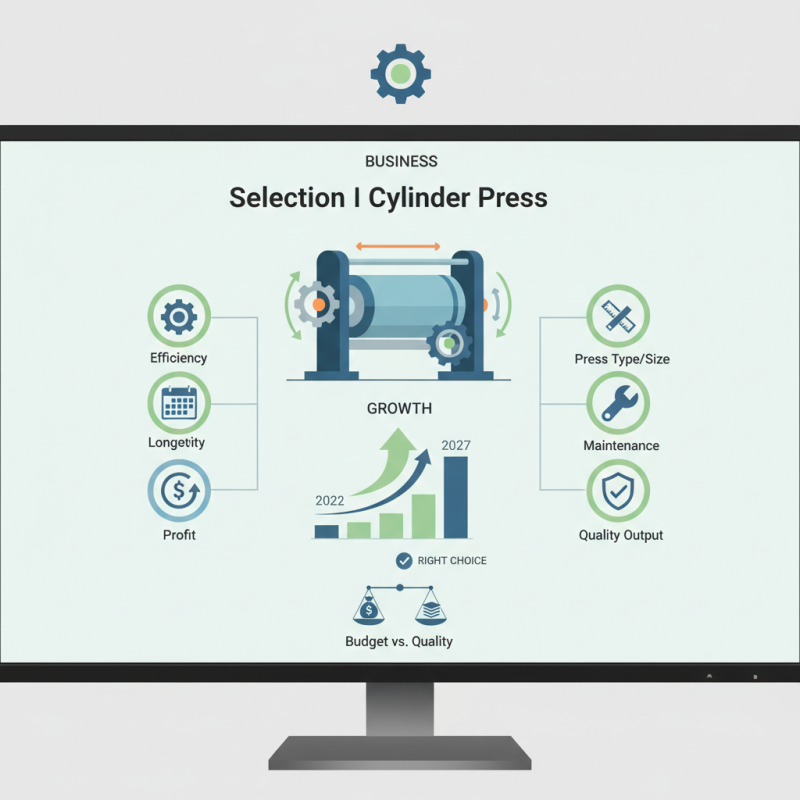
Choosing the right Cylinder Press is crucial for any business in the printing industry. A well-selected machine can significantly enhance productivity and quality. The global market for printing presses was valued at over $16 billion in 2022. Experts predict a steady growth rate of approximately 3% over the next five years, driven by technological advancements and increasing demand for high-quality printing.
John Thompson, a leading expert in printing technology, emphasizes, “Investing in the right Cylinder Press is not just about cost; it's about efficiency and capability.” His insight reflects the critical decision-making needed in this industry. Businesses must consider factors like press type, size, and operational features before making a commitment. The wrong choice can lead to subpar outputs and lost revenue.
In exploring options, businesses often overlook the maintenance aspect. Regular upkeep is essential for longevity and performance. A Cylinder Press that requires constant repairs can quickly become a financial burden. Thus, understanding both immediate needs and long-term goals is vital. Balancing budget constraints with product quality remains a constant challenge.
Understanding Cylinder Press Types and Their Applications
When selecting a cylinder press, understanding the various types is crucial. There are several categories, including sheet-fed, web-fed, and digital cylinder presses. Each type caters to different production needs, from small runs to high-volume tasks. For example, sheet-fed presses are often used for high-quality prints in limited runs. In contrast, web-fed presses excel in producing large quantities with efficiency, making them ideal for magazines and newspapers.
According to the Printing Industries of America, nearly 45% of printing companies reported upgrading to modern cylinder presses to meet growing demands. The flexibility of digital cylinder presses is also notable. These machines allow for short print runs with quick turnaround times, appealing to businesses focused on customization. However, reliance on digital presses may lead to overextension without proper analysis of production costs.
Choosing the right press means assessing your specific production requirements. It's important to evaluate print volume, substrate types, and design complexity. Many businesses overlook the maintenance costs associated with their equipment, impacting long-term viability. Conducting a thorough analysis can prevent costly mistakes. The right cylinder press enhances production quality and streamlines your operations.
How to Choose the Right Cylinder Press for Your Business? - Understanding Cylinder Press Types and Their Applications
| Press Type | Applications | Max Print Area (mm) | Speed (Impressions per Hour) | Ideal for Business Size |
| Offset Cylinder Press | Commercial printing, packaging, magazines | 600 x 900 | 8000 | Medium to Large |
| Flexographic Cylinder Press | Flexible packaging, labels, tags | 500 x 700 | 10000 | Small to Medium |
| Gravure Cylinder Press | High-quality prints, wallpaper, packaging | 1000 x 1200 | 6000 | Large |
| Letterpress Cylinder Press | Artistic prints, stationery, and business cards | 300 x 450 | 2000 | Small |
| Digital Cylinder Press | Short-run jobs, variable data printing | 500 x 700 | 3000 | Small to Medium |
Identifying Your Business Needs for Cylinder Press Selection
Choosing the right cylinder press begins with understanding your specific business needs. Consider your production volume. High-volume operations often require robust machinery to ensure efficiency. A press that cannot keep pace might lead to delays and increased costs. Evaluate your output requirements carefully to avoid selecting an inadequate machine.
Next, analyze the types of materials you will work with. Different projects may require different specifications. For example, some presses are better suited for thicker materials, while others excel at precision tasks. This choice can affect not only the quality but also the durability of your products. It's critical to match the machine's capabilities with the demands of your projects.
Budget is another crucial factor. It’s tempting to choose the cheapest option, but this can lead to expensive repairs later. Assess costs related to operation and maintenance over time. Ensure the selected machine aligns with both current needs and future growth. Reflect on these elements thoroughly to avoid regret later.
Evaluating Key Features of Cylinder Presses
Choosing the right cylinder press requires careful evaluation of several key features. Power and speed play crucial roles in productivity. Reports indicate that presses with variable speed settings can improve efficiency by up to 25%. This adaptability allows for adjustments based on the material used, giving operators greater flexibility.
Another important aspect is the press’s build quality. A robust frame enhances durability, reducing maintenance downtime. According to industry standards, a well-constructed press can last over ten years with proper care. Look for models made from high-grade materials to ensure longevity and reliability.
**Tips:** Consider the size of your workspace. Compact models may save space but could limit production capacity. Evaluate your output needs carefully. Don't overlook customer support and warranty options, as these can protect your investment. Balancing cost with these features is vital in the selection process. Ultimately, every business has unique demands that must be met with the appropriate equipment. Reflect on your specific needs to make an informed choice.
Key Features Evaluation of Cylinder Presses
Comparing Costs and Budget Considerations for Cylinder Presses
When evaluating cylinder presses, cost is a key factor. The initial price is crucial, but it's not the only consideration. You must think about the long-term expenses, including maintenance and energy use. A low purchase price might lead to higher operational costs down the road.
Budgeting for a cylinder press requires analyzing your business needs. Determine how often you will use the press. High-volume production can benefit from a more expensive model that offers efficiency. However, if your needs are occasional, a basic model could suffice. Don’t forget about additional costs like replacement parts or specialized training.
Assessing the total cost of ownership is essential. This includes setup, training, and potential downtime for repairs. Sometimes, cheaper models can lead to frustrations. Spending a little more initially might save money in the long run. Reflecting on these factors can help you make a wiser decision for your business.
Researching Manufacturers and Customer Reviews for Informed Choices
Choosing the right cylinder press for your business is essential. Researching manufacturers and customer reviews is a key step. Start by exploring reputable sources. Look for industry journals and forums related to printing and manufacturing. These platforms often provide valuable insights.
Customer reviews can reflect real user experiences. They reveal both benefits and potential drawbacks. Be cautious; not all reviews are unbiased. Consider patterns in feedback. Are users complaining about the same issues? Pay attention to the recurring themes that emerge from reviews. This will guide your decision-making process.
Tip: Create a pros and cons list from your findings. This visual aid clarifies your options. You might find conflicting reviews, which can feel overwhelming. Take a step back. Assess the long-term implications of your choice. Finding a balance between cost and quality is crucial. Keep your unique business needs in mind throughout your research.