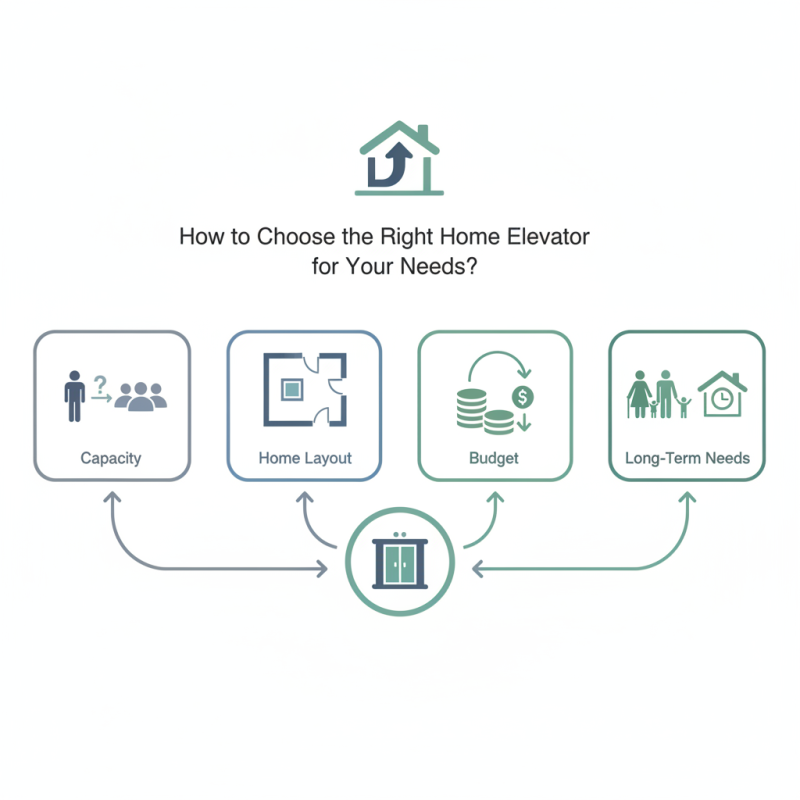
How to Choose the Right Home Elevator for Your Needs?
Choosing the right Home Elevator is vital for your living space. A home elevator can enhance your home's accessibility and value. It is essential to consider various factors before making a decision.
Do you need a small lift for one person? Or, perhaps a larger model for family and friends? Understanding your needs will guide your choice. Evaluating the layout of your home is equally important. Think about the installation area and space requirements.
Budget also plays a critical role. Home elevators can vary significantly in price. Investing in a quality elevator makes sense, but be cautious. Overspending can lead to regrets. Reflect on your long-term needs. Will your family grow? Will aging in your home be a factor? These considerations will help you select the best home elevator for your lifestyle.
Factors to Consider When Choosing a Home Elevator Model
When selecting a home elevator, several factors come into play. The space you have available is crucial. Measure the area where you plan to install the elevator. Consider the height between floors. A tight fit may limit the design options and functionality. Additionally, the elevator's design should match your home’s décor. Think about finishes and style. It can enhance the overall appeal of your living space.
Another significant aspect is the intended use. Will it be for mobility assistance or transporting goods? Identifying the primary purpose helps you make a smarter choice. Weight capacity is essential too. Ensure it can accommodate your needs without strain. Noise level is often overlooked. A quiet operation is preferable, especially in a family home. Lastly, energy efficiency should be considered. You want a model that minimizes your energy costs. Reflect on these factors carefully. Your decision can greatly impact comfort and accessibility in your home.
How to Choose the Right Home Elevator for Your Needs?
| Factor | Details |
| Space Requirements | Assess the available space for installation including shaft size and structure. |
| Load Capacity | Determine the maximum weight the elevator should support, including passengers and items. |
| Type of Elevator | Choose between hydraulic, traction, or pneumatic based on your needs and preferences. |
| Style and Design | Select a design that complements your home’s decor and style. |
| Safety Features | Look for standard safety features such as emergency brakes and alarm systems. |
| Installation and Maintenance | Consider the installation process and the maintenance requirements over time. |
| Cost | Evaluate your budget for both initial purchase and long-term maintenance costs. |
Types of Home Elevators: Pros and Cons for Residential Use
Choosing the right home elevator involves understanding various types. Each type comes with unique advantages and disadvantages. A hydraulic elevator is common. It operates using a fluid-driven piston. This type tends to be reliable and smooth. However, it requires a larger space for installation. It also needs regular maintenance for optimal performance.
Another option is the traction elevator. It uses cables and pulleys for movement. This type is energy-efficient and has a faster speed. However, it may generate more noise compared to hydraulic models. Ownership costs can increase over time due to maintenance and potential repairs.
Vacuum elevators are a modern alternative. They are easy to install, often requiring no pit or machine room. Their sleek design is appealing. However, they have a limited weight capacity. This can be restrictive for larger households. Reflect on your needs carefully. Each type offers distinct features that may or may not suit your lifestyle.
Key Safety Regulations and Standards for Home Elevators
When considering a home elevator, safety should be a top priority. There are key regulations that must be followed. The American Society of Mechanical Engineers (ASME) has specific codes for residential elevators. These guidelines ensure that the elevator operates safely and reliably. Home elevators must meet these standards to avoid potential hazards.
Each elevator should be equipped with safety features. These might include emergency brakes, backup power systems, and interlocks. Regular inspections and maintenance are essential. Don't overlook the importance of hiring qualified professionals for installation and maintenance.
Tips for selecting the right elevator include assessing weight capacity and space requirements. Measure your home’s layout carefully. Ensure there is adequate room for the elevator without compromising workflow. Consider features like door types and control systems. An informed choice can enhance your home's accessibility while prioritizing safety.
Cost Breakdown: Initial Investment vs. Long-Term Maintenance Expenses
When choosing a home elevator, understanding the cost breakdown is vital. The initial investment can range from $20,000 to $50,000. This cost depends on factors like design, size, and installation complexity. However, many overlook long-term maintenance expenses, which can add significantly to the overall cost. For instance, annual maintenance can be about 10% of the initial purchase price. This can escalate with age.
Tips: Consider setting aside a budget for maintenance. This can prevent surprises later. Regular checks can prolong the elevator's life.
Many homeowners don’t account for the potential need to replace parts over time. For example, hydraulic systems may require valve replacements every 7 to 10 years, costing between $2,500 to $5,000. Even minor issues can accumulate costs. Adjustments in budget plans for repair should be made.
Tips: Research maintenance contracts. Some companies offer packages that can save you money in the long run. Check warranty details carefully. Not all elevators are covered equally.
Sizing Your Home Elevator: Dimensions and Space Requirements
Choosing the right size for your home elevator is crucial. You need to consider dimensions and space requirements carefully. Measure the area where the elevator will be installed. It typically needs a footprint of at least 5x5 feet, but larger models require more space. Think about door openings and whether they will fit in your home design.
When sizing your elevator, also consider how many people will use it. A standard elevator can accommodate two to four people. However, if you think you’ll need more capacity, plan accordingly. Don't forget about the height. The distance between floors affects the elevator's design. Ensure you allow for enough clearance above and below.
Additionally, be mindful of other elements like lighting and flooring. These can impact how spacious the elevator feels. You might find it challenging to fit everything perfectly. Reflect on your current and future needs. Are you planning any renovations? The space might not allow room for changes later. Balancing practicality and aesthetics is often tricky. Careful planning can help you avoid costly mistakes.