How to Choose the Right Machine Tool for Your Business?

Choosing the right Machine Tool is a business decision, not merely an equipment purchase. It affects production speed, part accuracy, worker safety, energy use, and long-term operating costs. A machine that looks impressive in a showroom may perform poorly on your actual materials, tolerances, or batch sizes.

Tony Schmitz, a respected machining researcher and author, states, “The machine tool and the cutting process must be considered together.” This principle deserves attention. A five-axis machining center may be unnecessary for simple aluminum brackets. Meanwhile, a basic three-axis machine may struggle with hardened steel, tight geometric tolerances, or continuous production. The correct choice begins with evidence from your workshop.

Measure the parts you produce today. Record material hardness, maximum dimensions, tolerance requirements, spindle load, setup time, and monthly volume. Then examine what your customers may require next year. Capacity matters.

Do not trust specifications alone.

A machine rated for high speed may lose accuracy when heat builds around the spindle. A lower-cost model may create expensive downtime through weak service support or difficult programming. Ask suppliers for sample cutting tests using your material and tooling. Inspect the finished surface, cycle time, chip control, and repeatability.

Budgeting also needs honesty. Purchase price is only one line. Include installation, training, tooling, maintenance, software, electricity, and financing costs. I have seen buyers focus on speed and ignore operator skill. That mistake can remain hidden until production starts.

The best Machine Tool is not always the most advanced one. It is the machine that fits your real work, your people, and your planned growth. Leave room for doubt. Recheck the assumptions before signing.
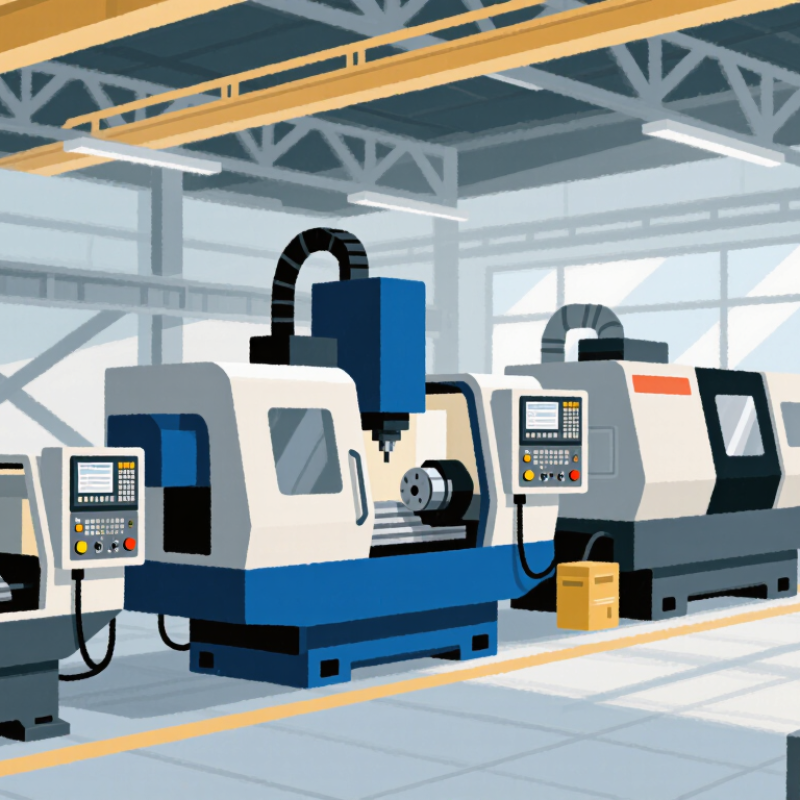
How to Choose the Right Machine Tool for Your Business?

Define Your Production Goals and Machine Tool Requirements

Choosing a machine tool should begin with production goals, not a catalog. Define the parts, materials, dimensions, tolerances, and expected annual volume. A shop producing 200 aluminum housings monthly needs different capacity from one cutting hardened steel shafts every shift. Record the largest workpiece, tightest tolerance, surface-finish target, and average cycle time. These details convert general ambition into measurable machine requirements.

Automation also deserves careful attention. The International Federation of Robotics reported 541,302 industrial robots installed worldwide in 2023. That figure shows how strongly manufacturers are investing in repeatability and labor efficiency. However, automation is not automatically profitable. A high-volume process may justify automatic tool changing, probing, pallet handling, and bar feeding. Short-run work may benefit more from fast setup changes and accessible controls.

Count setup minutes, operator movements, chip-removal problems, and inspection delays on the current line. Real experience often reveals costs that a brochure hides.

Budget the complete operating picture. Include spindle power, axis travel, tooling, software, training, maintenance, energy, and floor space. Deloitte’s 2023 Global Smart Manufacturing Survey found that 86% of manufacturing leaders viewed smart manufacturing as important to competitiveness within five years. Still, digital features can become expensive decoration without reliable data and trained staff.

Ask whether existing operators can maintain the system, whether local service is available, and whether the machine supports your next three years of orders. That forecast may be wrong. Recheck it against actual quotes, customer contracts, and monthly utilization before committing.

Compare Machine Types, Capabilities, and Processing Methods

How to Choose the Right Machine Tool for Your Business?

Choosing the right machine begins with the part, not the machine’s advertised power. Compare turning, milling, drilling, grinding, and multi-process equipment by actual workpieces. A lathe suits cylindrical parts, while a machining center handles angled faces, pockets, and holes. For thin sheets, cutting or forming equipment may outperform chip-removal methods. Look closely. Material changes everything. Aluminum cuts quickly, but heat-resistant alloys need slower speeds, rigid fixturing, and careful coolant control.

Measure capability through useful details: work envelope, spindle speed, torque, axis travel, accuracy, repeatability, and load capacity. Do not compare accuracy numbers alone. A precise machine may still struggle with a heavy fixture or long tool. Check tolerance, surface finish, batch size, and setup frequency. Flexible CNC equipment can reduce programming time for prototypes. In repeated production, stable cycle times may matter more than maximum speed. That trade-off is easy to miss.

Processing method also affects costs beyond the purchase price. Estimate tooling, energy, coolant, maintenance, inspection, and operator training. Ask whether one setup can replace three. It may not. A practical trial with representative material can reveal chatter, chip-control issues, access problems, and real cycle time. Leave room for error; early estimates are often optimistic. Review sample parts with operators and quality staff before committing. Their daily observations may expose problems hidden in a technical specification.

Evaluate Accuracy, Capacity, Speed, and Material Compatibility

Choosing a machine tool starts with the part, not the brochure. Measure tolerance, repeatability, work envelope, and batch size before comparing spindle power. ISO 230-2 provides a recognized method for checking positioning accuracy and repeatability. That test matters, but shop-floor heat, vibration, and operator habits can still change results. A perfect specification is not a perfect part.

Capacity must cover the largest realistic workpiece, fixtures, tooling, and chip clearance. Leave practical room. A table that barely fits one casting creates costly handling problems. Judge speed through cycle time, acceleration, tool changes, and stable cutting data. The International Federation of Robotics reported 541,302 industrial robot installations worldwide in 2023, up 10% from 2022. Faster motion cannot repair poor process planning. Track spindle load, non-cutting time, and first-pass yield during a production trial.

Material compatibility is often underestimated. Aluminum, hardened steel, titanium, composites, and abrasive alloys require different rigidity, cooling, filtration, and tooling strategies. A machine suitable for aluminum may struggle with titanium heat and deflection. The 2024 Smart Manufacturing and Operations Survey reported that 86% of manufacturers viewed smart manufacturing as a major competitiveness driver within five years. Use that direction carefully; sensors help, yet bad data can mislead decisions. Ask for documented test cuts, measured tolerances, energy use, and maintenance records. Compare evidence against actual parts, not an ideal future workload.

How to Choose the Right Machine Tool for Your Business? — Evaluate Accuracy, Capacity, Speed, and Material Compatibility

Machine Tool Type Typical Working Capacity Typical Positioning Accuracy Typical Speed Range Suitable Materials Best-Fit Applications Key Selection Consideration
Vertical Machining Center Work envelope commonly around 500–1,200 mm in X-axis travel, with table loads of approximately 300–1,500 kg. About ±0.005–0.010 mm Spindle speeds commonly range from 6,000 to 18,000 rpm; rapid traverse is often 20–48 m/min. Aluminum, carbon steel, stainless steel, cast iron, engineering plastics, and selected titanium alloys. Prismatic parts, molds, fixtures, housings, and general production machining. Choose based on part envelope, tool-change time, spindle torque, and required chip evacuation.
Horizontal Machining Center Typical pallet sizes range from 400 × 400 mm to 800 × 800 mm, with multi-sided machining capability. About ±0.004–0.008 mm Spindle speeds commonly range from 5,000 to 15,000 rpm; rapid traverse is often 30–60 m/min. Steel, stainless steel, cast iron, aluminum, nickel-based alloys, and other production-grade metals. High-volume production, deep cavities, complex components, and parts requiring multiple setups. Evaluate pallet pool options, chip management, workholding, and automation readiness.
CNC Turning Center Swing diameters commonly range from 400–800 mm, with turning lengths of approximately 500–1,500 mm. About ±0.005–0.010 mm Spindle speeds commonly range from 3,000 to 6,000 rpm; live tooling may reach 4,000–12,000 rpm. Carbon steel, stainless steel, aluminum, brass, bronze, titanium, and high-temperature alloys. Shafts, bushings, threaded parts, flanges, fittings, and rotational components. Check maximum bar diameter, chuck size, spindle bore, turret capacity, and turning force.
Mill-Turn Center Common turning diameters are approximately 300–700 mm, with integrated milling travel for complex parts. About ±0.003–0.008 mm Turning spindle speeds commonly range from 3,000 to 6,000 rpm; milling spindles may reach 8,000–20,000 rpm. Aluminum, steel, stainless steel, titanium, nickel alloys, and precision engineering plastics. Complex parts requiring turning, milling, drilling, tapping, and contouring in one setup. Prioritize process consolidation, sub-spindle capability, Y-axis travel, and programming requirements.
CNC Drilling and Tapping Center Typical work envelopes range from 400 × 300 × 300 mm to 800 × 500 × 400 mm. About ±0.005–0.010 mm Spindle speeds commonly range from 8,000 to 24,000 rpm; rapid traverse may reach 40–60 m/min. Aluminum, mild steel, brass, cast iron, plastics, and light stainless-steel applications. High-volume drilling, tapping, light milling, electronics housings, and small precision components. Compare tool-change speed, tapping synchronization, spindle acceleration, and automation options.
CNC Surface Grinder Grinding tables commonly range from 500 × 250 mm to 1,000 × 500 mm, depending on model size. About ±0.002–0.005 mm Grinding wheel speeds commonly range from 1,500 to 3,600 rpm; table feed varies by application. Hardened steel, tool steel, stainless steel, carbide, cast iron, and selected ceramics. Flat surfaces, tooling plates, precision gauges, dies, and hardened components. Assess surface-finish targets, wheel selection, magnetic chuck capacity, and thermal control.
Wire Electrical Discharge Machine Typical workpiece sizes range from approximately 500 × 350 × 150 mm to 1,000 × 700 × 300 mm. About ±0.002–0.005 mm Cutting speed is commonly around 80–300 mm²/min, depending on material thickness and finish requirements. Electrically conductive materials, including hardened steel, carbide, copper, brass, and nickel alloys. Dies, punches, intricate profiles, narrow slots, and hardened parts that are difficult to cut conventionally. Confirm dielectric filtration, taper capability, workpiece thickness, and required surface finish.
CNC Router Working areas commonly range from 1,300 × 2,500 mm to 2,000 × 4,000 mm, with lighter table loads. About ±0.020–0.100 mm Spindle speeds commonly range from 12,000 to 24,000 rpm; feed rates may reach 10–30 m/min. Wood, MDF, plastics, foam, aluminum sheet, composite panels, and non-ferrous materials. Signs, panels, cabinetry, prototypes, packaging components, and large-format sheet cutting. Focus on table size, dust extraction, vacuum hold-down, spindle power, and material thickness.
Laser Cutting Machine Sheet formats commonly range from 1,500 × 3,000 mm to 2,000 × 6,000 mm, depending on configuration. About ±0.020–0.050 mm Positioning speeds may reach approximately 80–140 m/min; cutting speed depends heavily on material and thickness. Mild steel, stainless steel, aluminum, brass, copper, and coated sheet metal within rated thickness limits. Sheet-metal profiles, brackets, enclosures, signage, and short- to medium-run fabrication. Evaluate laser power, maximum thickness, gas consumption, nesting software, and ventilation requirements.
CNC Swiss-Type Lathe Typical bar capacities range from 10–32 mm, with some larger configurations reaching approximately 38–40 mm. About ±0.002–0.005 mm Main spindle speeds commonly range from 6,000 to 12,000 rpm; guide-bushing systems support high feed rates. Stainless steel, titanium, brass, aluminum, medical alloys, and small-diameter engineering materials. Medical parts, connectors, watch components, miniature shafts, and high-volume precision parts. Check bar capacity, guide-bushing design, tooling flexibility, coolant delivery, and operator skill requirements.
Selection note: The figures shown are representative industry ranges rather than guaranteed specifications. Final selection should be based on the machine builder's verified test data, workpiece drawings, tolerances, material grade, production volume, tooling strategy, and total operating cost.

Assess Costs, Automation Options, Maintenance, and Operator Needs

Choosing the right machine tool begins with the total cost, not the purchase price. Include installation, tooling, training, energy use, software, and planned downtime. A low-cost machine can become expensive when replacement parts arrive slowly or operators need constant assistance. I once saw a workshop choose a cheaper unit, then lose several production days correcting setup problems. The initial saving did not survive the first quarter.

Automation should match your workload and staff, rather than follow fashion. Automatic tool changers, probing systems, and material handling can reduce repetitive work. However, they also add programming demands and maintenance points. Ask how many hours the machine will run unattended. Check whether your operators can adjust offsets, read alarms, and verify finished parts safely. A highly automated machine still needs skilled judgment.

Maintenance deserves a practical test. Request service schedules, access points, spare-part lead times, and diagnostic procedures. Examine the control panel and work area before purchase. Can an operator clean chips without awkward movements? Can a technician reach filters and lubrication lines quickly? Small design details affect real productivity. Keep a written maintenance log from the first shift. It may feel unnecessary at the beginning, but missed lubrication or calibration can quietly damage accuracy.

Costs should be compared against realistic output, not optimistic promises. Measure cycle time with your actual material, tolerances, and inspection requirements. Leave room for training and setup changes. Your production plan may change. Choose a tool that can adapt without making every future upgrade expensive.

Select a Machine Tool That Supports Long-Term Business Growth

Choosing a machine tool should begin with your growth plan, not a tempting specification sheet. Ask what parts you may produce in three years. A compact three-axis mill may suit today’s orders, yet restrict future tolerances or materials. Capacity matters. Check spindle speed, work envelope, loading method, and control compatibility against likely jobs. Do not buy unused power. That mistake can drain cash before demand arrives.

A growth-ready choice should also protect daily productivity. Review cycle time, setup changes, tool access, and maintenance intervals with an experienced operator. Request a cutting test using material close to your own. Measure surface finish, repeatability, noise, chip control, and energy use. Ask for documented accuracy tests and service response times. Reliable support often matters more than a small price difference. Keep the evidence. Service records and test results support better decisions later.

Calculate total ownership cost before approval. Include training, tooling, software, installation, calibration, utilities, and expected downtime. Leave room for expansion. Modular automation or additional axis capability may delay another major purchase. Still, avoid paying for features your team cannot use. A staged upgrade may be wiser for uncertain demand. Production forecasts are rarely perfect. Test your assumptions with operators, maintenance staff, and current job data. A useful machine must improve output without creating a new bottleneck. Watch how easily a worker loads a blank, checks a dimension, and clears chips at the end of a shift.

Build your system. Protect your boat. Join the movement.

Compare Products
Talk to Sales