What is the Function of NTC Thermistors for Global Buyers?
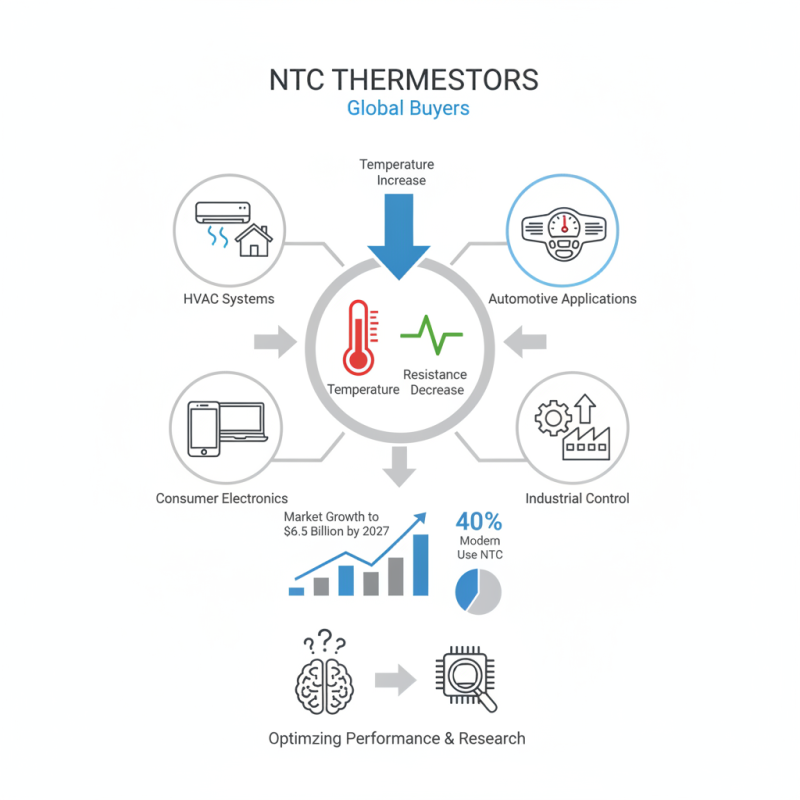
NTC thermistors play a crucial role in various applications worldwide. These temperature sensors are known for their sensitivity to changes in temperature. According to recent industry reports, the global thermistor market is expected to reach USD 6.5 billion by 2027, growing at a CAGR of 6.1%. This growth highlights the importance of understanding the Ntc Thermistor Function.
These thermistors exhibit a negative temperature coefficient, meaning their resistance decreases as temperature rises. This feature makes them ideal for temperature monitoring and control in HVAC systems, automotive applications, and consumer electronics. Reliable data indicates that about 40% of modern devices utilize NTC thermistors for precision temperature measurements. However, not all users understand how to optimize their performance in different environments.
While their reliability is well-documented, manufacturers often face challenges in calibrating these devices. Issues arise from variations in application conditions and inherent material properties. This complexity requires ongoing research and adaptation. Ultimately, comprehending the NTC thermistor function is essential for global buyers to make informed decisions and improve application outcomes.
The Role of NTC Thermistors in Temperature Sensing Applications
NTC thermistors play a pivotal role in temperature sensing applications. These resistive sensors are particularly sensitive to temperature changes. As the temperature rises, their resistance decreases, allowing for precise measurements. According to industry reports, the global NTC thermistor market is projected to grow by 8% annually, driven by increasing demand in diverse sectors.
In automotive and consumer electronics, NTC thermistors are integral for temperature monitoring and management. They help ensure devices operate efficiently and prevent overheating. A recent study revealed that around 70% of electronic manufacturers favor NTC thermistors for their reliability and affordability. Their robust performance in extreme conditions makes them suitable for critical applications, like HVAC systems and medical devices.
Despite their advantages, some challenges exist. Calibration issues can occur, affecting accuracy. Additionally, NTC thermistors can be sensitive to environmental factors, which may impact their performance. Continuous advancements in material science aim to address these limitations. The industry must focus on improving the consistency and longevity of these sensors to enhance their reliability in varying conditions.
Key Characteristics of NTC Thermistors Relevant to Global Buyers
NTC thermistors, or Negative Temperature Coefficient thermistors, play a critical role in temperature sensing and control. These resistive components decrease their resistance as temperature increases, making them ideal for precise temperature measurement. For global buyers, understanding their key characteristics is vital. Their response time is rapid, providing real-time data for applications ranging from home appliances to industrial systems.
Durability is another important characteristic. NTC thermistors are designed to withstand various environmental conditions, ensuring reliability over time. Many buyers prefer thermistors with wide temperature ranges. This versatility allows them to be used in numerous industries, including automotive and medical. The self-heating effect must also be considered. If overlooked, it could lead to inaccuracies in temperature readings. This aspect requires careful evaluation for specific applications.
Considering the sourcing of NTC thermistors, quality is paramount. A focus on high-quality materials can prevent failures in critical applications. However, potential buyers should be wary of the trade-offs. Lower-cost options may tempt buyers but can lead to reliability issues. Establishing strong relationships with trusted manufacturers can help mitigate these risks and ensure consistent performance.
Market Trends: Demand for NTC Thermistors in Consumer Electronics
NTC thermistors play a crucial role in consumer electronics, particularly in temperature sensing and control. These devices respond to temperature changes, altering resistance accordingly. This feature is vital for many applications, ensuring devices operate efficiently and safely. As the electronics market grows, so does the demand for precise thermal management solutions.
Recent trends indicate a rising usage of NTC thermistors in various consumer devices, from smartphones to home appliances. Companies are focusing on creating smaller, more efficient components. However, challenges remain, such as balancing size with performance. Buyers must weigh various factors, including accuracy and reliability, before making a purchase decision. The ongoing shift towards eco-friendly products adds another layer of complexity, as manufacturers seek sustainable materials.
Feedback from users highlights a desire for improved response times and durability. While today's NTC thermistors are effective, there is always room for refinement. Market demands continue to evolve, pushing for innovative designs. As global buyers navigate this landscape, it's essential to stay informed about advancements and emerging trends.
Comparative Analysis: NTC Thermistors vs. Other Temperature Sensors
NTC thermistors are critical components in temperature sensing. They exhibit a negative temperature coefficient, meaning their resistance decreases with increasing temperature. This property makes them highly sensitive and accurate for various applications. According to a report by Allied Market Research, the global NTC thermistor market is expected to reach $1.82 billion by 2026, highlighting their growing importance.
When comparing NTC thermistors to other temperature sensors, such as thermocouples and RTDs, distinct advantages emerge. NTC thermistors typically offer greater sensitivity and quicker response times. For instance, they can detect temperature changes within fractions of a degree. However, their operating range is narrower than that of thermocouples, which can withstand extreme temperatures. This limits their use in high-temperature applications.
Moreover, NTC thermistors are often less expensive than other technologies, providing cost-effective solutions without sacrificing accuracy. A study by MarketsandMarkets notes that as the demand for precise temperature measurement rises, NTC thermistors will likely continue to capture significant market share. However, users must consider their limitations in extreme conditions, prompting a careful evaluation of options depending on specific project needs.
Comparison of NTC Thermistors and Other Temperature Sensors
This bar chart compares the accuracy of NTC thermistors against other popular temperature sensors including RTD, thermocouples, and infrared sensors. As illustrated, NTC thermistors offer high accuracy, making them a reliable choice for various applications.
Applications of NTC Thermistors in Industrial and Automotive Sectors
NTC thermistors, or negative temperature coefficient thermistors, play a vital role in industrial and automotive applications. These resistors decrease in resistance as temperature rises, making them ideal for temperature sensing and control. In the automotive sector, they are used to monitor engine temperatures. Additionally, NTC thermistors help in battery management systems to ensure optimal performance and safety.
In industrial settings, NTC thermistors are crucial for accurate temperature regulation in manufacturing processes. They are often found in HVAC systems, where precise temperature control is essential for energy efficiency. Their small size and reliability enable seamless integration into various devices. However, end-users must be cautious. Not all thermistors are created equal. Choosing the wrong specifications can lead to system failures.
Despite their benefits, NTC thermistors require periodic calibration. This ensures accuracy over time. Users should routinely check their systems to avoid discrepancies. A lack of attention can lead to larger issues down the line. Moreover, understanding the thermal characteristics of these thermistors is necessary for optimal application. This knowledge helps engineers design effective systems, increasing overall reliability and performance.