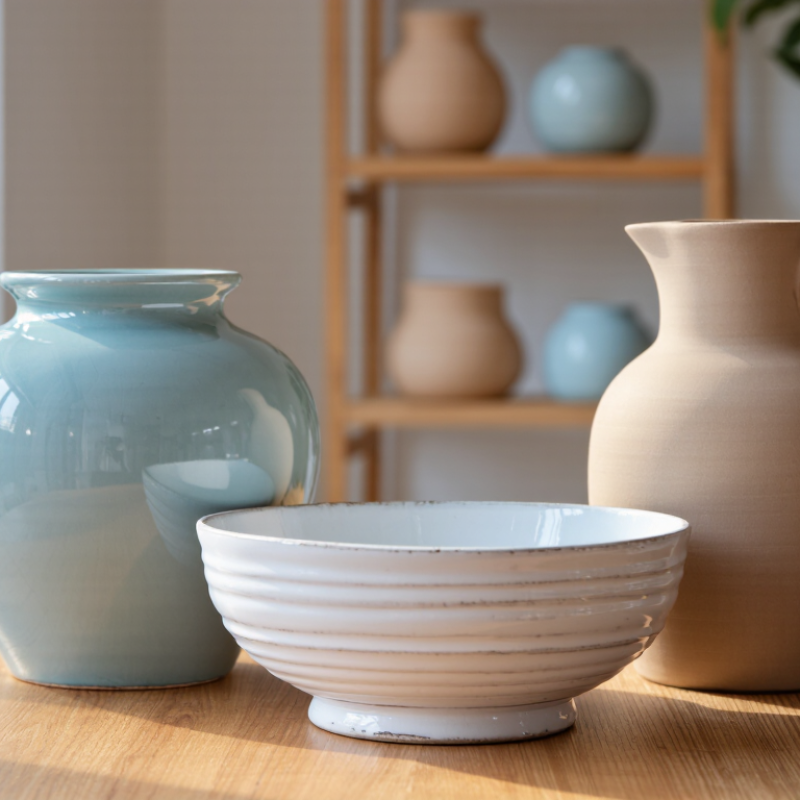
How to Source Ceramic Home Decor Wholesale

Sourcing Ceramic Home Decor wholesale requires more than finding attractive pieces at a low price. Buyers must examine design consistency, material quality, packaging strength, production capacity, and landed cost. A charming vase means little if its glaze varies between batches or arrives with a chipped rim.

Recent industry research supports this cautious approach. Grand View Research’s 2024 Home Decor Market analysis identifies online retail and design-led products as important growth areas. The Business Research Company’s 2024 ceramics market report also highlights expanding demand across residential and commercial applications. These reports do not solve every purchasing decision. They do, however, show why reliable wholesale sourcing matters.

Frances Palmer, ceramic artist and author of Life in the Studio, says, “I want my pots to be used.” That simple statement carries practical meaning for Ceramic Home Decor buyers. Products should look beautiful on a supplier’s website and remain useful on a dining table, shelf, or bathroom counter. Ask for physical samples. Test the base, glaze, handles, and protective packaging. Request clear information about minimum order quantities, replacement policies, lead times, and batch control.

A spreadsheet helps.

It cannot reveal every weakness. I have seen a small color shift change an entire collection’s appearance. Wholesale buyers should compare at least three suppliers before committing. Check certifications where relevant, review recent buyer feedback, and calculate freight, duties, breakage, and storage costs. The cheapest quote may become the most expensive mistake. Reliable sourcing is slower, less glamorous, and often more profitable.

How to Source Ceramic Home Decor Wholesale

Define Your Ceramic Home Decor Wholesale Requirements

Before contacting a supplier, define the exact role of your ceramic home decor. Will it be a small vase, candle holder, sculptural bowl, or wall piece? Each category changes tooling, breakage risk, packaging, and pricing. Grand View Research valued the global home decor market at approximately $682.9 billion in 2023, with projected annual growth of 4.8% through 2030. That scale creates opportunity, but vague requirements still produce expensive mistakes.

Write a practical product brief. Include dimensions, clay body, glaze finish, color tolerance, weight, target cost, order quantity, and delivery window. State whether pieces must be food-safe or decorative only.

Ask for sample approval before mass production. Specify carton strength, inner protection, drop testing, and acceptable defect rates.

A 2% surface imperfection may be reasonable for handmade ceramics, but a cracked rim is not.

Sustainability also needs measurable details. PwC’s 2024 Voice of the Consumer Survey found that consumers were willing to pay about 9.7% more for sustainably produced goods. Request recycled content percentages, firing energy information, and packaging specifications.

Do not accept vague claims. I have seen attractive samples hide weak cartons and inconsistent glaze colors.

My first brief often focuses too heavily on appearance. It should also define replenishment speed, inspection records, payment milestones, and corrective actions.

A perfect specification is rare. Leave room for honest testing.

Research and Compare Potential Wholesale Suppliers

When sourcing ceramic home decor wholesale, supplier research should begin with evidence, not attractive photos. Request a current catalog, material details, dimensions, glaze information, and wholesale pricing. Ask whether pieces are handmade or factory-produced. Production methods affect consistency, lead times, and acceptable variation. I also request sample units before discussing a larger order. A sample reveals pinholes, uneven bases, rough rims, and color differences that images often conceal.

Compare suppliers in a simple worksheet. Record minimum order quantity, sample cost, production time, packaging method, shipping terms, and replacement policy. Check how quickly each supplier answers technical questions. Clear replies usually indicate stronger operating discipline, although fast communication alone proves little. Ask for photos of packed cartons and drop-test procedures. Ceramic breaks easily. Poor internal cushioning can erase an attractive unit price.

I once compared only the lowest quoted price and overlooked inconsistent dimensions. That decision created extra sorting work and delayed product photography. A better review includes landed cost, defect allowance, reorder stability, and payment safeguards. Request references from comparable retailers when possible, but verify claims independently. Small trial orders remain useful, even after a supplier passes every document check. My process is not perfect; handmade variation can still surprise an experienced buyer. That uncertainty belongs in the budget, not hidden from it.

How to Source Ceramic Home Decor Wholesale - Research and Compare Potential Wholesale Suppliers

Supplier Profile Primary Region Main Product Category Typical MOQ Indicative FOB Price Range Production Lead Time Sample Availability Customization Options Compliance Documents to Request Packaging Standard Suggested Evaluation
Profile A East Asia Vases, planters, figurines 300 units per design US$3.50–12.00 per unit 35–50 days Available; sample fee usually credited after bulk order Glaze color, dimensions, logo embossing, gift boxes Material composition, glaze safety, heavy-metal test, carton drop test Individual foam or molded-pulp protection; export carton Strong for scalable collections
Profile B South Asia Hand-painted pottery and decorative bowls 100 units per design US$4.00–18.00 per unit 45–65 days Available; color variation may occur Hand-painted patterns, color palette, shape adjustments Glaze safety report, lead and cadmium test, ethical sourcing statement Paper wrapping, corrugated dividers, double-wall cartons Best for artisanal positioning
Profile C Southern Europe Tableware, candle holders, sculptural decor 250 units per design US$7.00–26.00 per unit 40–60 days Available; production sample recommended Custom glaze, mold development, embossed patterns Food-contact declaration where applicable, glaze test, factory quality policy Recyclable carton inserts and moisture-resistant outer cartons Strong for premium retail lines
Profile D Southeast Asia Minimalist vases, trays, and home accents 200 units per design US$4.50–15.00 per unit 30–45 days Available; one revision included Matte or glossy finish, color matching, retail labeling Glaze safety test, packaging test, social-compliance questionnaire Molded-pulp inserts or honeycomb paper protection Balanced cost and flexibility
Profile E Eastern Mediterranean Textured pottery, jars, and rustic decor 150 units per design US$5.00–20.00 per unit 35–55 days Available; handmade variation documented Texture, glaze finish, dimensions, private-label packaging Lead and cadmium test, glaze specification, quality inspection checklist Paper wrap with reinforced carton partitions Good for distinctive textures
Profile F Latin America Colorful bowls, planters, and wall decor 75 units per design US$6.00–22.00 per unit 30–50 days Available; color approval required Hand decoration, color combinations, small-batch designs Glaze safety report, artisan labor statement, packaging inspection report Recycled paper padding and double-wall cartons Suitable for small test orders
Comparison note: FOB price ranges are indicative wholesale benchmarks in U.S. dollars and exclude freight, duties, insurance, tooling, and destination charges. Confirm current pricing, MOQ, testing records, production capacity, packaging specifications, and trade terms directly before placing an order.

Evaluate Product Quality, Materials, and Manufacturing Standards

How to Source Ceramic Home Decor Wholesale

Quality begins with the clay body, not the photograph. Stoneware usually feels denser than earthenware and shows fewer absorption problems. Ask suppliers for clay composition, firing temperature, glaze specifications, and batch records. Grand View Research valued the global ceramic tableware market at about USD 10.7 billion in 2023, with continued growth forecast through 2030. That expansion can encourage shortcuts. A beautiful sample may still hide weak production control.

Inspect every surface under bright, angled light. Look for pinholes, crawling, crazing, uneven glaze, sharp edges, and unstable bases. Measure several pieces, not just one. Differences in diameter or height reveal inconsistent molding. For decorative pieces used near food, request lead and cadmium migration tests. Relevant methods include ASTM C738 and ISO 6486. For general decor, ask for impact, moisture, and colorfastness testing. ISO 9001-based quality procedures can support traceability, but certification alone proves little. I have learned that paperwork cannot replace physical inspection.

Tips: Request three production samples from separate batches. Check their weight, dimensions, glaze tone, and packaging damage. Ask for kiln temperature records and test reports from an independent laboratory. Keep one approved sample for later comparison. Do not accept “handmade variation” as an excuse for cracks or unsafe surfaces. The standard may need refining. Revisit it after the first shipment.

Review Pricing, Minimum Orders, and Shipping Terms

Sourcing ceramic home decor wholesale starts with a realistic landed-cost review. Ask suppliers for prices by quantity, glaze, size, packaging, and inspection level. A low unit price can hide costly foam inserts, export cartons, or high defect rates. I usually request three tiers, such as 100, 300, and 1,000 pieces. Then I compare the cost per saleable item, not the cost per shipped item. Some pieces arrive chipped. That changes everything.

Minimum orders deserve equal attention. A factory may quote 500 units, but each color could require another 100 pieces. Confirm whether the MOQ applies to one design, one finish, or the whole purchase order. Order samples first, then test stacking, moisture exposure, and carton compression. My early mistake was accepting attractive samples without checking production consistency. The reflection is useful: handmade variation may sell well, but uncontrolled variation creates returns.

Shipping terms must be written precisely. Incoterms should identify who pays freight, insurance, customs clearance, and destination charges. UNCTAD’s Review of Maritime Transport 2024 states that ships carry over 80% of global merchandise trade by volume, so port delays can affect inventory planning. The World Bank’s 2023 Logistics Performance Index evaluates customs, infrastructure, shipment tracking, and timeliness on a one-to-five scale. Use those risks in your purchase plan. Compare EXW, FOB, and DDP quotes only after confirming duties, delivery windows, damage claims, and carton counts. A cheaper quote is not always cheaper.

Place Samples and Build a Reliable Supplier Relationship

Sourcing ceramic home decor wholesale becomes safer when samples guide every decision. Do not judge a supplier from photographs alone. Request several pieces with different shapes, glazes, and surface finishes. Examine each item under natural light. Look for pinholes, uneven rims, hairline cracks, and unstable bases.

I once approved a sample too quickly because its color looked excellent. The larger production batch showed slight shade differences and rough underside edges. That mistake taught me to request a signed sample standard. Record dimensions, weight, glaze color, packaging details, and acceptable defect limits. Ask whether the sample uses the same clay body and firing process as bulk orders. It should.

Clear communication builds a more reliable supplier relationship. Share reference photos, target quantities, carton requirements, and delivery windows in writing. Ask for production photos before packing. A dependable supplier should explain delays, material changes, and quality concerns without hiding details. Small trial orders reveal more than confident promises. Inspect random cartons, not only the top layer. Keep notes after every shipment, including breakage rates and response times.

Be practical. Good suppliers still make mistakes. What matters is how they correct them. Discuss replacement procedures and inspection responsibilities before payment. Maintain respectful contact between orders, rather than appearing only when problems occur. Occasional video calls can clarify glaze texture better than long message threads. Trust grows slowly, through consistent samples, accurate records, and honest conversations.

How to Source Ceramic Home Decor Wholesale: Supplier Evaluation Priorities

A practical 100-point framework for comparing ceramic home decor suppliers before placing samples and building a reliable long-term relationship.

Product quality and sample accuracy receive the highest weighting because they directly affect customer satisfaction and repeat orders. MOQ flexibility, lead-time reliability, communication, and protective packaging help reduce purchasing risk during supplier development.

Build your system. Protect your boat. Join the movement.

Compare Products
Talk to Sales