Essential Tips for Choosing the Best Recreational Vehicle?
Choosing the right Recreational Vehicle (RV) can significantly enhance your travel experience. An RV serves as your home on wheels, fitting your lifestyle and adventure style. Selecting one often feels overwhelming due to various options.
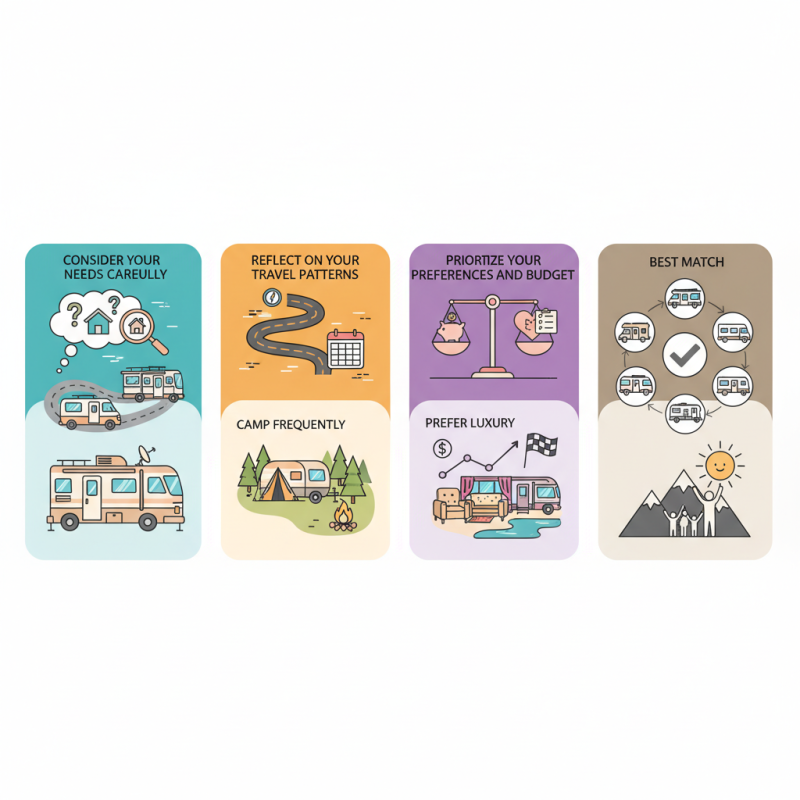
Consider your needs carefully. Different RV types exist, from compact campers to spacious motorhomes. Each has unique benefits and drawbacks. For instance, smaller RVs are easier to maneuver. However, they may lack essential amenities. This could affect your comfort during longer trips.
Reflect on your travel patterns. If you plan to camp frequently, focus on models with excellent storage and versatility. If you prefer luxury, opt for a larger motorhome with advanced features. Remember, no RV is perfect. Take time to evaluate what truly matters to you. Prioritize your preferences and budget to find the best match.
Factors Influencing RV Choice: Types, Sizes, and Features
Choosing the right recreational vehicle (RV) involves considering various factors like type, size, and features. Different RV types include motorhomes, travel trailers, and fifth wheels. Each has unique advantages. For instance, motorhomes are perfect for those who want convenience and ease of driving. On the other hand, travel trailers offer flexibility, allowing you to detach the vehicle for local trips. Knowing your travel style can help you select the best option.
Size is another crucial aspect. An RV that's too small might not provide the comfort needed for long trips. Conversely, one that’s too large could be cumbersome on narrow roads. Evaluate how many passengers will travel with you. A couple may be happy in a compact RV, while a family might need more space for comfort. It's easy to get carried away by size; think practically about your needs.
Features also play a significant role in your decision. A fully equipped kitchen might appeal to some, while others might prioritize entertainment features. Consider what’s essential for your trips. Reflect on what amenities you truly need versus what looks good on paper. Balancing preferences with realism can help you make a more informed choice. Remember, each feature adds weight to the RV, affecting fuel efficiency and drivability.
Understanding Different RV Classes: Motorhomes vs. Trailers
When considering an RV purchase, understanding the differences between motorhomes and trailers is crucial. Motorhomes offer the convenience of driving and living space in one unit. They come fully equipped with kitchens and bathrooms, making long journeys comfortable. However, their size can be challenging in tight parking spots or narrow roads.
Trailers, on the other hand, require a towing vehicle. They can be detached from the car, allowing for easier exploration of areas. Trailers often offer more living space than motorhomes at lower costs. Yet, setting them up at a campsite can be time-consuming. It’s essential to consider your travel habits. Do you prefer to drive directly to your destination, or do you enjoy making several stops along the way?
Choosing the right RV class also depends on your comfort level. Motorhomes provide immediate access to living space, but it can feel cramped on rainy days. Trailers allow for more outdoor activities but can bring logistical challenges. Reflecting on how you intend to use your RV will guide your decision. Each class has its pros and cons, and understanding these will lead to a better choice.
Evaluating Budgeting Strategies for RV Purchase and Maintenance
When considering an RV purchase, budgeting strategies are crucial. Studies indicate that the average cost of an RV can range from $10,000 to over $300,000. Understanding your financial limits is essential.
Monthly payments vary widely. Depending on the loan term and interest rates, many owners pay between $200 and $600. Remember to account for insurance, maintenance, and storage fees. RV owners typically spend around $1,500 to $3,000 annually on maintenance. It's easy to overlook these costs.
Fuel expenses also add up quickly. Industry reports suggest that RVs can achieve 10 to 15 miles per gallon. During long trips, this could easily exceed $200 per week. Budgeting should include these real expenses. Many new owners fail to remember these realities. Planning for the unexpected is also wise. An unanticipated repair can quickly strain finances.
Analyzing the Importance of RV Weight and Towing Capacity
When choosing a recreational vehicle, it’s crucial to analyze RV weight and towing capacity. These factors significantly influence safety and performance. An RV that is too heavy for your towing vehicle can lead to dangerous situations on the road. Always check the manufacturer's specifications. Make sure your vehicle can handle the RV weight.
Understanding your needs is vital. Are you traveling solo, or with family? Larger families often require spacious RVs. However, larger units can be heavier. It’s essential to balance space with the towing limits of your vehicle. Calculate the total weight you plan to tow. This includes passengers, gear, and any additions.
Many overlook the importance of weight distribution. An RV that feels stable while parked can behave differently when towing. Uneven weight can cause swaying or poor braking. Test your setup in a safe, controlled environment. Take time to adjust and reflect on your experience. Competence in understanding these factors can enhance your RV experience immensely.
Researching Industry Trends: RV Sales Growth and User Preferences
The recreational vehicle (RV) market has seen remarkable growth in recent years. According to the RV Industry Association, RV shipments in 2022 reached 600,000 units, marking a 20% increase compared to the previous year. This surge indicates a strong consumer interest in leisure travel. The rise in popularity aligns with shifting user preferences towards outdoor experiences and flexible travel options.
Demographics play a significant role in shaping the RV landscape. A recent study by Statista revealed that around 53% of RV owners are between 35 to 54 years old. Younger generations are also entering the market. This trend shows a growing desire for adventure among millennials. Many seek more affordable travel alternatives post-pandemic. However, it’s crucial to note that not all purchases come without challenges. New RV owners often cite maintenance costs and initial investment as potential drawbacks.
Sustainability trends are further influencing consumer decisions. Reports suggest that nearly 40% of RV buyers consider eco-friendliness when making a purchase. This could lead to an increase in hybrid and electric models in the coming years. Diverse preferences mean manufacturers must adapt continuously. However, while the market grows, potential buyers must weigh their options carefully, considering their lifestyle, budget, and personal travel goals.