China Top 10 Depth Filter Sheet Manufacturers

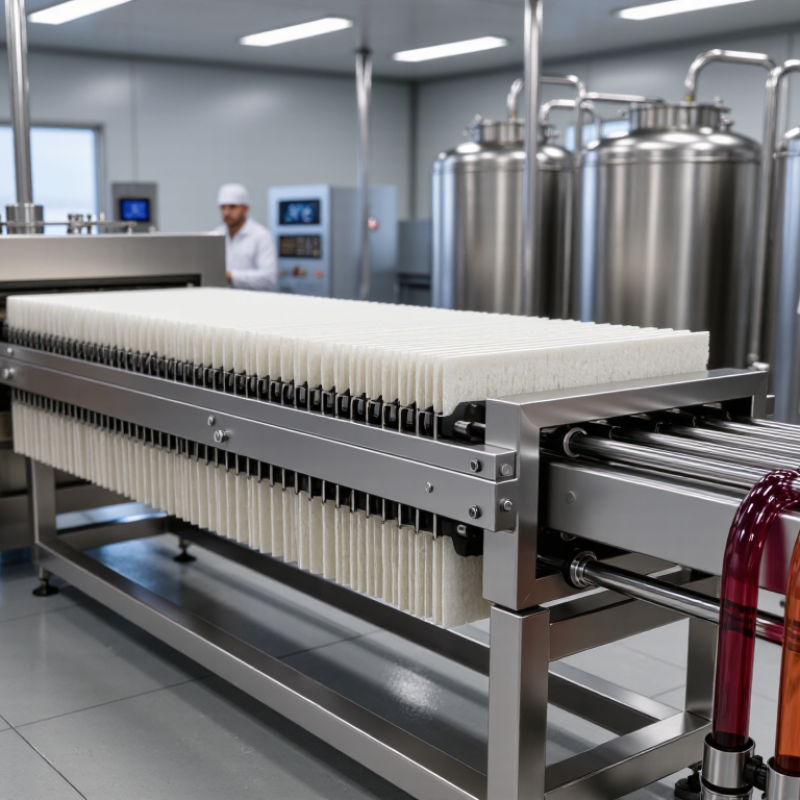
Depth Filter Sheet products support the clarification of wine, beer, edible oils, and pharmaceutical liquids. At a production line, the sheet sits between plates in a filter press, where its fiber structure helps retain suspended particles. The right grade can affect clarity, flow rate, and product loss. Small details matter. Yet a datasheet alone cannot predict performance; the liquid, operating pressure, and filtration setup all play a part.

Industry data gives this topic useful context. The OIV’s 2024 report, State of the World Vine and Wine Sector in 2023, estimated global wine production at 237 million hectolitres. It reported the lowest output in six decades. This figure does not measure filter-sheet demand, but it shows the scale of one important beverage application. MarketsandMarkets’ Filtration Market research also examines filtration across food and beverage, pharmaceuticals, and water treatment—sectors where process consistency matters.

This guide introduces China’s top 10 Depth Filter Sheet manufacturers and the practical questions buyers should ask. Compare material composition, sheet grades, retention claims, operating limits, and quality-control documentation. Check whether a supplier can provide samples and application support. A low price may look attractive, but it is not a performance test. Rankings also have limits: product fit depends on the process, and public data may not reveal every factory’s capabilities. Use the list as a starting point, then verify specifications directly with each manufacturer.
China Top 10 Depth Filter Sheet Manufacturers

What Depth Filter Sheets Are and How They Work

Depth filter sheets are porous, fibrous media designed to retain particles throughout their thickness, not only on the surface. Their structure often combines cellulose fibers with mineral filter aids and, in some grades, binding resins. The exact composition varies, so check technical data before selecting a sheet. Small particles follow winding paths through the matrix. Larger particles are held in its deeper channels, while finer particles may be captured by interception or adsorption. It is not a simple sieve.

During filtration, liquid passes through the sheet under pressure. Solids collect within the media, gradually increasing resistance and reducing flow. Operators commonly track pressure difference, flow rate, and filtrate clarity to judge when a sheet needs changing. Watch the trend. A sudden change may signal poor installation, a leak, or an unexpected solids load—not simply a spent sheet. Before use, confirm chemical compatibility and follow the sheet maker’s preparation instructions; some applications require wetting or flushing. Results also depend on liquid viscosity, particle type, and operating conditions. A sheet that works well in one process may perform poorly in another. Bench testing is useful, though it cannot perfectly reproduce production conditions.

Criteria for Evaluating Chinese Depth Filter Sheet Manufacturers

Criteria for Evaluating Chinese Depth Filter Sheet Manufacturers

A capable manufacturer should explain how each sheet grade balances particle retention, flow rate, and dirt-holding capacity. Ask for test methods, not just attractive specification tables. Request recent batch records showing thickness, permeability, wet strength, and ash content. Small variations matter. They can change pressure drop and filtration time on a production line.

MarketsandMarkets estimated the global filtration market at USD 40.9 billion in 2023, projecting USD 56.3 billion by 2028. This growth signals wider demand, but it does not prove any supplier’s quality. Compare independent test reports with your own process conditions, including liquid type, temperature, and operating pressure. For food or pharmaceutical use, review fiber composition, extractables data, and material-suitability documentation. Check that certificates cover the actual production site and product grade.

A factory audit should include raw-material traceability, in-process checks, and retained samples from finished lots. Ask how the supplier handles out-of-specification results and repeat orders. A tidy laboratory is useful; consistent records are more useful. One limitation is that sample testing may not predict every production run. So, verify several lots before approval, and document any gaps rather than assuming they will disappear.

China Top 10 Depth Filter Sheet Manufacturers: Criteria for Evaluation

Representative nominal retention grades found in depth filter sheet specifications

Retention grades are product specifications, not a ranking of manufacturers. When evaluating suppliers, confirm the test method, retention performance, batch consistency, documentation, and suitability for the intended process. Available grades vary by product and application.

Profiles of 10 Leading Depth Filter Sheet Manufacturers in China

China’s depth filter sheet market serves beverage, pharmaceutical, and fine-chemical processes. The ten manufacturer profiles are most useful as a comparison of capabilities, not a fixed ranking. Each profile should examine fiber composition, sheet dimensions, retention range, and available quality documentation. These details affect clarification speed, product loss, and filter life. Small differences matter.

Manufacturers may vary in how they control raw materials, test batch consistency, and support custom formats. Ask for current technical data, sample sheets, and test results suited to your liquid and operating conditions. A stated retention rating alone may not predict performance in a real process. Compare pressure drop and filtration capacity where data is available. Published information can be uneven, so some comparisons remain incomplete; that is worth acknowledging.

Tips: Request samples and run a controlled trial. Record flow rate, pressure, and clarity. Check whether the supplier can trace each production batch.

Product Types, Applications, and Manufacturing Capabilities

China Top 10 Depth Filter Sheet Manufacturers: Product Types, Applications, and Manufacturing Capabilities

Depth filter sheets capture particles throughout a porous matrix, rather than only at its surface. Common formulations combine cellulose fibers with diatomaceous earth or perlite; some add resins for wet strength. Coarse grades clarify cloudy process liquids, while finer grades target smaller particles. Applications include beverage polishing, pharmaceutical process filtration, and chemical clarification. No sheet fits every batch. Selection depends on fluid viscosity, particle load, flow rate, and required clarity.

Manufacturing capability matters as much as the product label. Buyers can ask how suppliers control fiber blending, pore structure, sheet thickness, and drying. Request test data for retention, permeability, wet strength, and extractables, then compare results under similar operating conditions. MarketsandMarkets estimated the global filtration market at USD 33.7 billion in 2022 and projected USD 44.9 billion by 2027, a 5.9% compound annual growth rate. This broad market figure signals demand, but does not measure depth-sheet sales specifically. That distinction is easy to miss.

Tips: Ask for samples and a trial protocol. Check lot-to-lot consistency, not just a single specification sheet. A small pilot run can reveal uneven flow or premature clogging—details a catalog may not show.

China Top 10 Depth Filter Sheet Manufacturers - Product Types, Applications, and Manufacturing Capabilities

The entries below describe ten common depth-filter-sheet product and manufacturing capability profiles, not named companies or a verified supplier ranking. Filter performance and retention ratings vary by grade and test method; confirm specifications directly with each supplier.

No. Capability Profile Product Types Typical Media Common Applications Relevant Manufacturing Capabilities
1 General-purpose clarification Coarse and medium-grade depth sheets Cellulose fibers with mineral filter aids, such as diatomaceous earth or perlite Clarification of process liquids, beverages, and industrial fluids Sheet forming, controlled basis weight and thickness, cutting, and standard packaging
2 Fine clarification Fine-grade sheets for particle removal Cellulose and selected mineral filter aids Polishing of liquids where suspended solids and turbidity need reduction Grade formulation, uniform sheet formation, and batch-to-batch testing of physical properties
3 High dirt-holding capacity Open-structure depth sheets Cellulose fibers with a relatively open pore structure and filter aids Liquids with higher solids loading and prefiltration before finer filtration Control of porosity, sheet strength, thickness, and permeability
4 Adsorptive treatment Adsorptive depth sheets Cellulose combined with activated carbon or other adsorptive media Reduction of certain color bodies, odors, or adsorbable compounds, depending on the formulation Media dispersion, sheet uniformity, and checks for extractables and particle release
5 Food and beverage processing Clarifying and polishing grades for process use Cellulose and suitable mineral filter aids Beverage and food-liquid clarification, subject to application-specific compliance requirements Lot traceability, hygienic packing options, and documentation of material compliance where applicable
6 Pharmaceutical and bioprocess support High-purity clarification sheets Selected cellulose and mineral components, subject to product specification Process clarification steps; suitability must be validated for the specific process and regulatory requirements Controlled production records, cleanliness controls, and testing for relevant extractables or leachables
7 Chemical-process filtration Application-specific sheets for compatible process liquids Cellulose, mineral filter aids, or other specified constituents Clarification of selected chemical solutions, subject to chemical compatibility checks Custom grade development and evaluation of wet strength, flow, and compatibility with the intended liquid
8 High-strength sheet construction Reinforced or higher-wet-strength depth sheets Cellulose-based formulations with selected reinforcing fibers or binders Applications where handling strength and resistance to wet operation are important Control of reinforcement distribution, dimensional stability, and wet-strength testing
9 Custom-size and format production Sheets, cut pads, and customer-specified formats Media selected to meet the required filtration and handling properties Filter presses and other equipment designed for sheet or pad formats Slitting, die cutting, dimensional inspection, and packaging to agreed specifications
10 Quality-control-focused production Multiple grades supported by defined release checks Formulation-dependent fiber and filter-aid blends Industrial and process applications requiring documented, repeatable sheet properties Checks may include thickness, basis weight, permeability, wet strength, dimensions, and grade-specific retention testing

How to Select a Depth Filter Sheet Manufacturer in China

When selecting a depth filter sheet manufacturer in China, start with your process, not a catalog description. Define the liquid, operating temperature, flow rate, and particles you need to retain. A sheet that performs well in a water trial may behave differently with a viscous product. Details matter.

Ask for technical data on retention, permeability, thickness, wet strength, and extractables where relevant. Request recent batch records and traceability details, then compare them with your own acceptance criteria. Good documentation should explain how measurements are taken, not just list impressive numbers. Ask how raw materials and finished sheets are checked. Clear answers are a useful sign. Vague promises are not.

Order samples from the grade you plan to purchase and test them under realistic conditions. Record pressure changes, flow, filtrate clarity, and any shedding or handling problems. A small pilot can reveal issues that a specification sheet misses. It takes time. That step is easy to skip when deadlines are tight, and I would not treat one successful run as proof of consistent performance. Also discuss lead times, minimum order quantities, packaging, and how the supplier handles complaints or production changes. Get important commitments in writing before placing a large order.

Build your system. Protect your boat. Join the movement.

Compare Products
Talk to Sales