Top 10 Hydraulic Rubber Hose Manufacturers Worldwide?
Choosing the Top 10 Hydraulic Rubber Hose Manufacturers Worldwide requires more than comparing sales figures or website claims. Hydraulic hoses work under intense pressure, vibration, heat, and repeated bending. A small failure can stop a construction machine, factory line, or agricultural system. This guide examines manufacturers through practical criteria, including pressure ratings, reinforcement design, temperature resistance, product consistency, testing procedures, and global service support.
The evaluation also considers certifications, traceability, distributor networks, customization options, and documented field experience. A reliable supplier should explain its hose construction clearly, from the inner tube compound to the steel wire braid or spiral reinforcement. It should also provide accurate dimensions, compatible fittings, performance data, and replacement guidance. These details matter when a hose operates beside a hot engine or through a narrow machine frame.
Numbers can mislead.
Ranking manufacturers worldwide is not perfectly simple. Public information differs between regions, while product ranges and certifications can change over time. Some companies excel in mining applications, while others focus on mobile hydraulics, marine equipment, or industrial automation. Therefore, this list offers a practical comparison rather than an absolute verdict. The selected manufacturers demonstrate strong technical capability, recognizable quality systems, and credible market experience. Still, buyers should verify current specifications, local availability, and application compatibility before purchasing. Even an established brand may not suit every pressure class, fluid type, or installation environment. That caution is part of responsible sourcing.
What Are Hydraulic Rubber Hoses and How Do They Work?
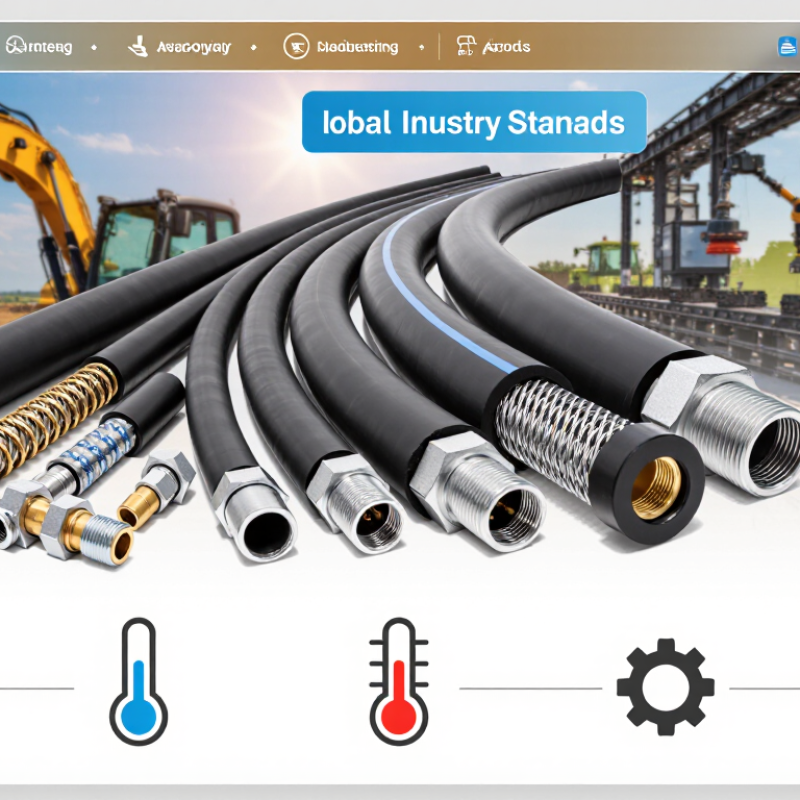
Hydraulic rubber hoses are flexible pressure lines that transfer oil or other approved fluids between a pump, valve, and actuator. The pump creates flow and pressure. The hose carries that energy without becoming rigid. Its inner tube contains the fluid, while braided or spiral reinforcement resists pressure. The outer cover shields against abrasion, heat, moisture, and ozone. Small details matter. A twisted hose can fail early.
Hydraulic hoses work through controlled fluid movement. When a valve opens, pressurized fluid moves through the hose and drives a cylinder or motor. Pressure ratings must exceed the system’s normal working pressure, including possible surges. ISO 18752 and SAE J517 provide widely used requirements for hose performance, dimensions, and testing. A 2024 Grand View Research assessment valued the global hydraulic hose market at roughly US$2 billion in 2023, reflecting broad use in construction, agriculture, transport, and industrial equipment.
In field inspections, leaks often begin near fittings, sharp bends, or overheated sections. I would not judge a hose by appearance alone. Flexible does not mean weak. Yet replacement intervals are not universal. Fluid chemistry, temperature, vibration, and installation quality change service life. The commonly missed point is routing: maintaining the recommended bend radius can matter as much as selecting a higher-pressure hose.
Key Standards for Evaluating Global Hose Manufacturers
Top 10 Hydraulic Rubber Hose Manufacturers Worldwide?
Global hose manufacturers should be judged by measurable performance, not impressive catalogs. A reliable producer follows recognized standards such as ISO 18752, SAE J517, and applicable EN specifications. These standards help verify pressure ratings, dimensions, impulse resistance, and construction quality. However, certification alone is not enough. Test reports should identify the exact hose series, test conditions, and production batch.
Look closely at manufacturing controls. Strong suppliers maintain traceability from rubber compounds and reinforcement wire to final inspection. Their laboratories should test burst pressure, impulse cycles, abrasion, ozone exposure, temperature limits, and fluid compatibility. Factory audits can reveal practical details, including storage conditions, crimping guidance, and how rejected products are handled. Paperwork can look impressive. Real consistency matters more.
Tips: Request recent, product-specific test evidence instead of general certificates. Check whether quality records are independently verified. Ask about failure analysis and corrective actions; honest answers often show technical maturity. Review delivery history, technical support, and emergency replacement procedures. A low price may hide shorter service life. No checklist is perfect, and even experienced buyers can overlook application-specific risks. Confirm working pressure, bend radius, temperature, and fluid type before comparing manufacturers.
Top 10 Hydraulic Rubber Hose Manufacturers Worldwide
Top 10 Hydraulic Rubber Hose Manufacturers Worldwide
The top 10 hydraulic rubber hose manufacturers worldwide are usually judged by engineering depth, production consistency, and field performance. A credible comparison should examine more than sales volume. It should review reinforced construction, pressure ratings, temperature ranges, and documented impulse testing. In practical purchasing work, hose flexibility matters too. A rigid hose can stress fittings, especially near vibrating pumps.
Leading manufacturers typically supply hoses tested against recognized international standards. Their facilities often use controlled rubber mixing, automated reinforcement, and calibrated crimping equipment. Look for clear batch numbers and traceable inspection records. These details help maintenance teams identify failures quickly. Some manufacturers also provide application guidance for mining, agriculture, construction, and industrial machinery. Useful guidance is specific. “Suitable for heavy duty” is not enough.
No ranking is perfect. A company may excel in high-pressure hose but perform poorly with compact routing. Another may offer excellent quality, yet struggle with regional delivery. I would compare burst pressure, minimum bend radius, cover resistance, and coupling compatibility before choosing a supplier. Field trials can reveal problems that brochures miss. Small leaks, stiff bends, or premature cover wear deserve serious attention. Cost still matters, but the cheapest hose may create longer downtime. That lesson is easy to overlook.
Top 10 Hydraulic Rubber Hose Manufacturers Worldwide
| Rank | Manufacturer Profile | Primary Manufacturing Region | Core Hose Construction | Common Applicable Standards | Typical Working Pressure | Typical Temperature Range | Common Bore Sizes | Typical Applications |
| 1 | Profile A | Western Europe | High-pressure rubber hose with one or more steel-wire braid layers | SAE 100R1AT, EN 853 1SN | 160–250 bar | Approximately −40°C to +100°C | 6–51 mm | Industrial machinery, mobile hydraulics, material handling equipment |
| 2 | Profile B | East Asia | Two-wire steel-braid hose designed for demanding hydraulic circuits | SAE 100R2AT, EN 853 2SN | 250–400 bar | Approximately −40°C to +100°C | 6–51 mm | Construction equipment, agricultural machinery, lifting systems |
| 3 | Profile C | North America | Spiral-wire and compact high-pressure rubber hose assemblies | SAE 100R12, ISO 18752 | 280–420 bar | Approximately −40°C to +121°C | 10–51 mm | Mining, heavy construction, forestry and off-highway equipment |
| 4 | Profile D | Central Europe | Multi-spiral wire hose for high-pressure and high-impulse service | SAE 100R13, EN 856 4SP | 350–450 bar | Approximately −40°C to +121°C | 13–51 mm | Steel mills, hydraulic presses, heavy mobile machinery |
| 5 | Profile E | South Asia | Textile-reinforced and wire-reinforced rubber hose for general hydraulics | SAE 100R3, SAE 100R6 | 70–110 bar | Approximately −40°C to +100°C | 5–38 mm | Low-pressure return lines, pilot circuits, lubrication systems |
| 6 | Profile F | Southern Europe | Thermoplastic-covered rubber hose for abrasion-resistant applications | SAE 100R7, ISO 3949 | 140–350 bar | Approximately −40°C to +93°C | 5–25 mm | Robotics, machine tools, compact hydraulic systems |
| 7 | Profile G | East Asia | High-temperature synthetic-rubber hose with braided reinforcement | SAE 100R8, ISO 3949 | 210–420 bar | Approximately −40°C to +100°C | 5–25 mm | Elevated-temperature hydraulics, compact equipment, control lines |
| 8 | Profile H | North America | Four-spiral wire hose for severe impulse and high-pressure duty | SAE 100R15, ISO 18752 | 420–560 bar | Approximately −40°C to +121°C | 19–51 mm | Mining systems, heavy-duty cranes, large excavators |
| 9 | Profile I | Western Europe | Flame-resistant and electrically non-conductive hydraulic hose variants | EN 853, EN 857, ISO 8031 | 100–350 bar | Approximately −40°C to +100°C | 6–38 mm | Underground mining, industrial plants, utility equipment |
| 10 | Profile J | Middle East and Southeast Asia | Oil-resistant rubber hose with flexible wire-braid reinforcement | SAE 100R1, SAE 100R2, EN 853 | 160–400 bar | Approximately −40°C to +100°C | 6–51 mm | Oil and gas support equipment, marine hydraulics, general industry |
Pressure, temperature and size ranges are typical industry values; the exact rating depends on hose construction, fluid type, fitting configuration and applicable certification requirements.
Product Ranges, Technologies, and Industry Applications
The top ten hydraulic rubber hose manufacturers compete through product range, testing depth, and application expertise. Industry estimates place the global hydraulic hose market at about USD 2.5 billion in 2023, with Grand View Research forecasting continued growth through 2030. Mining, construction, agriculture, and mobile equipment remain major demand centers. Tough environments need more than pressure capacity. They need abrasion resistance, temperature stability, and controlled bending.
Leading manufacturers commonly produce textile-reinforced, wire-braided, and spiral-wire hoses. Their ranges may cover low-pressure return lines, high-pressure power circuits, suction hoses, and compact connection assemblies. Products designed around SAE 100R and ISO 18752 requirements support clearer performance comparisons. ISO 18752 also classifies hoses by pressure, temperature, and impulse performance. That detail matters on excavators where sharp movement and dirty conditions accelerate wear. Small fittings can become expensive failures.
Technology is moving toward lighter constructions, improved cover compounds, and digital traceability. MarketsandMarkets reports that mobile hydraulics will remain a significant application segment as equipment fleets expand worldwide. Food processing and industrial automation require different priorities, including cleanable surfaces and tighter routing. Experienced buyers should examine impulse-test results, minimum bend radius, and field replacement records. A glossy catalog is not enough. Some rankings remain subjective because public warranty data is limited. Installation errors also distort comparisons. Even a premium hose can fail when routing, clamping, or contamination control is neglected.
How to Choose the Right Hydraulic Hose Manufacturer
Top 10 Hydraulic Rubber Hose Manufacturers Worldwide: How to Choose the Right Supplier
Choosing among the top ten hydraulic hose manufacturers requires more than comparing prices. Grand View Research estimated the global hydraulic hose market at about USD 2 billion in 2023. It also projects steady growth through 2030. This growth increases supplier choices, but not necessarily product reliability. Check each manufacturer’s experience with your pressure range, fluid type, temperature, and operating environment. A capable supplier should provide traceable test records, material data, and clear replacement guidance. ISO 18752 and SAE performance classifications offer useful benchmarks, but specifications must match the actual machine.
Ask for burst-pressure results, impulse-cycle data, and dimensional tolerances. These details expose weaknesses hidden by attractive catalogs. Confirm whether the supplier tests complete assemblies, not only loose hose. Also review quality controls, production capacity, delivery history, and technical support. The International Organization for Standardization emphasizes documented quality systems and traceability in manufacturing. However, a certificate alone does not prove consistent field performance. I have seen apparently suitable hoses fail after repeated bending near hot steel surfaces. The selection process is not perfectly predictable.
Tips: Request samples from the same production batch. Check markings and storage dates. Test hose compatibility with the exact hydraulic fluid. Keep installation records, including bend radius and fitting torque. Reassess the supplier after the first service cycle. One overlooked detail can become a costly shutdown.