Top 10 Laminated Safety Glass Manufacturers Worldwide

Laminated Safety Glass is used where visibility and post-breakage containment must work together. It consists of glass layers bonded by an interlayer, which can help hold fragments in place after impact. Performance varies with glass thickness, interlayer type, fabrication quality, and the conditions in which the product is installed. Details matter.

This guide to the Top 10 Laminated Safety Glass Manufacturers Worldwide offers a practical starting point for comparing suppliers. It considers factors such as product range, manufacturing capabilities, quality controls, technical support, and experience across architectural, automotive, and other applications. A manufacturer’s published specifications can help, but they do not replace project-specific review. Ask how products are tested, what documentation is available, and whether the supplier can support the intended design and installation requirements.

The list is not a universal ranking for every buyer. Regional availability, lead times, customization, and local project standards can change which supplier is the right fit. Even strong product data has limits. Buyers should confirm current certifications and performance information directly with manufacturers, and consult qualified professionals when evaluating safety-critical applications. A comparison can narrow the field; it cannot make the final decision by itself.
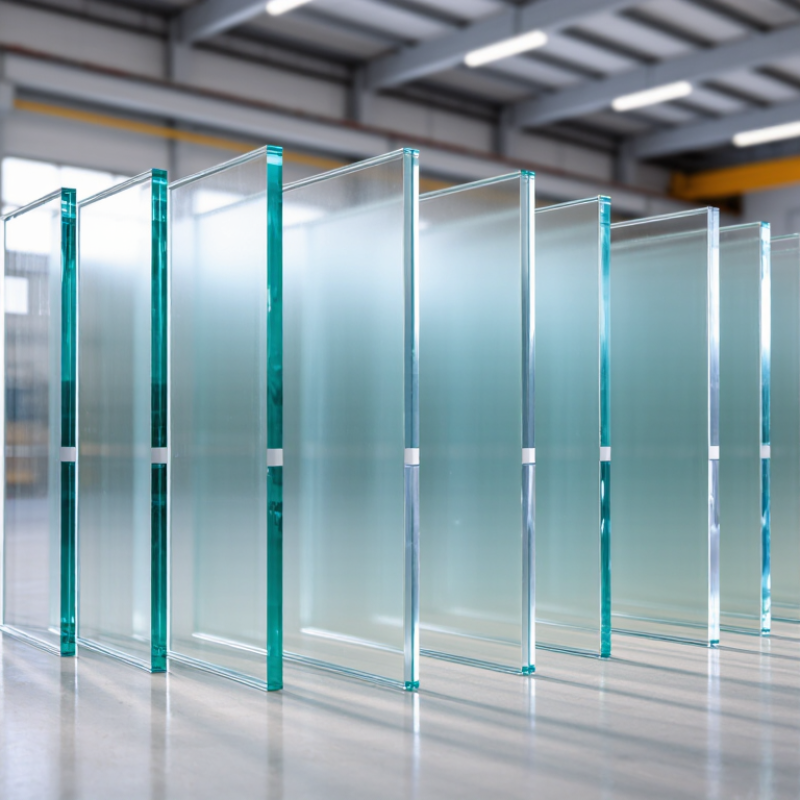
Top 10 Laminated Safety Glass Manufacturers Worldwide

Laminated Safety Glass: Structure, Standards, and Applications

Laminated safety glass is made by bonding two or more glass panes around a clear or tinted interlayer. Heat and pressure help create a single composite panel. If broken, many fragments remain attached to the interlayer rather than falling freely. That can reduce injury and help maintain a barrier. Not always. Performance depends on the glass thickness, interlayer type, and quality of production.

Standards test specific properties, not every real-world condition. Depending on the market, specifications may reference impact, breakage, or post-breakage behavior. Buyers should check the exact standard, test level, and product configuration listed in technical documents. A certificate for one thickness or interlayer does not automatically cover another. This detail is easy to miss. Installation, edge protection, and support conditions also affect how glazing performs after damage.

Common applications include doors, storefronts, curtain walls, skylights, and glass balustrades. In overhead glazing, designers consider falling fragments and support after breakage. For façades, they balance safety with daylight, sound control, and heat performance. Ask suppliers for test reports that match the intended build-up, then confirm that installers follow the approved details. Specifications look tidy on paper; site conditions can be less so. Regular inspection helps reveal edge damage, moisture intrusion, or separation between layers before concerns become harder to assess.

Criteria for Identifying Leading Manufacturers Worldwide

A credible comparison of laminated safety glass manufacturers starts with product evidence, not polished catalogs. Buyers should review glass make-up, interlayer options, thickness tolerances, and intended applications. Ask for current test reports that identify the tested construction, not just a general product family. Details matter.

Manufacturing consistency is equally important. Look for documented checks on edge quality, optical distortion, adhesion, and visual defects. A capable producer can explain how samples are selected, how results are recorded, and what happens when a batch falls outside specification. Traceability from raw materials to finished panels helps resolve problems later. Site visits can reveal practical details, such as clean storage, careful handling, and calibrated inspection equipment.

Global reach alone does not prove technical strength. Compare delivery reliability, technical support, customization capacity, and experience with the project’s climate and building conditions. Certifications may help, but their scope and validity should be verified independently. Some suppliers publish impressive figures with little context about test methods; that is a reason to ask more questions, not assume poor quality. Even a careful shortlist has blind spots. No single score captures every buyer’s needs.

Top 10 Laminated Safety Glass Manufacturers Worldwide — Criteria for Identifying Leading Manufacturers Worldwide

A practical comparison framework based on verifiable product, testing, manufacturing, and quality evidence. It is not a company ranking.

No. Evaluation criterion Evidence to verify Why it matters
1 Product-standard compliance Product-specific test reports and declarations referencing applicable requirements in the ISO 12543 series for laminated glass and laminated safety glass, or ASTM C1172 for laminated architectural flat glass. Confirms that the offered glass is evaluated against recognized requirements for its intended product category. Check the exact construction and scope covered by each report.
2 Impact-safety performance Test results for the relevant market and application, such as EN 12600 pendulum-impact classification, ANSI Z97.1, or applicable requirements under U.S. CPSC 16 CFR Part 1201. Impact classifications and compliance depend on the tested glass make-up and applicable use. Match reports to the specified thickness, interlayer, and installation context.
3 Durability testing Evidence of relevant ageing, humidity, or other durability testing under applicable product standards, together with the tested laminate construction and test conditions. Laminated glass performance depends on the glass, interlayer, edge condition, and exposure. Test details help assess suitability for the expected environment.
4 Range of laminate constructions Published technical data identifying available glass ply combinations, interlayer types, nominal thicknesses, and specialty options for the intended application. A clearly documented range helps designers select a suitable construction rather than assuming different laminates have interchangeable performance.
5 Declared product performance Current datasheets stating the tested or declared performance, limitations, tolerances, intended uses, and applicable installation guidance for each product configuration. Complete, configuration-specific information supports accurate specification and reduces reliance on broad, unqualified product claims.
6 Manufacturing capability Documented production locations, processing capabilities, supported dimensions and thicknesses, and confirmation that the requested configuration can be produced at the stated facility. Capability is product- and site-specific. Facility-level information is more useful than unsupported global capacity estimates.
7 Quality management and traceability Auditable quality procedures, batch or order identification, inspection records, and a valid quality-management-system certificate where claimed. ISO 9001 certification applies to a management system, not by itself to a glass product. Traceability helps connect delivered material with production and inspection records, while clear certification scope avoids confusing system certification with product approval.
8 Independent certification and report validity Certificates or test reports issued by competent third parties, with identifiable product scope, standard edition, test date, and any conditions or limitations. Independent documentation improves confidence in stated results. Confirm that the documents cover the product actually being supplied.
9 Technical and project support Accessible technical documentation, support for specification questions, installation and handling guidance, and a defined process for reviewing project-specific requirements. Correct selection and installation depend on the project, local codes, and the complete glazing system—not only the glass product.
10 Environmental transparency Product-specific environmental product declarations (EPDs), where available, and clearly scoped environmental-management information. An EPD reports environmental impacts; it is not a safety-performance certification. Comparable environmental documentation supports procurement assessments while keeping sustainability claims distinct from impact-safety and durability claims.

Comparison note: verify the standard edition, test scope, product configuration, and certification validity for the destination market before making a selection.

Profiles of Ten Major Laminated Safety Glass Manufacturers

A clear manufacturer profile starts with its specialty. One producer focuses on architectural façades, supplying large panels for offices and public buildings. Another concentrates on vehicle glazing, where fit, optical clarity, and impact performance matter. A third serves interior projects with slim laminated partitions. A fourth processes curved panels for roofs and display cases. Details matter.

A fifth manufacturer emphasizes custom sizes and short production runs. A sixth supplies high-volume flat glass for construction projects. A seventh develops decorative laminates with colored or patterned interlayers. An eighth focuses on acoustic glazing, pairing glass layers with sound-dampening materials. A ninth offers heat-strengthened laminated products for demanding building applications. A tenth combines several product lines and serves customers across multiple regions. These are useful capability profiles, not claims that one supplier suits every project.

When comparing manufacturers, look beyond product descriptions. Ask for glass make-up, interlayer options, thickness tolerances, edge-finishing details, and recent test documentation relevant to the intended use. Check whether sample panels match the proposed production specification. A small mismatch can affect installation. Production capacity, lead times, and packaging also deserve attention, especially for oversized panels. Public information may be incomplete, so confirm technical details directly and review the evidence before specifying a product.

Comparing Product Range, Certifications, and Global Reach

A useful comparison of the top 10 laminated safety glass manufacturers starts with product range, not catalogue size. Check whether each offers clear, tinted, acoustic, solar-control, and custom-thickness laminates. Ask for glass make-ups, interlayer details, and test results for the intended application. A broad range helps only when specifications are documented and repeatable.

Certifications help separate claims from verified performance. Compare relevant product testing, such as EN 14449 or ANSI Z97.1, alongside quality-management certification. Requirements vary by project and market, so a certificate alone does not prove suitability for every use. The International Energy Agency’s 2023 buildings analysis reports that buildings account for about 30% of global final energy consumption and 26% of energy-related emissions. That makes thermal performance and glazing compatibility important parts of a responsible product review.

Global reach is more than a map of sales offices. Compare regional stock, lead times, technical support, and the ability to provide consistent documentation across production sites. Ask how changes in thickness, interlayer, or dimensions affect availability. Small details matter. A ranking can still miss local service quality; that is worth checking directly with project references and sample test records.

Market Trends and Emerging Manufacturing Technologies

Laminated safety glass is moving beyond windshields. Automakers want lighter glazing, clearer camera views, and better acoustic comfort. The International Energy Agency’s Global EV Outlook 2025 reports that electric car sales exceeded 17 million in 2024, representing more than one-fifth of new car sales. That shift raises demand for precise glass shaping and consistent bonding, especially as vehicle designs add larger glass areas and sensor zones.

Manufacturers are responding with automated cutting, digital inspection, and tighter control of heat and pressure during lamination. These steps can reduce defects such as bubbles, edge lift, and optical distortion. In building projects, low-emissivity coatings and laminated panes are also being paired to manage heat, noise, and impact risks. The IEA’s Global Status Report for Buildings and Construction 2024 estimates that buildings account for 32% of global energy use and 34% of energy-related CO₂ emissions. Glazing choices matter, though glass alone cannot fix poor building design.

Recycling remains a stubborn gap. Glass, polymer interlayers, and coatings are difficult to separate cleanly, and advanced automation does not solve that problem by itself. Not quite. Better traceability and process data may help manufacturers reduce scrap, but performance still depends on careful testing across thickness, temperature, and installation conditions.

Build your system. Protect your boat. Join the movement.

Compare Products
Talk to Sales