Top Automatic Dual-arm Drop Tester for Quality Testing?
In today's fast-paced manufacturing world, quality testing is paramount. The Automatic Dual-arm Drop Tester has emerged as a vital tool for ensuring product durability. This innovative device helps assess the impact resistance of various items, from electronics to fragile materials. Testing involves dropping the products at specific heights, simulating real-world conditions.
Quality assurance professionals appreciate the reliability of the Automatic Dual-arm Drop Tester. Its dual-arm feature allows simultaneous testing of multiple samples, saving time and enhancing efficiency. However, some users find it challenging to calibrate correctly. Inconsistent results can occur if settings are not adjusted precisely.
Moreover, while the technology is advanced, understanding its operational limits is crucial. Users must consider product specifications and test environments for accurate outcomes. With careful attention to detail, the Automatic Dual-arm Drop Tester can be an invaluable asset in maintaining product quality. A thorough understanding of its capabilities and limitations fosters better testing practices.
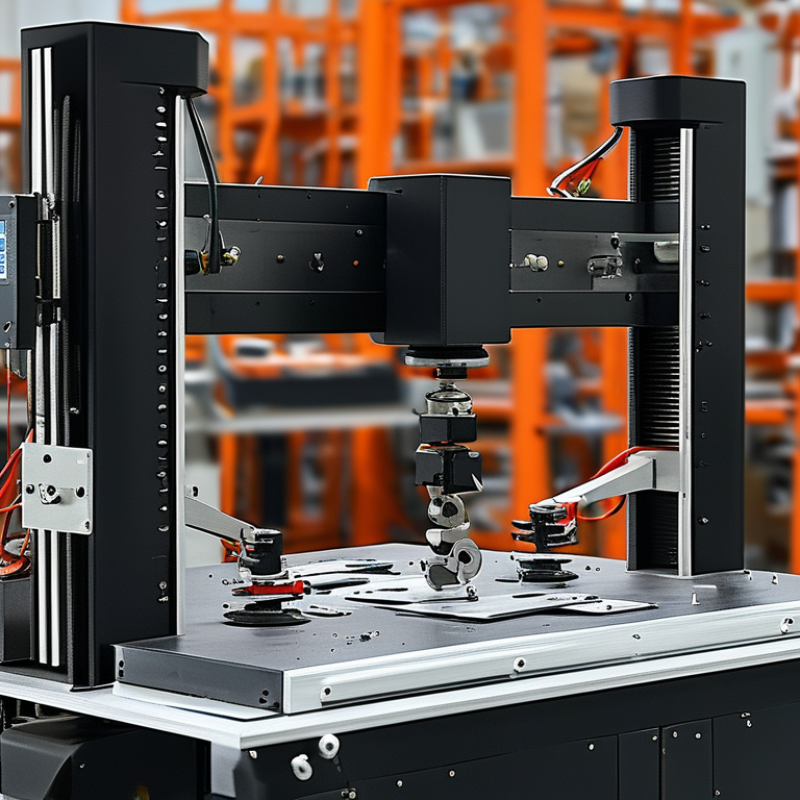
Top Automatic Dual-arm Drop Tester for Quality Testing
The importance of quality testing in manufacturing has increased significantly. Companies are investing heavily in advanced testing equipment. Among these, the automatic dual-arm drop tester stands out. This equipment offers precision and efficiency in simulating real-world impacts on products.
According to industry reports, about 80% of product failures occur due to inadequate testing. The dual-arm drop tester effectively measures the durability of various items. It mimics drops from different heights and angles, providing comprehensive insights. This level of detailed analysis can identify weaknesses that manual testing often overlooks.
However, not all dual-arm drop testers are created equal. Some users report calibration issues, leading to inconsistent results. Regular maintenance and training are crucial to ensure that these machines function properly. Investing in quality equipment is essential, but understanding its limitations is equally important. Achieving reliable results requires a balanced approach to both technology and human oversight.
Key Features of Automatic Dual-arm Drop Testers
Automatic dual-arm drop testers are essential tools for quality control across various industries. These testers simulate real-world impacts to evaluate product durability, ensuring items meet safety standards. Significant industry reports indicate that nearly 30% of product failures occur due to packaging damage during transit. Companies prioritizing rigorous testing often see a 25% reduction in damaged returns.
Key features of modern automatic dual-arm drop testers include adjustable drop heights and angles. For instance, many models can replicate different fall scenarios, such as corner drops or flat drops. This versatility is crucial for thorough testing. Additionally, automation in these devices allows consistent results, reducing human error and improving reliability. According to the International Conference on Mechanical Engineering, automated testing can boost efficiency by up to 40%.
Investing in high-quality dual-arm drop testers can lead to improved customer satisfaction. Effective testing ensures products are resilient, reducing the chances of post-sale issues. Despite these advantages, companies sometimes overlook the importance of conducting regular maintenance on testing equipment, which can lead to inaccurate results. Continuous monitoring and refinement of testing processes are vital for maintaining high standards in product quality.
How Dual-arm Drop Testers Improve Quality Assurance Processes
Dual-arm drop testers offer significant advantages in quality assurance processes. Their design allows for precise and consistent testing. This equipment simulates real-world impacts that products may encounter during shipping and handling. The dual-arm mechanism ensures that the samples are subjected to uniform conditions. This uniformity improves the reliability of results.
Using automatic dual-arm drop testers increases efficiency in quality control. They minimize human error and reduce testing time. Operators can focus on analyzing the results rather than managing the testing process. Furthermore, these testers provide valuable data that can be used for product improvements. However, some users may find calibration and maintenance tricky. Regular checks are essential to ensure accurate results.
The insights gained from using dual-arm testers can drive better product designs. They help identify weaknesses in packages that may not be obvious to the naked eye. Even minor flaws can lead to significant issues in product performance. This process encourages continuous improvement, pushing teams to rethink their designs and packaging strategies. Such reflection is vital for maintaining high standards in product quality.
Top Automatic Dual-arm Drop Tester for Quality Testing
| Test Model | Drop Height (cm) | Weight Capacity (kg) | Number of Drops | Control Method |
| Model A | 150 | 20 | 10 | Automatic |
| Model B | 200 | 25 | 15 | Semi-Automatic |
| Model C | 180 | 30 | 12 | Fully Automatic |
| Model D | 250 | 15 | 8 | Manual |
Applications of Dual-arm Drop Testers in Different Industries
Dual-arm drop testers are essential tools in various industries. They simulate drops to assess product durability effectively. Electronics, packaging, and automotive sectors significantly benefit from these testers. For instance, in electronics, they ensure devices withstand accidental falls. In packaging, the testers validate whether materials protect items adequately.
In the automotive industry, drop testing evaluates parts for impact resistance. This testing can expose weaknesses in components. Real-world scenarios are mimicked, revealing how products may fail. It's important to ensure all aspects of design undergo scrutiny. Inadequate testing may lead to costly recalls or damaged reputations.
Tips: Always calibrate drop testers regularly. Consistent results rely on precise equipment. Consider environmental factors like temperature and humidity. They can influence outcomes. Additionally, involve quality assurance teams early in the process. Their insights can enhance testing protocols.
Comparative Analysis of Leading Brands in Drop Testing Technology
In the realm of drop testing technology, automatic dual-arm drop testers play a pivotal role. These machines ensure that products can endure real-world abuse. Recent industry reports indicate that around 40% of product failures occur due to inadequate drop resistance. This alarming figure highlights the need for effective testing methods.
Leading brands utilize advanced engineering to enhance their drop testing capabilities. A comparative analysis shows that models capable of adjusting arm height offer more versatile testing scenarios. Products tested at varying heights can better simulate potential accidents in the field. Surprisingly, many testers still rely on fixed drop heights, limiting their effectiveness. The market may benefit from adopting more adaptive testing strategies.
Reliability is crucial in any testing apparatus. Reports indicate that even minor inconsistencies in testing can lead to significant discrepancies in results. Observations reveal that some testers exhibit variabilities in drop height. Such issues may cause misleading assessments of a product's durability. As the technology evolves, addressing these imperfections will be essential for manufacturers aiming to meet high-quality standards.