Top Heat Shrink Plastic Suppliers for Global Buyers
Choosing dependable Heat Shrink Plastic suppliers requires more than comparing prices on a spreadsheet. Global buyers must examine film clarity, shrink ratio, tensile strength, sealing performance, and production consistency. A roll may look smooth under warehouse lights yet split around a sharp carton edge during transport. That small failure can damage labels, delay delivery, and increase waste.
Dr. Susan Selke, a recognized packaging researcher, states, “A package must protect the product while fitting responsibly into its broader life cycle.” This principle gives supplier selection a practical direction. Buyers should request technical data sheets, sample rolls, test reports, and clear information about resin composition. They should also check production capacity, export experience, quality controls, and response times.
Supplier claims still need testing.
A suitable Heat Shrink Plastic supplier should explain how its material performs under different temperatures, storage conditions, and machine settings. PVC, PE, and polyolefin films do not behave identically. A low-cost option may create higher operating costs if it wrinkles, tears, or requires repeated machine adjustments. I have seen comparisons focus heavily on unit price while overlooking carton protection and line efficiency. That approach feels incomplete.
This guide reviews leading suppliers for international buyers. It considers product range, customization, certifications, order flexibility, packaging support, and after-sales communication. No supplier is perfect for every market. The best choice depends on application, shipment distance, equipment, and sustainability goals. Buyers should verify current claims directly, because specifications and manufacturing capabilities can change.
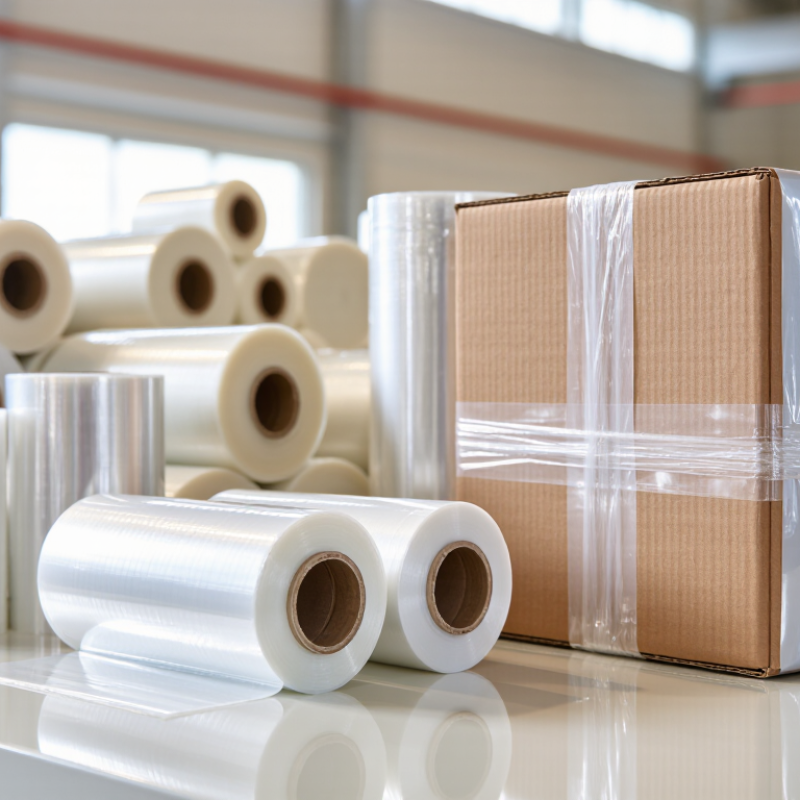
Top Heat Shrink Plastic Suppliers by Global Production Capacity
Top Heat Shrink Plastic Suppliers for Global Buyers
Production capacity matters more than a polished product catalogue. Large suppliers usually operate multiple extrusion lines, film-blowing units, and regional converting facilities. These assets support stable delivery for packaging, electrical insulation, medical devices, and industrial components.
Grand View Research’s 2024 market assessment identifies Asia-Pacific as the largest regional market for heat-shrink tubing. The report also highlights automotive, electronics, and energy applications as major demand drivers.
Smithers’ flexible packaging outlook shows continued volume growth through 2028, supported by lightweight film and improved material efficiency. PlasticsEurope reported approximately 54 million tonnes of plastics production in Europe during 2023.
This figure is broader than heat-shrink plastics, but it indicates the scale of regional resin infrastructure.
Global buyers should request verified annual capacity, monthly output, line count, resin sources, and average utilization rates. A supplier claiming 20,000 tonnes annually may produce only half that volume during maintenance periods.
Capacity figures are not perfectly comparable. Some companies include subcontracted output, which can weaken control over thickness, shrink ratio, and delivery timing. I would examine audit records, batch samples, and recent shipment data before selecting a high-volume partner.
A small technical detail can become expensive: a 2% thickness variation may affect sealing pressure, appearance, and downstream machine performance.
Polyolefin, PVC, and PVDF Films: 2:1–4:1 Shrink-Ratio Selection
For global buyers, shrink ratio is not a decorative number; it controls fit, recovery, and installation tolerance.
A 2:1 film suits modest diameter changes, such as bundling wires or covering smooth cylindrical parts. Polyolefin usually offers balanced clarity, toughness, and processing flexibility for general packaging and component protection. However, wall thickness and recovery temperature still need verification. Ask suppliers for test data.
PVC films can provide strong shrink performance and clear presentation. They are often selected for labels, sleeves, and shaped packaging with controlled heating. Yet plasticizer migration, cold-weather brittleness, and heat exposure deserve practical checks.
Use a 3:1 ratio when the package has moderate size variation or uneven contours. A 4:1 option handles larger changes, including connectors, irregular housings, and mixed-diameter assemblies. That extra range may create more wrinkles if heating is uneven. Do not choose by ratio alone.
PVDF film targets demanding environments where chemical resistance, weather stability, and high-temperature performance matter. It can resist harsh exposure better than many general-purpose films, but its cost and processing requirements are higher. During supplier audits, review lot traceability, film thickness tolerance, shrink-temperature curves, and dimensional recovery results. Samples should be tested on the actual part, not only on a smooth laboratory mandrel. One detail is easy to miss: storage humidity can affect handling and surface appearance. A neat specification can still fail during installation.
Global Compliance Screening: UL 224, RoHS, REACH, and ISO 9001
Global buyers evaluating heat shrink plastic suppliers should treat compliance as a purchasing requirement, not a brochure claim. UL 224 evidence should identify the construction, temperature rating, flammability performance, and applicable report details. Ask for samples from the same production line. Small differences matter. A tube that shrinks evenly around a cable shows better process control than one with wrinkles or thin spots.
RoHS documentation should match the exact material, color, adhesive, and production date. REACH statements also need review when additives, coatings, or imported articles change. Request a current declaration, supporting test data, and a clear list of restricted substances. Do not accept a generic certificate without scope. It may describe raw resin only.
ISO 9001 supports controlled purchasing, inspection, corrective action, and batch traceability. During supplier screening, check certificate validity and whether its scope covers the manufacturing site. Ask how the supplier handles nonconforming tubing, retained samples, and complaint response times. In practice, paperwork can look complete while lot records remain weak. We should admit that risk. A pre-shipment inspection and independent laboratory check can expose color variation, incorrect shrink ratios, or contamination before global delivery. Keep every revision, test report, and approval record linked to the purchase order.
Comparing MOQ, Lead Times, Custom Sizes, and 20–40% Packaging Savings
Top Heat Shrink Plastic Suppliers for Global Buyers
Comparing MOQ, Lead Times, Custom Sizes, and 20–40% Packaging Savings
Reliable heat shrink plastic suppliers should be compared beyond unit price. In practical sourcing, MOQ often separates stock products from custom production. Standard sleeves may start at a few cartons, while custom widths, thicknesses, or printed designs require larger commitments. Ask for sample rolls before approving a full order. A small test can reveal poor sealing, uneven shrinking, or weak packaging protection.
Lead times usually range from several days for stocked materials to several weeks for custom sizes. Confirm production time, inspection time, and shipping separately. Custom dimensions can reduce waste around irregular products, but incorrect measurements create expensive delays. Measure the product at its widest points, including labels and closures. This sounds simple. It is often missed.
Tips: Request a written quotation showing MOQ, material thickness, shrink ratio, tolerances, sample costs, and delivery terms. Compare landed costs, not factory prices alone. Well-fitted film can reduce excess material and labor, with packaging savings sometimes reaching 20–40%. Results depend on product shape, equipment, and packing volume. I have seen attractive estimates fail because the sealing machine was unsuitable. Leave room for testing. A supplier that documents specifications, responds clearly, and accepts reasonable quality checks is usually a safer long-term choice.
Top Heat Shrink Plastic Suppliers for Global Buyers – Comparing MOQ, Lead Times, Custom Sizes, and 20–40% Packaging Savings
| Supplier Profile | Primary Supply Region | Common Materials | Typical MOQ | Standard Lead Time | Custom Widths / Thickness | Estimated Packaging Savings* | Best Fit |
| Profile A | East Asia | PE, POF, PVC | 500–1,000 kg | 15–25 days | 100–2,000 mm; 15–200 μm | 25–40% | Large-volume export packaging |
| Profile B | Southeast Asia | PE, POF | 300–800 kg | 18–30 days | 200–1,800 mm; 20–180 μm | 20–35% | Retail bundles and consumer goods |
| Profile C | South Asia | PE, PVC, cross-linked polyolefin | 1,000–2,000 kg | 20–35 days | 150–2,400 mm; 25–250 μm | 22–38% | Industrial and palletized products |
| Profile D | Eastern Europe | PE, POF | 500–1,500 kg | 25–40 days | 250–2,000 mm; 20–220 μm | 20–32% | European regional distribution |
| Profile E | Western Europe | POF, PE, recyclable polyolefin | 250–750 kg | 15–28 days | 100–1,600 mm; 12–180 μm | 20–30% | Short-run orders and sustainability projects |
| Profile F | North America | PE, POF, PVC | 500–1,000 kg | 20–35 days | 150–2,100 mm; 15–250 μm | 20–35% | Domestic supply and contract packaging |
| Profile G | Middle East | PE, PVC | 1,000–3,000 kg | 25–45 days | 200–2,400 mm; 30–300 μm | 25–40% | Heavy-duty construction materials |
| Profile H | Latin America | PE, POF | 500–1,500 kg | 25–40 days | 150–2,000 mm; 20–220 μm | 20–34% | Food, beverage, and household products |
*Savings are indicative commercial ranges compared with conventional rigid cartons, multi-layer wrapping, or labor-intensive secondary packaging. Actual results vary according to film gauge, product dimensions, order volume, freight, energy costs, machine settings, and packaging design. Lead times exclude artwork approval, tooling, customs clearance, and peak-season delays.