Coffee habits are creating practical opportunities for countertop accessories, though coffee consumption alone does not prove demand for every frothing tool. The International Coffee Organization estimated global coffee consumption at about 177 million 60-kilogram bags in 2023/24. In the United States, the National Coffee Association’s 2024 National Coffee Data Trends report found that 67% of adults had coffee the previous day. These figures show a broad, active coffee culture—not a guaranteed sales forecast for any single product.
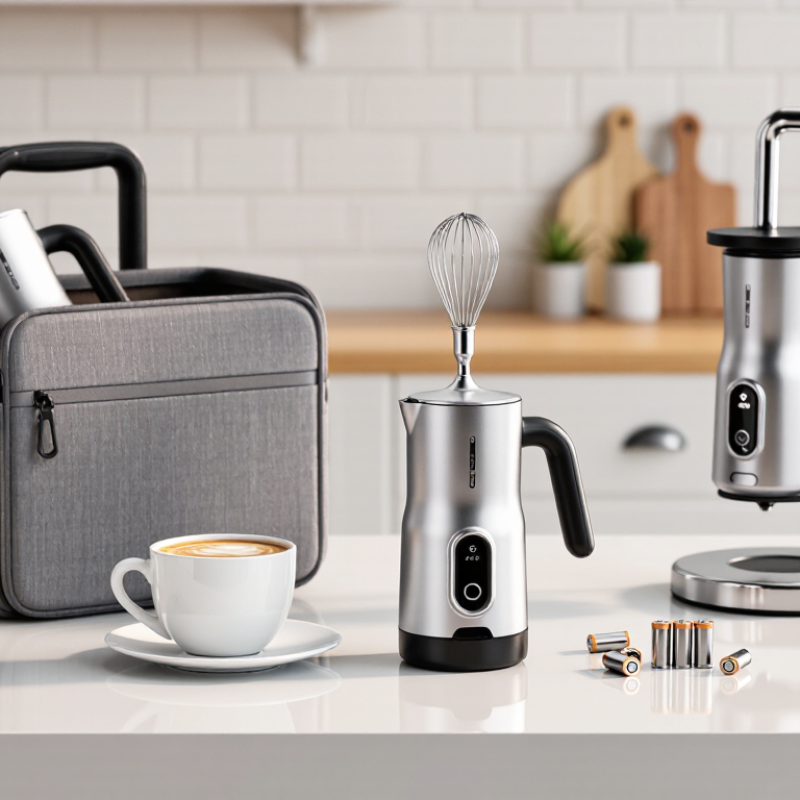
Small details matter. A handheld whisk beside a ceramic cup, a rechargeable frother in a travel bag, or a compact stand on a crowded kitchen counter can shape buying decisions. A good Portable Milk Frother should balance foam consistency, cleaning ease, battery life, noise, and durable construction. For buyers comparing Chinese manufacturers and suppliers, product samples and clear specifications matter more than polished catalog claims. Check whisk materials, charging details, production capacity, packaging options, and quality-control procedures before placing an order. Ask how suppliers test performance across different milk types, too.
There is no perfect specification for every customer. That deserves a second look. Cafés may prioritize repeat use, while home users may care more about storage and simple cleanup. This guide introduces China-based manufacturers and suppliers, with attention to product range, manufacturing experience, and verifiable business details. Treat supplier claims as starting points, then confirm them through direct questions and sample evaluation.
Portable Milk Frothers: Product Types and Core Functions
Portable milk frothers generally come in three forms: handheld whisk models, cup-style electric frothers, and rechargeable travel units. A handheld model uses a small spinning coil to introduce air into milk. It is light, easy to rinse, and works well in a mug. Cup-style units usually heat and froth milk inside a covered vessel, reducing splashes on the counter. Rechargeable designs are convenient away from outlets, though battery life and charging time vary. Small, but practical.
Their core function is simple: create foam by mixing air into milk. Some models also warm milk, while others only froth; checking this distinction helps avoid surprises. Whisk speed, coil shape, and milk temperature all affect the result. Cold milk can produce a light topping, while warmed milk may blend more smoothly into coffee. Not always silky. Foam texture also depends on the milk itself, so one device cannot promise identical results every morning. For daily use, look for a stable grip, a washable whisk, and controls that are easy to operate with one hand. A compact design saves space, but tiny vessels can feel limiting when making drinks for two. It is a modest tool, not a substitute for careful technique.
China’s portable milk frother manufacturing landscape draws on a broader small-appliance supply chain. Components such as compact motors, stainless-steel whisk heads, rechargeable cells, and molded housings often come from different specialist suppliers. Guangdong and Zhejiang are important appliance-manufacturing regions, offering access to component makers, assembly facilities, and export logistics. That density can shorten procurement cycles, but it does not guarantee consistent quality.
The Ministry of Industry and Information Technology reported that China’s home-appliance industry generated about 1.84 trillion yuan in operating revenue in 2023, with profits of 156.5 billion yuan. These figures cover the wider industry, not frothers alone. Still, they indicate the scale of the manufacturing ecosystem supporting small appliances. Details matter. For buyers, practical checks include whisk balance, battery runtime, charging consistency, and whether the lid seals securely during daily use.
Portable models also present trade-offs. A lighter body is easier to carry, yet may feel less stable when mixing thick milk. Battery performance can vary with temperature and repeated charging. A factory sample is useful, but it cannot show every production batch’s consistency. Buyers should review inspection records and test units under comparable conditions. There is room for improvement here: product descriptions often emphasize speed, while noise, cleaning effort, and long-term battery life receive less attention.
Product formats, common specifications, materials, and manufacturing considerations
Reading note: Specifications below describe common product configurations, not a survey of every Chinese factory or product. Actual specifications depend on the model and should be confirmed with the supplier.
| Product format | Power configuration | Typical construction | Common functions | Manufacturing and quality checks | Typical sourcing considerations |
|---|---|---|---|---|---|
| Handheld battery-powered whisk | Replaceable batteries; many models use two AA cells. Battery type and runtime vary by design. | Compact plastic handle with a stainless-steel shaft and whisk head. | Manual start/stop; usually designed for frothing milk in a separate cup. | Check switch operation, whisk alignment, vibration, battery-contact reliability, and corrosion resistance of the whisk assembly. | Confirm battery compartment design, included accessories, packaging, and applicable destination-market requirements. |
| Rechargeable handheld whisk | Built-in rechargeable battery, commonly charged through a USB connection. Charging input and battery capacity vary by model. | Plastic or metal-look handle, stainless-steel whisk, internal battery and charging circuit. | One or more speed settings on some models; intended for foam preparation in a separate vessel. | Check charging and overcurrent protection, charge-port fit, battery consistency, switch life, and whisk-head runout. | Confirm charging cable and adapter inclusion, battery documentation, transport requirements, and label details. |
| Portable cup-style frother | Typically rechargeable or powered by an external USB supply; some designs use replaceable batteries. | Small cup or container with an integrated motor-driven whisk or stirring element; food-contact parts require material verification. | Mixing or frothing in the included vessel; operating modes differ by model. | Check lid fit, leakage resistance where applicable, motor noise, mixing performance, and cleaning access. | Verify usable capacity, whether the vessel is intended for hot liquids, cleaning instructions, and food-contact documentation. |
| Compact electric jug frother | Usually mains-powered through a base or cord, so portability is limited compared with handheld models. | Container with an internal heating or frothing system; vessel materials and construction vary. | Depending on the model, may heat milk, froth milk, or provide separate preparation programs. | Check temperature control, dry-boil protection where fitted, electrical safety, lid interlock if present, and non-stick coating durability if applicable. | Confirm rated voltage and frequency for the destination market, plug type, usable capacity, and cleaning limitations. |
| Whisk-head and accessory options | Not applicable; accessories are matched to the motor unit and its drive connection. | Whisk coils and shafts are commonly made from stainless steel; exact grade and finish should be specified by the buyer. | Single or interchangeable whisk attachments, depending on product design. | Check attachment retention, weld or joint quality, burrs, surface finish, and resistance to ordinary washing conditions. | Request material declarations and confirm whether spare heads are available and compatible with the selected model. |
| Production and supplier verification | Confirm whether the supplier produces the motor unit, assembles components, or sources finished subassemblies. | Common processes may include plastic molding, metal forming, component sourcing, final assembly, and packaging. | Inspection scope should reflect the specific product and intended sales market. | Review incoming-material checks, assembly records, functional testing, sampling criteria, and traceability practices. | Request current product specifications, samples, test reports where applicable, and written confirmation of production and quality responsibilities. |
Note: This overview is a product-category guide, not a ranking or verification of individual manufacturers. Confirm current specifications, materials, certifications, and compliance documentation directly for each product.
China’s portable milk frother suppliers often fit three profiles: OEM factories focused on volume, ODM teams offering housing and control options, and component-led manufacturers specializing in motors or heating systems. These profiles are practical starting points, not guarantees of quality. Ask for the factory’s actual role in production.
Demand context is encouraging. World Coffee Portal’s Project Café China 2024 reported 49,691 branded coffee shops in mainland China, a 58% annual increase. The International Coffee Organization forecast global coffee consumption at 177 million 60-kilogram bags in 2023/24, up 2.2%. These figures indicate a growing coffee market, but they do not measure frother sales. Details matter.
When comparing suppliers, request recent test records for whisking consistency, battery endurance, charging protection, and noise. Ask how each unit performs with cold milk, not only warm milk. A sample should produce stable foam without a lumpy residue around the whisk. Review materials, spare-part availability, and production lead times before discussing price. A polished catalog is not proof. I would also check whether the quoted test conditions match ordinary kitchen use; suppliers do not always describe them clearly.
Portable milk frother production depends on more than motor speed. Suppliers may offer different handle shapes, whisk heads, battery options, and packaging formats. Ask how they control assembly steps, from motor installation to final function testing. A sample should foam cold milk consistently and start without excessive vibration. Small details matter.
Quality checks can include switch operation, whisk alignment, noise, and resistance to repeated use. Request written inspection criteria and batch records, rather than relying only on a general quality claim. For export orders, confirm that product materials and electrical specifications match the destination market’s requirements. Independent testing may be appropriate for your sales channel. There are trade-offs. A lower unit price can mean less flexibility in sampling or tighter production schedules, so compare the full offer.
Export services often cover carton design, labeling, shipping documents, and coordination with freight providers. Clarify who checks packaging dimensions and whether cartons are tested for ordinary handling; a bent whisk is a small defect, but it can create avoidable returns. Ask for lead times by production stage, not just one delivery date. A factory audit or pilot order can reveal gaps that polished catalog photos cannot. Even then, one sample cannot represent every batch, so ongoing checks are worth discussing.
Choosing a Chinese portable milk frother supplier takes more than comparing unit prices. Ask how the motor, whisk, and battery compartment are checked during production. A useful supplier can explain its inspection steps and share recent test records. Request a sample made with the same materials and process as the production model. Test it with cold milk, warm milk, and a full battery. Note the foam texture, vibration, noise, and whether the whisk is easy to clean. Small details matter.
Check specifications carefully. Confirm the stated speed, charging method, included accessories, packaging dimensions, and customization limits in writing. Ask how production defects are recorded and handled, and who responds to quality concerns after shipment. If answers are vague, request clearer evidence rather than relying on a polished product sheet. One sample cannot prove every batch will match. That is an imperfect part of supplier evaluation, so discuss batch inspections and agree on acceptance criteria before placing an order.
Tips: Compare samples side by side, using the same milk and cup. Keep dated photos and a short test log. Ask for a written quotation with lead time, sample fees, and packaging details. If a specification seems unusually favorable, verify it yourself.
Suggested evaluation weighting for comparing portable milk frother suppliers. These buyer-defined weights are a practical framework, not industry survey data.
Request product test reports and applicable compliance documentation, verify frothing performance with samples, and assess production capacity, quality controls, communication, and total landed cost before making a decision.
Build your system. Protect your boat. Join the movement.