What Are the Top Types of Automatic Circuit Reclosers?

An Automatic Circuit Recloser helps restore power after temporary faults while isolating faults that persist. But reclosers are not all built alike. Their operating mechanisms, sensing and control systems, and interruption technologies affect how they perform on a feeder. The right comparison starts with the network: its voltage, expected fault levels, load, and coordination requirements. A device suited to a rural overhead line may not be the best fit for a compact urban feeder. Details matter.

Thomas A. Short, an author and power-distribution specialist, has written extensively about distribution protection. A practical takeaway from his work, paraphrased here, is: “Choose a recloser for the feeder’s protection duty, not just its nameplate.” That distinction guides this overview. It will compare common types, including hydraulic and electronically controlled units, as well as single-phase and three-phase designs. It will also consider interruption technologies such as vacuum and oil. Each category brings trade-offs in control flexibility, maintenance, and application. No single type fits every circuit. Even familiar labels can hide important differences in ratings and protection settings. The following outline offers a clear starting point for evaluating those differences and matching a recloser to real operating conditions.
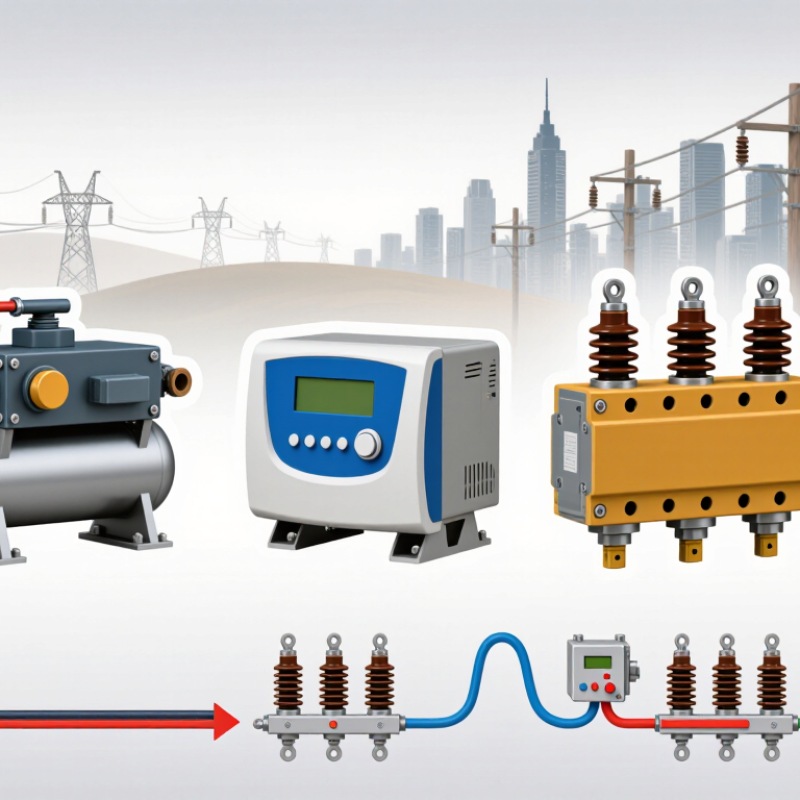
What Are the Top Types of Automatic Circuit Reclosers?

Automatic Reclosers Classified by Phase Configuration

What Are the Top Types of Automatic Circuit Reclosers?

Automatic Reclosers Classified by Phase Configuration

Phase configuration describes how many electrical phases a recloser monitors and controls. The main options are single-phase and three-phase units. The right choice depends on the feeder layout, fault patterns, and protection settings—not just the number of wires.

A single-phase recloser is often installed on a single-phase branch or rural lateral. If a tree limb briefly touches one conductor, it can interrupt and then restore power on that section without necessarily tripping the entire three-phase feeder. That can limit the number of customers affected. Small detail, big impact.

Three-phase reclosers protect three-phase feeder sections, such as lines serving industrial loads or several distribution branches. Depending on the design, all three poles may operate together, or each pole may operate independently. Linked operation can disconnect all phases for a fault, while independent operation may preserve service on unaffected phases when system settings allow. The trade-off matters. Engineers coordinate the recloser with upstream and downstream protection devices, considering load balance and local fault behavior. A neat diagram cannot replace field data; real feeder conditions can be less tidy than expected.

Single-Phase Reclosers for Lateral Line Protection

Single-phase reclosers help protect lateral lines that branch from a distribution feeder. When a fault occurs on one branch, the device can interrupt current and then reclose after a brief pause. If the fault was temporary, such as a twig touching a conductor, service may return without affecting the entire feeder. If the fault remains, the recloser trips again according to its programmed sequence.

This selective response can limit outages for customers on neighboring branches. On a rural line, for example, a crew might find a damaged insulator several poles beyond the recloser, while homes on the main feeder remain energized. Coordination matters. The recloser’s settings should work with upstream equipment and any downstream fuses, so the smallest practical section is isolated. A setting that looks neat on a diagram may behave differently under real load.

Engineers need to consider available fault current, conductor characteristics, grounding, and seasonal load changes. Field measurements and protection studies help confirm whether the device will detect faults reliably without tripping during normal conditions. Vegetation growth and changing demand can alter those conditions over time. Review is necessary. Even careful coordination has limits, especially where laterals have uneven loads or incomplete records, so inspection and setting checks should remain part of routine maintenance.

Top Types of Automatic Circuit Reclosers

A comparison of common recloser configurations by the number of phase poles in the device.

Single-phase reclosers are commonly used to protect lateral lines, allowing a fault on one phase to be isolated without necessarily interrupting the entire three-phase feeder. Three-phase reclosers have three poles; gang-operated units operate the poles together, while independent-pole units can control each pole separately according to their settings.

Three-Phase Reclosers for Feeder Protection

What Are the Top Types of Automatic Circuit Reclosers?

Three-Phase Reclosers for Feeder Protection

Three-phase reclosers protect feeder sections by detecting excessive current and interrupting all three phases. After a brief pause, the device can close again, giving temporary faults time to clear. A branch brushing a line during wind may cause a momentary fault; damaged equipment may cause a lasting one. Recloser controls use current measurements and programmed timing to distinguish between these conditions. Their settings should coordinate with upstream protection and downstream devices, or an avoidable outage could affect a much larger area.

Tips: Check the feeder’s load, expected fault current, and grounding arrangement before selecting ratings. Review trip curves against nearby protective devices. Small setting differences matter.

Three-phase operation is useful where keeping phases balanced and limiting equipment stress are priorities. The recloser’s interrupting rating must suit the available fault current, while its continuous-current rating must handle normal demand. Site conditions matter too: moisture, dust, temperature swings, and enclosure placement can influence maintenance needs. A neat coordination study is helpful, but it cannot capture every real-world change. Revisit settings when feeder layout or loads change, and document the reasons for each adjustment.

Hydraulic and Electronic Reclosers by Control System

Automatic circuit reclosers are commonly grouped by how their control systems detect faults and command interruption. Both hydraulic and electronic designs can open a circuit after abnormal current, then reclose after a set interval. Their operating logic differs. On a rural feeder, that distinction affects setting changes, fault records, and coordination with other protective devices.

Hydraulic reclosers use current-responsive mechanisms to trigger operation, with timing shaped by mechanical or fluid elements. Their controls are generally self-contained and may suit installations where locally adjusted protection is preferred. Fewer electronic functions can mean less diagnostic detail. Trade-offs matter. “Simple” does not mean foolproof: oil condition, mechanism wear, and calibration still deserve attention.

Electronic reclosers use current sensors and a microprocessor-based control to apply selected time-current curves. Depending on configuration, they can store fault events, support remote status checks, and offer precise adjustments. A technician might review a timestamped trip record after a brief feeder interruption instead of relying only on inspection. This added visibility calls for careful checks of settings, communications, and control power. A curve change should be checked against neighboring protective devices before it is applied.

Oil, Vacuum, and SF₆ Reclosers by Interruption Medium

Oil designs use insulating oil to cool the arc and restore insulation. They are proven, but oil condition, leaks, and fire protection need attention. That sounds simple. In practice, maintenance depends on switching duty and site conditions.

Vacuum reclosers interrupt arcs inside sealed vacuum bottles. They avoid routine insulating-oil handling, and their compact design suits many distribution installations. Still, sealed components need inspection and replacement planning. IEEE C37.60-2018 provides technical requirements for automatic circuit reclosers, but it does not make one medium best for every network.

SF₆ units use gas for insulation and interruption, allowing compact equipment with strong dielectric performance. There is a significant climate trade-off: the IPCC Sixth Assessment Report gives SF₆ a 100-year global warming potential of 25,200. Gas leakage control and end-of-life recovery therefore matter.

Details matter. Selection should weigh fault duty, maintenance skills, enclosure space, environmental controls, and local operating experience—not just purchase price.

Build your system. Protect your boat. Join the movement.

Compare Products
Talk to Sales