What Are the Top Types of Rope Clips for Buyers in 2026?

For buyers comparing Rope Clips in 2026, the right choice depends on the rope, the load, and the working conditions. A clip that feels secure on a dry showroom bench may behave differently when exposed to rain, grit, or repeated movement. That detail matters.

Common options include spring clips for quick attachment, screw-gate clips for a more deliberate closure, and locking designs intended to reduce accidental opening. Stainless steel suits many wet or corrosive settings, while lighter alloys can help reduce carried weight. Material names alone do not prove suitability. Check the manufacturer’s stated working load, compatibility, inspection guidance, and intended use before choosing.

“Fit and condition matter as much as the clip’s style,” says fictional rope-hardware specialist Daniel Mercer. This illustrative quotation is not a sourced industry statement; it reflects a practical selection principle. Buyers should compare gate action, corrosion resistance, rope diameter, and ease of inspection. Try the clip with the actual rope where possible. A stiff gate can slow handling, while a loose or damaged mechanism deserves replacement, not optimism.

This guide examines the main types of Rope Clips, where each may be useful, and what to verify before purchase. It also considers common trade-offs, because no single design fits every job. Small components deserve careful attention.
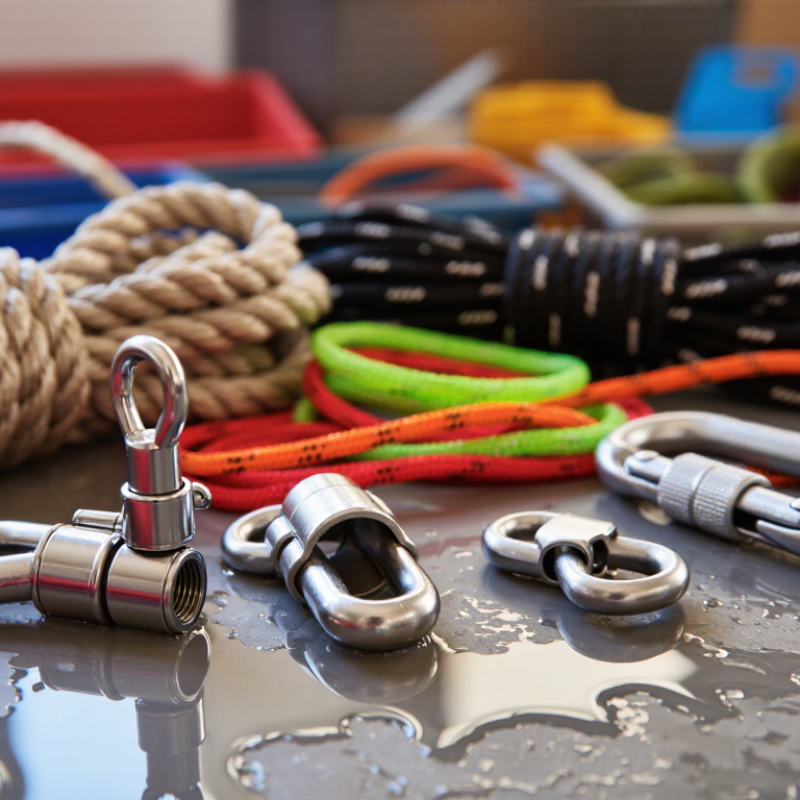
What Are the Top Types of Rope Clips for Buyers in 2026?

Key Features That Define Rope Clips for Buyers in 2026

For buyers comparing rope clips in 2026, the defining features are material, fit, load performance, and inspection access. Match the clip to the rope’s diameter and construction; a loose saddle can permit movement, while an undersized one may damage strands. For wire-rope grips, EN 13411-5:2003+A1:2008 specifies requirements for U-bolt grips, including construction and testing. Check that the product documentation identifies the applicable standard and intended rope size. Small details matter.

Corrosion resistance deserves close attention in wet, coastal, or chemical environments. Stainless steel may suit some settings, while galvanized steel can be a practical choice elsewhere; neither is automatically right for every application. Buyers should also look for clear installation instructions, torque guidance where specified, and enough space to inspect the rope and fasteners after fitting. ISO 2307:2019 sets out test methods for fibre ropes, including measuring breaking force and elongation, but it does not certify a clip’s capacity. That distinction is easy to miss. Ask suppliers for traceable test records and stated working-load limits, then verify compatibility with the complete rope assembly before purchase.

Wire Rope Clips for Securing Cable Ends and Loops

Wire rope clips secure cable ends and form temporary eyes, but the clip must match the rope’s diameter and construction. A clip that is too large can slip; one that is too small can crush strands. For U-bolt clips, the saddle belongs on the live, load-bearing part of the rope, with the U-bolt over the short, dead end. This detail is easy to miss.

Selection should consider rope diameter, material compatibility, load direction, and exposure to moisture or vibration. ASME B30.26-2020 addresses rigging hardware inspection and use, while the Wire Rope Technical Board’s guidance stresses following the clip maker’s instructions for clip count, spacing, and tightening torque. OSHA construction rule 29 CFR 1926.251 also specifies a minimum spacing of six rope diameters between clips, subject to its applicable tables and conditions. Check the relevant standard and product instructions; spacing alone does not establish a safe connection.

Inspect the finished termination closely. Look for a seated saddle, aligned clips, and no visibly crushed or kinked strands. Recheck fasteners after the initial loading, as settling can reduce tightness. Small details matter. Clips are often chosen for convenience, yet repeated bending, shock loading, or an improvised installation can undermine the connection. When the application is critical, have a qualified rigging professional verify the termination and its rated capacity.

Snap Hooks and Spring Clips for Quick Connections

Snap hooks and spring clips are popular rope clips because they connect quickly without knots. A spring-loaded gate opens with a thumb, then closes around a loop or attachment point. Snap hooks often have a more enclosed shape, while spring clips may be lighter and simpler. Small differences matter when gloves, wet hands, or frequent adjustments are part of the job.

Check the clip’s material, gate action, and stated working load before buying. Stainless steel can suit damp settings, while plated steel may be a practical choice for dry, general use. Look for a gate that returns fully after release. A sticky or loose gate can be hard to notice during a rushed setup. Test the movement by hand, but do not treat that test as proof of strength.

Match the clip to the rope diameter and the attachment point. A narrow opening may pinch a thick rope; a broad one may let a small loop shift around. That detail is easy to overlook. For climbing, lifting, or other life-safety tasks, use only equipment specifically rated for that purpose and follow its instructions. A general-purpose snap hook is not automatically suitable. Buyers sometimes focus on quick connection alone, though durability and intended use deserve equal attention.

Carabiners and Locking Clips for More Secure Attachments

Carabiners and locking clips can make rope attachments quicker, but the right choice depends on the job. A spring-gate carabiner is handy for frequent adjustments, such as securing a rope to a compatible anchor point. Its gate should close fully after every connection. For overhead, dynamic, or safety-critical use, choose only equipment specifically rated for that application; a general-purpose clip is not a substitute.

Locking clips add a second step to help prevent accidental gate opening. Screw-lock designs are simple to check, while auto-locking gates close without a separate manual turn. Neither type makes a weak anchor safe. Match the clip opening to the rope and attachment point, and check that the rope sits in the basket rather than pressing against the gate. Small details matter.

Before each use, look for a bent frame, a sticky gate, cracks, or corrosion. Keep the clip aligned with the expected pull; sideways loading can reduce its strength. I still find it easy to overlook a half-turned screw lock when working quickly, so a deliberate gate check is worthwhile. For lifting or fall protection, follow the equipment maker’s instructions and use purpose-rated hardware.

How to Match Rope Clips to Loads, Materials, and Conditions

Choosing a rope clip starts with the rope, not the price tag. For wire rope, forged U-bolt clips suit many general-purpose terminations, while malleable clips are typically reserved for lighter-duty uses where the manufacturer permits them. Match clip material to the rope and environment: galvanized steel helps resist outdoor corrosion, while stainless steel may suit damp or marine settings. Watch for mixed metals. They can accelerate corrosion, and a shiny finish alone proves little.

Load capacity depends on installation and the complete assembly. OSHA’s construction standard, 29 CFR 1926.251, specifies minimum clip counts by wire-rope diameter: three clips for 1/2-inch rope and four for 3/4-inch rope. These are minimum installation requirements, not a blanket rating for every lifting setup. Check the clip maker’s instructions for spacing, orientation, torque, and any required retightening. For example, a U-bolt clip must be oriented correctly on the live and dead ends. Small errors matter.

Consider movement, abrasion, heat, and exposure to chemicals before selecting a design. A clip exposed to repeated vibration may loosen; inspect it after initial loading and during service. Keep the rope diameter within the clip’s stated range, and never estimate capacity from appearance. I’d also question any selection made without the rope construction and load path in hand. If the application involves lifting people or critical loads, obtain competent engineering guidance and use rated components as a system.

Top Rope Clip Types for Buyers in 2026

Qualitative fit for common rope and load conditions—not a load rating or safety certification.

How to use this chart: Match the clip to the rope construction, expected load, and environment. Wire-rope clips are intended for wire rope; soft-eye splices and sewn terminations are common options for synthetic rope. Cam cleats suit adjustable lines, not permanent load-bearing terminations. Always follow the clip and rope manufacturers’ specifications, and verify working-load limits and installation requirements before use.

Build your system. Protect your boat. Join the movement.

Compare Products
Talk to Sales