Why Choose a Gummy Making Machine for Your Business?
Why Choose a Gummy Making Machine for Your Business?
The gummy market is expanding, but growth alone does not guarantee profitable production. Grand View Research estimates that the global gummy market will continue growing strongly through 2030, driven by supplements, functional ingredients, and convenient formats. Fortune Business Insights also identifies dietary supplements as a major growth area. These figures suggest opportunity, not certainty. Your factory still needs reliable dosing, stable textures, and repeatable shapes.
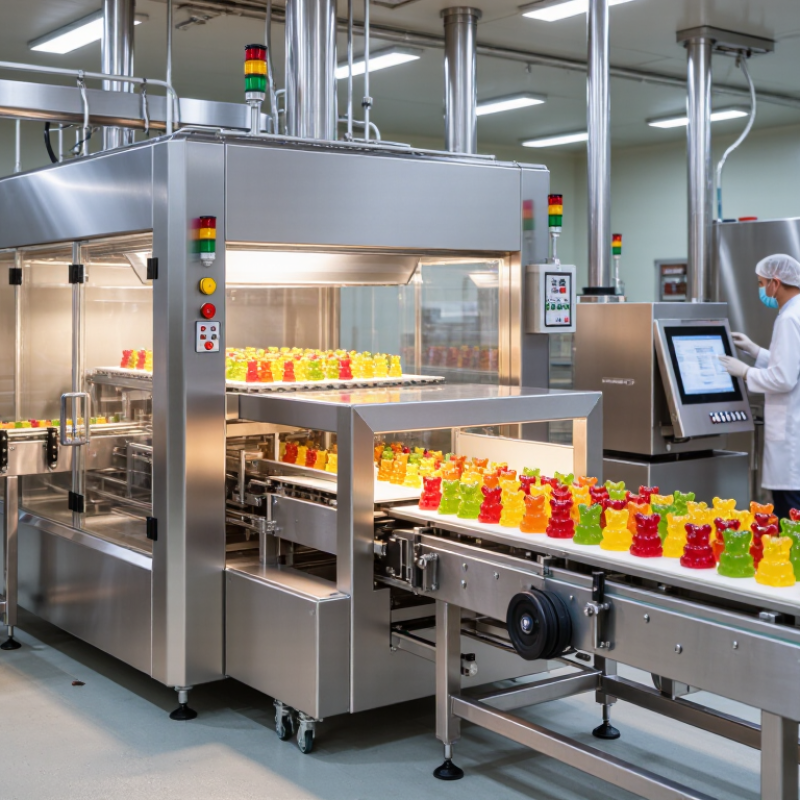
A modern Gummy Making Machine can control cooking, depositing, cooling, and demolding with fewer manual adjustments. Picture a production line handling hundreds of identical bears while operators monitor temperature, viscosity, and weight. That consistency can reduce rework and improve customer trust. PMMI reports that food manufacturers increasingly invest in automation to address labor shortages, efficiency demands, and production variability.
Confectionery process specialist Dr. Ewald Notter has said, “Consistency is the foundation of quality.” His point applies directly to gummy production. A machine does not replace skilled judgment. It supports it. The wrong system may waste ingredients, energy, and valuable floor space. This is where many buyers underestimate the decision.
Before purchasing, businesses should compare output capacity, mold flexibility, cleaning time, recipe control, and after-sales support. They should also examine product claims carefully, especially for functional gummies. Higher speed is not always better. Sometimes, a slower line creates fewer defects and safer operations. A Gummy Making Machine becomes valuable when its capabilities match your recipes, workforce, and realistic market demand.
Business Needs That Gummy Making Machines Address
Why Choose a Gummy Making Machine for Your Business?
Gummy making machines address several practical business needs. Demand is growing, but manual production can create uneven weights, shapes, and textures. Fortune Business Insights valued the global gummy market at about USD 20.85 billion in 2023. Its report projects continued growth through 2032. The Council for Responsible Nutrition also reported that 75% of U.S. adults used dietary supplements in 2024. These figures show strong demand, but customers still expect reliable quality.
A machine improves dosing accuracy, production speed, and batch consistency. It can reduce repetitive labor around cooking, depositing, cooling, and demolding. This matters when orders suddenly increase. Automated systems also support different molds, flavors, colors, and portion sizes. A small producer may begin with limited output, then expand without rebuilding the entire workflow. Hygiene is another concern. Enclosed processing areas and easier cleaning can reduce avoidable handling risks. Still, equipment does not solve every problem. Poor recipes remain poor recipes. Operators need training, maintenance schedules, and careful temperature control.
Tips: Measure real production demand before choosing capacity. Test the machine with your actual formula, not only water or a simple syrup. Ask for cleaning time, changeover details, and documented accuracy results. Keep a manual quality check during early batches. It may feel inefficient, but small defects become expensive at scale. Review waste, labor hours, and downtime after thirty days. The first estimate may be wrong.
How Gummy Making Machines Work
Why Choose a Gummy Making Machine for Your Business?
How Gummy Making Machines Work
A gummy making machine turns a liquid recipe into consistent pieces through controlled heating, mixing, depositing, and cooling. Ingredients enter a jacketed tank, where gentle heat dissolves sugars and activates gelatin or pectin. An agitator keeps the mixture moving. This prevents burned edges and uneven texture. The operator then checks temperature, viscosity, and soluble solids before depositing the batch into molds. Timing matters.
A servo-driven depositor releases measured amounts into starch, silicone, or metal molds. Sensors help control fill weight and reduce product variation. After cooling, the gummies firm up and leave the molds for oiling, coating, or packaging. Modern systems often connect these stages through programmable controls. That reduces manual handling, but it does not remove quality risks. Small errors multiply.
Grand View Research estimated the global gummy market at about USD 19.6 billion in 2023, with a projected 12.7% CAGR from 2024 to 2030. This growth increases pressure for repeatable production. PMMI’s recent food and beverage automation reports also identify labor availability and faster changeovers as key equipment concerns. In practical trials, a machine may improve throughput, yet cleaning can still slow the line. A thoughtful design should provide tool-free access, temperature records, and clear sanitation procedures. I would not judge performance by speed alone. Texture, weight accuracy, waste, and changeover time matter more.
Key Benefits for Production Efficiency and Consistency
Why Choose a Gummy Making Machine for Your Business?
A gummy making machine can turn a careful recipe into a repeatable production process. In a well-configured line, automated dosing controls the amount of syrup entering each mold. Operators can set depositing speed, temperature, and batch volume with greater precision. That matters. The result is more uniform gummy size, texture, and weight across long production runs. Small errors multiply when workers fill thousands of molds manually.
Consistency improves when heating, mixing, depositing, and cooling work as one system. Uniform depositing helps each piece develop the same shape and center fill. Controlled cooling can reduce sticking, surface damage, and uneven firmness. Production records also make quality checks easier, especially when a batch needs investigation. However, automation is not a cure-all. A machine cannot rescue poor ingredient preparation or careless temperature control. That part is often underestimated.
From an operator’s perspective, cleaning access and simple adjustments are just as important as speed. Removable contact parts can shorten sanitation time and reduce residue buildup between batches. Reliable production also depends on trained staff who understand viscosity changes during heating. If the recipe changes, settings may require testing again. I would leave room for that learning period, even with advanced equipment. Real efficiency comes from stable machinery, practical training, and disciplined checks at every stage.
Why Choose a Gummy Making Machine?
Key benefits for production efficiency and consistency
The chart compares a representative small-batch manual process with an automated gummy production setup. The example shows how automation can increase throughput, reduce direct labor requirements, and improve the percentage of gummies meeting the target weight. Actual results vary according to recipe, mold size, depositing speed, and operating conditions.
Features to Evaluate Before Choosing a Machine
Why Choose a Gummy Making Machine for Your Business?
Before choosing a gummy making machine, examine its dosing accuracy, heating control, and sanitation design. Small weight differences can affect texture, packaging, and customer experience. A reliable machine should maintain stable temperatures during cooking and depositing. Digital controls help operators repeat each batch with fewer manual adjustments.
Check whether the equipment supports different molds, sizes, and formulas. A flexible depositor can handle small trial runs and larger production schedules. Quick mold changes matter when several shapes are made in one day. Look for food-grade contact surfaces, smooth welds, and tool-free parts. These details make daily cleaning less frustrating. They also reduce hidden contamination risks.
Capacity deserves careful testing. Ask for output data under realistic conditions, not only the highest advertised speed. Consider floor space, electrical requirements, cooling time, and operator access. Maintenance support and spare-part availability are equally important. A machine that stops for one minor component can disrupt an entire shift. I would also inspect the controls personally, because complicated screens can slow trained workers. Speed is useful. Consistency matters more. No machine is perfect. A thoughtful evaluation should include a live demonstration, sample production, cleaning procedures, and clear documentation. That practical evidence often reveals weaknesses that a sales specification cannot show.
Costs, Maintenance, and Business Growth Considerations
A gummy making machine can turn a small confectionery line into a repeatable production system. The investment, however, is more than the purchase price. Budget for molds, heating equipment, depositors, packaging, installation, training, and spare parts. A realistic cost model should include electricity, ingredients, labor, cleaning time, and rejected batches. In one pilot assessment, changeover delays reduced output more than expected. That was an expensive lesson.
Maintenance is practical, not optional. Operators should inspect pumps, hoses, nozzles, seals, and temperature sensors every shift. Sticky syrup can harden inside narrow passages when cleaning is delayed. A documented sanitation schedule lowers contamination risks and protects product consistency. Keep critical spare parts nearby, especially seals and heating components. Maintenance records also support troubleshooting and staff accountability. Still, schedules can fail during busy seasons. Build extra time into production plans.
Business growth depends on useful capacity, not impressive machine speed. Compare hourly output with actual orders, storage space, staffing, and packaging capacity. A machine may produce thousands of pieces daily, yet create a bottleneck at cooling or packing. Ask the supplier for test runs, utility requirements, warranty terms, and training details. Verify measurements with your own recipes before signing. I would also calculate payback using conservative sales figures. Demand forecasts fail. A modular machine may cost more initially but offer safer expansion later.