Why Choose a Louvered Pergola for Your Outdoor Space?
An outdoor space can feel inviting in the morning and uncomfortable by noon. Strong sun, passing showers, and changing temperatures often make a patio harder to use. A Louvered Pergola offers adjustable roof slats, letting you change how much sunlight and airflow reach the area. Open the louvers for a brighter, breezier setting. Tilt them when you want more shade. Small adjustments can make a noticeable difference.
That flexibility is appealing, but it does not make every pergola suitable for every yard. Still, it is not a magic roof. Performance depends on the design, materials, installation, and local weather. Before choosing a model, consider the space’s dimensions, drainage, wind exposure, and how often you plan to use it. Check the manufacturer’s guidance, too. A covered patio may need less direct sun, while a dining area may benefit from adjustable light throughout the day. Think about furniture, sightlines, and where rainwater will go.
This guide explores why homeowners consider a Louvered Pergola, how its adjustable system works, and which practical details deserve attention before purchase. It also looks at comfort, appearance, upkeep, and potential limitations. Some details are easy to overlook. For example, a sleek finish still needs cleaning, and an open-sided structure may not protect furniture from wind-driven rain. The right choice is not always the most elaborate one. It is the option that fits your outdoor habits, site conditions, and realistic expectations.
What a Louvered Pergola Is
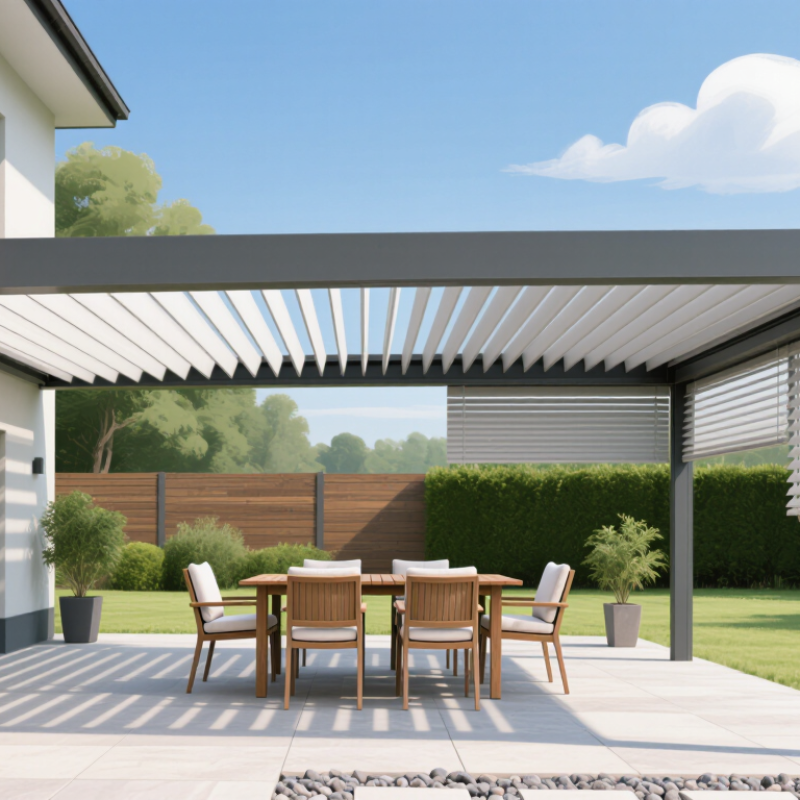
A louvered pergola is an outdoor structure with adjustable roof slats, called louvers. You can tilt them to admit sunlight, create shade, or allow airflow. Some systems open the slats fully; others adjust them by hand or with a motor. The frame usually stands over a patio, deck, or garden seating area. It is not a solid-roof room. That distinction matters.
When closed, the louvers may direct rain toward built-in gutters, but performance depends on the design, installation, and upkeep. Wind-driven rain can still enter from the sides. The U.S. Environmental Protection Agency reports that urban areas can be 1–7°F warmer than surrounding areas during the day. That figure describes the urban heat-island effect, not the cooling performance of a pergola. Still, it helps explain why adjustable shade can be useful on a hot patio.
Think of the louvers as a movable filter above your table: angle them for softer light, then open them when you want more sky. Check how the frame drains water and whether the controls suit your space. A motorized roof is convenient, but it adds components that may need servicing. Not magic. It is a practical shade system, with limits worth checking before installation.
How Adjustable Louvers Manage Sunlight and Weather
A louvered pergola lets you adjust the angle of its roof slats as the sun moves. Open them on a bright morning, and daylight can reach the table without leaving everyone fully exposed. Tilt them later, and the shade shifts across the patio. Small changes matter.
The same adjustment can help manage light rain. When the louvers are closed, some systems channel water into built-in gutters and down through posts. Performance depends on the design, installation, and maintenance, so check the drainage details before choosing one. A closed roof is not automatically a fully weatherproof room. That distinction matters.
Adjustable slats also affect airflow. Partially opening them can release trapped heat, while a tighter angle can reduce direct sun on a seating area. On gusty days, follow the manufacturer’s guidance; louvers are not a substitute for wind protection. One detail is easy to overlook: the best setting may change from one side of the pergola to the other. You may still move a chair or lower a screen. The system offers control, not perfect control. Cleaning debris from gutters and checking moving parts can help the louvers keep working as intended.
Why Choose a Louvered Pergola?
Adjustable louvers let you change how much direct overhead sunlight reaches the space below. The chart shows an idealized geometric estimate for louvers 150 mm wide, spaced 180 mm apart; actual shade varies with the sun’s angle and Pergola Design.
Tilting louvers toward a horizontal position increases shade from overhead sun. Closing them can help shed rain, but wind-driven rain may still enter; performance depends on the installation and weather conditions.
The Comfort and Design Benefits of a Louvered Pergola
A louvered pergola makes outdoor comfort adjustable. Tilt the slats to soften midday sun, open them for a patch of blue sky, or close them when light rain begins. The exact protection depends on the design, installation, and drainage system; not every model is fully waterproof. On a warm afternoon, that difference can matter. Air still moves through an open structure, while adjustable shade can make a patio more usable for dining or reading.
The design also gives an outdoor space a clear focal point without making it feel like a closed room. In its 2023 Residential Landscape Architecture Trends Survey, the American Society of Landscape Architects reported that 82% of responding landscape architects rated outdoor living spaces as popular. That signals strong professional interest, though popularity alone cannot tell you what suits your home. Consider the pergola’s scale, the sun’s path, and whether nearby windows could lose daylight. A small detail, easily missed.
Tips: Before choosing a finish, watch the patio at different times of day. Check where rainwater will drain, and leave room to operate the louvers. If you live in a windy area, ask a qualified installer about local exposure and structural requirements. Powered controls are convenient, but they add components that may need maintenance. I would not choose the most complex option by default. Simple can work better.
How to Choose a Pergola for Your Outdoor Space
Choosing a pergola starts with the space, not the style. Note where afternoon sun lands, how wind moves through the yard, and whether doors need a clear path. Measure the usable area, including chair pullback and grill clearance. Louvered roofs offer adjustable shade and airflow, but their moving parts need periodic care. Fixed roofs are simpler, though less flexible when weather changes.
Placement matters for comfort indoors, too. The U.S. Department of Energy’s Energy Saver guidance reports that exterior awnings can reduce summer solar heat gain through south-facing windows by up to 65%, and west-facing windows by up to 77%. A pergola is not an awning, so those figures do not predict its performance. Still, they show why sun direction deserves attention. Check the structure’s material, drainage, local wind exposure, and installation requirements before choosing a size. A beautiful roof can feel cramped if posts block the natural route across the patio.
Tips: Sketch the footprint with tape on the ground. Test the space with chairs in place. Ask the installer about wind limits and upkeep. Then check the louver controls in person; small details can be surprisingly fiddly. I would leave room for one more chair than seems necessary.
Why Choose a Louvered Pergola for Your Outdoor Space? - How to Choose a Pergola for Your Outdoor Space
| Selection Factor | What a Louvered Pergola Offers | What to Check Before Choosing |
| Sunlight and shade | Adjustable roof louvers let you change how much direct sunlight reaches the area below. | Check the louver adjustment range and consider the sun’s direction at the times you plan to use the space. |
| Ventilation | Opening the louvers allows air to move through the roof rather than leaving it fully covered. | Think about local heat, prevailing winds, and whether nearby walls or buildings restrict airflow. |
| Rain management | Some designs close the louvers and direct rainwater into integrated gutters or downspouts. | Confirm how water is collected and discharged. Weather resistance depends on the design, installation, and conditions; do not assume every model is fully waterproof. |
| Operation | Louvers may be adjusted manually or by a motor, depending on the model. | Compare the control method, power requirements for motorized systems, and access to controls or maintenance points. |
| Structure and installation | A pergola can be freestanding or attached to a building, subject to its design and site conditions. | Check dimensions, mounting requirements, local permitting rules, and whether the supporting surface is suitable. Use a qualified installer when required. |
| Wind and snow | Load capacity varies by product and installation; adjustable louvers may need a specified position in severe weather. | Review the manufacturer’s wind and snow-load ratings and operating guidance for your location. Do not rely on a general rating for every installation. |
| Materials and upkeep | Frames and louvers are available in different materials and finishes, each with its own care needs. | Ask about cleaning, corrosion resistance, finish care, moving-part inspection, and warranty coverage. |
| Comfort and intended use | Adjustable coverage can suit dining, lounging, or other outdoor uses where shade and airflow needs change. | Measure the furniture layout and usable area, and consider whether you also need lighting, screens, or heating accessories. |
Selection tip: Compare specifications for the exact model and installation site. Features, load ratings, drainage performance, and maintenance requirements vary between designs.