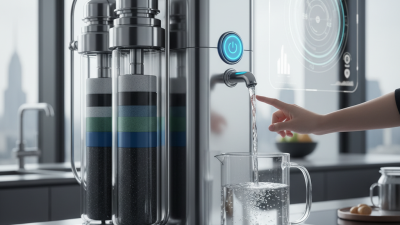
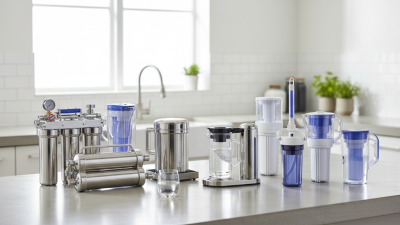
Access to clean water is crucial for health and well-being. This is why choosing the best water filter for your home is so important. Many tap water sources contain contaminants. These can impact your health over time. A high-quality water filter significantly reduces these risks.
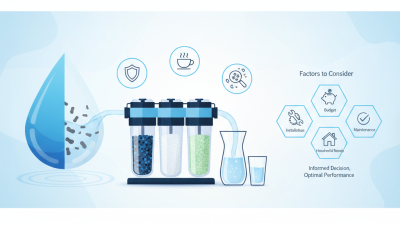
When selecting the best water filter, consider various factors. Each home has unique needs. Some filters remove specific contaminants better than others. Understanding what is in your water is vital. Regular testing can reveal hidden dangers. The best water filter adapts to your lifestyle and preferences.
In a world where information is abundant, it's easy to make a mistake. Not all filters are created equal. Some may promise a lot but deliver little. Researching reliable brands will guide you in making an informed choice. Reflections on your water quality can lead to better health outcomes. Choosing wisely can ensure a safer home for your family.
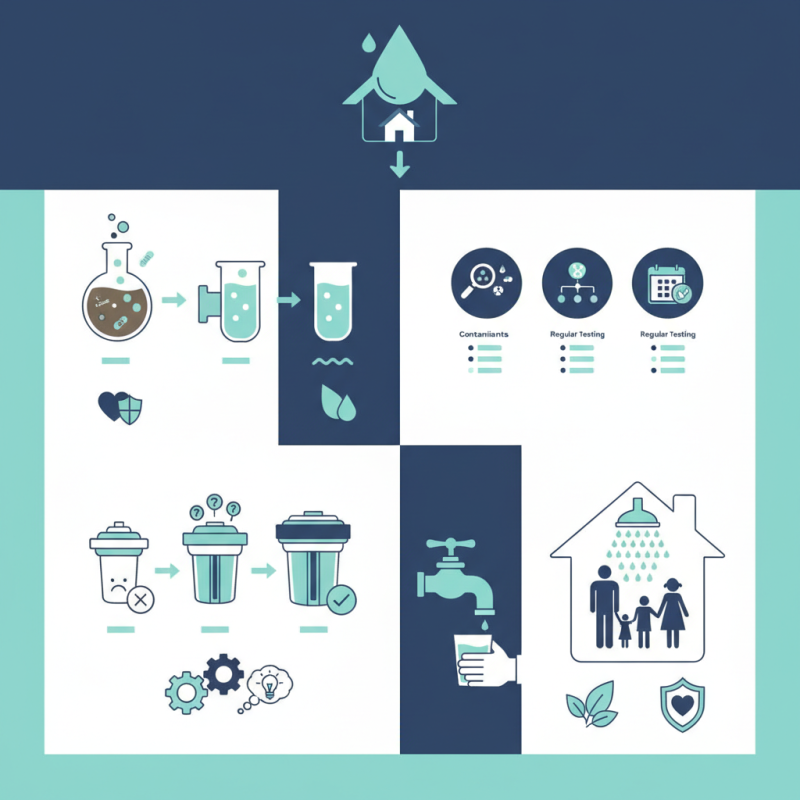
Water safety is crucial for health. Contaminants often lurk in tap water. These can be bacteria, lead, chlorine, or pesticides. Regular exposure to these substances can pose serious health risks. Children and pregnant women are particularly vulnerable. The consequences may include developmental issues and chronic illnesses.
Understanding these contaminants is key to making informed choices. A high-quality water filter can remove harmful substances. This improves water quality and taste. Filters may not catch every contaminant. Users should regularly test their water quality. Awareness about what’s in your water empowers better decisions.
Choosing the right filter requires research. Not every filter is made equal. Some may target specific contaminants effectively. Others might not meet your needs. Explore local water reports for insights. Knowledge about your water source leads to healthier choices for your home and family.
| Contaminant | Source | Health Impacts | Recommended Filtration Method |
|---|---|---|---|
| Lead | Old plumbing pipes, corrosion | Cognitive impairment, developmental issues in children | Activated carbon filter, reverse osmosis |
| Chlorine | Municipal water treatment | Irritation of skin and respiratory issues | Activated carbon filter |
| Fluoride | Water fluoridation policies | Dental fluorosis, bone issues | Reverse osmosis |
| Nitrates | Fertilizer runoff, septic systems | Methemoglobinemia ("blue baby syndrome") | Reverse osmosis |
| Arsenic | Naturally occurring, industrial waste | Cancer, skin lesions, developmental effects | Reverse osmosis, distillation |
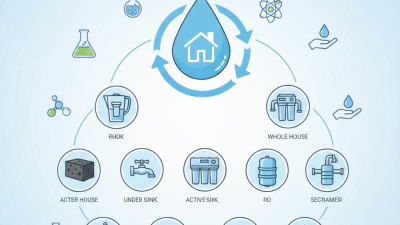
When considering water filtration for your home, it's essential to understand the types available. Each filter has unique features and benefits.
There are activated carbon filters, which reduce chlorine and improve taste. Reverse osmosis systems are more complex, removing a wide range of contaminants. UV filters effectively kill bacteria and viruses.
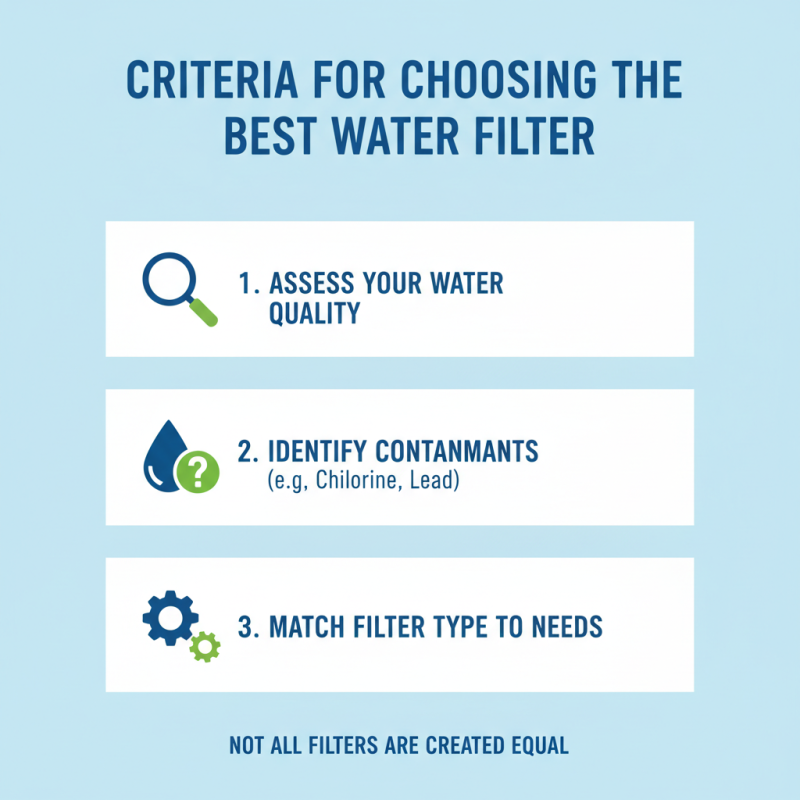
Choosing the right filter can feel overwhelming. It's crucial to assess your water quality first. Test kits can identify harmful substances. If your water contains impurities, opt for a more robust system like reverse osmosis.
Tip: Regularly replace filter cartridges for optimal performance. A neglected filter may worsen water quality.
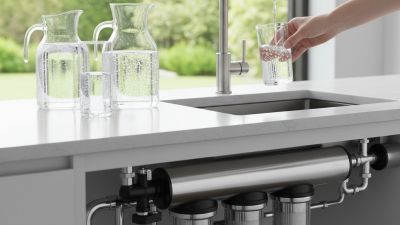
Whole-house filters are another option, providing clean water to every tap. However, they can be costly and require professional installation. Portable pitchers are affordable and easy to use. They may not filter as extensively, but can improve taste quickly.
Tip: Research local water quality reports. This information helps in selecting the right filter type. Remember, your filtration needs may change over time. Stay informed about the latest filtration advancements for best results.
Choosing the right water filter for your home is crucial. Understanding what you need is the first step. Not all filters are created equal. Consider the contaminants present in your water. Some filters handle chlorine well, while others excel at removing heavy metals.
A good tip is to test your water first. Use a reliable water testing kit. This will highlight any specific issues. Armed with that knowledge, narrowing down your options becomes easier. Look for certifications from recognized organizations. These affirm the filter’s effectiveness and reliability.
The flow rate is another critical factor. Filters that slow down water flow may frustrate daily use. Balance between a robust filter and a convenient flow is essential. Additionally, maintenance requirements vary. Some filters need frequent replacements, while others can last longer. Weighing the pros and cons ensures you select a filter that fits your lifestyle. Think about how often you use the water. Is your family large or small? Adjust your choices accordingly.
Installing a high-quality water filter in your home brings numerous benefits. First, it significantly improves the taste and odor of your water. According to the Environmental Protection Agency (EPA), many contaminants can alter the flavor and scent of tap water. A good filter can remove these impurities, making drinking water more enjoyable for you and your family.
Moreover, a reliable water filter can protect your health. The CDC states that nearly 10% of the United States population relies on private wells, which often lack regular monitoring for contaminants. Water filters may capture harmful pathogens, lead, and chlorine byproducts, thus reducing the risks of waterborne illnesses. Regularly updating your filter can maintain its effectiveness.
However, not all filters are created equal. It's essential to choose one that suits your specific water quality needs. Investing in a certified filter ensures that it meets industry standards. Some filters may require replacement more frequently than others. This aspect is often overlooked. Understanding various filtration methods can make a significant difference in performance. Always research before making decisions.
Maintaining your water filtration system is crucial for optimal performance. Regular upkeep ensures clean drinking water and extends the lifespan of your filter. A well-maintained system can save you money in the long run.
Check filters often. Some need replacement every few months. Others last longer. Know your system’s specifics. Skipping replacements can lead to bacterial growth. It’s a risk you don’t want to take.
Cleaning is also vital. Use mild solutions to sanitize your system. Avoid harsh chemicals. They can damage components. Periodically inspect all parts for wear and tear. A small crack can create big problems.
Keep an eye on water quality. If it changes, something might be wrong. Trust your instincts. Address issues early to avoid larger complications. Regular care is a straightforward way to ensure your family's health.
Build your system. Protect your boat. Join the movement.