Best Water Filter Options for 2026 What to Choose?
As we approach 2026, choosing the best water filter becomes increasingly essential. With growing concerns about water quality, many people seek reliable solutions. The best water filter not only improves taste but also removes harmful contaminants.
In today's market, various options cater to different needs. Some filters are compact and easy to use, while others provide advanced filtration systems. The challenge lies in selecting the right one for your home. A good water filter should blend efficiency with affordability.
However, not all products are created equal. Some may claim to be the best, yet fall short in effectiveness. Research and reviews are crucial when making a selection. Assessing real user experiences can guide you to a trustworthy choice. Remember, the best water filter for one household may not suit another. It's essential to consider individual needs before making a decision.
Best Water Filter Technologies to Consider for 2026
As we look ahead to 2026, the importance of clean water cannot be overstated. Water filter technologies continue to evolve, making it crucial to choose wisely. One promising option is reverse osmosis. This method removes a wide range of contaminants, exceeding typical filter capabilities. It can significantly improve water quality by eliminating heavy metals, bacteria, and chemicals.
Another technology to consider is UV filtration. This method effectively disinfects water, using ultraviolet light to kill harmful microorganisms. It stands out for its eco-friendliness. However, it doesn't remove sediment or chemicals, so a pre-filter might be needed. Weighing the pros and cons of each system is essential.
Activated carbon filters provide a simpler solution. They enhance taste and remove chlorine and some organic compounds. Yet, they require regular replacement to maintain efficacy. Users might find it easy to overlook this maintenance step. Understanding the strengths and weaknesses of each option shapes informed decisions for safe drinking water in 2026.
Best Water Filter Options for 2026 What to Choose?
| Filter Type |
Removal Efficiency |
Lifespan |
Price Range |
Best For |
| Activated Carbon |
Chlorine, Sediment, VOCs |
6 months |
$20 - $50 |
Home Use |
| Reverse Osmosis |
Heavy Metals, Salts, Microorganisms |
2 years |
$150 - $600 |
Households with Hard Water |
| UV Purification |
Bacteria, Viruses |
1 year |
$100 - $300 |
Emergency Situations |
| Ceramic Filters |
Bacteria, Sediments |
Up to 3 years |
$30 - $90 |
Rural Areas |
Key Features of High-Performance Water Filters in 2026
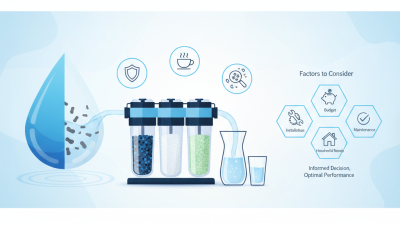
When considering high-performance water filters in 2026, key features are essential for making informed choices. First, look for filters that effectively remove contaminants. This includes heavy metals, chlorine, and microscopic pathogens. Advanced filtration technologies are crucial for achieving this level of purification.
Another important feature is the filter's lifespan. Many filters now last longer, reducing the frequency of replacements. This not only saves money but also lessens environmental impact. User-friendly designs matter too. Filters must be easy to install and maintain. Consumers increasingly value convenience in their home systems.
It’s crucial to evaluate certifications. Reliable filters should meet established health and safety standards. However, not all products provide clear certification details. Be cautious and do thorough research. Some filters may claim high performance but lack proper validation. Balancing performance with specifics like flow rate and storage capacity is necessary. As you choose a water filter, reflection on these factors will guide you to better options.
Comparative Analysis of Activated Carbon vs. Reverse Osmosis Filters
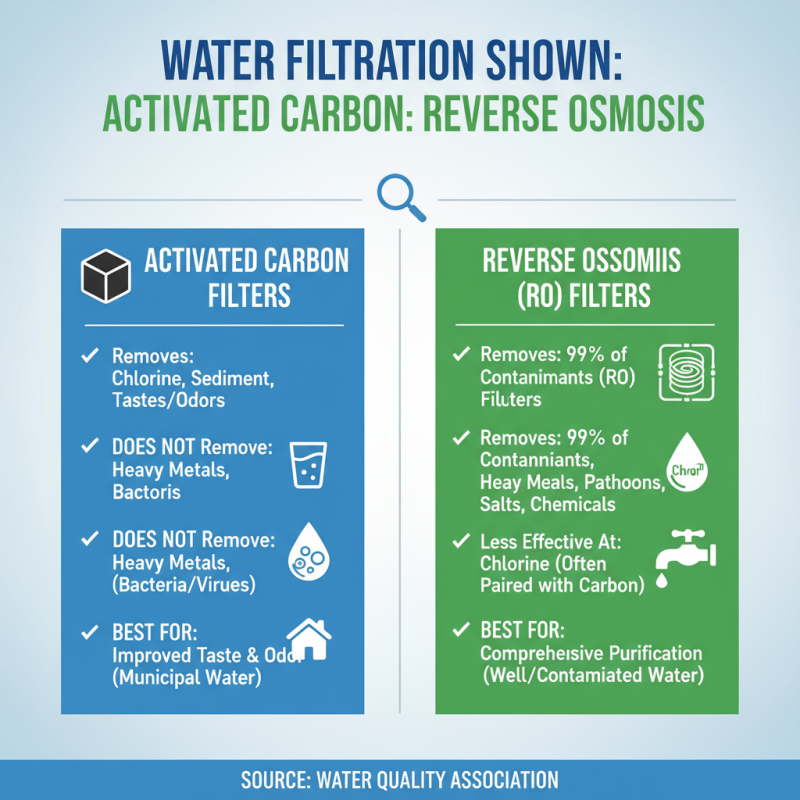
When considering water filtration systems, two popular options are activated carbon and reverse osmosis (RO) filters. According to the Water Quality Association, activated carbon filters excel at removing chlorine and sediment. They are effective at enhancing taste and odor, making them ideal for many households. However, carbon filters often do not eliminate heavy metals or pathogens, which can be a concern in areas with contaminated water sources.
On the other hand, reverse osmosis provides comprehensive filtration. It uses a semi-permeable membrane to remove up to 95% of total dissolved solids, including heavy metals and microorganisms. A report from the National Sanitation Foundation indicates that RO systems are particularly effective in areas with high levels of pollutants in the water supply. However, they tend to waste more water than activated carbon filters, a nuance that homeowners should consider.
Tip: Regular maintenance of your chosen filtration system is essential. Replace filters according to manufacturer guidelines to ensure optimal performance. Additionally, consider testing your water quality annually to identify potential contaminants. Keep in mind that no system is perfect; even the best filters have limitations and may require complementary solutions.
Understanding Contaminant Removal Standards and Certification for Filters
Choosing the right water filter for 2026 involves understanding contaminant removal standards and certifications. Various filters focus on specific contaminants, so knowing which standard applies is crucial. The NSF International and the Water Quality Association (WQA) set clear standards. For instance, NSF/ANSI Standard 53 targets health-related contaminants like lead and mercury. Reports indicate that nearly 9 million Americans consume water with harmful levels of contaminants annually.
Certification alone does not guarantee perfect filtration. Some filters may fail to remove certain microorganisms or chemicals effectively. It’s vital to read performance data. Many filters claim broad-spectrum efficacy but may only target limited contaminants. The EPA emphasizes that regular testing is important to ensure water remains safe.
Tip: Always check the certification mark on the filter packaging. Filters without credible certifications might not meet safety standards.
Another aspect to consider is maintenance. Users often overlook the need for regular filter changes. Deterioration in filtration quality may lead to health risks. Reports show that 30% of households do not replace filters on schedule.
Tip: Set a reminder for filter changes to maintain optimal water quality. Remember, cleaner water contributes to better health, but the effectiveness of your filter depends on its upkeep.
Cost-Benefit Analysis of Home Water Filtration Systems in 2026
When evaluating home water filtration systems in 2026, a cost-benefit analysis is essential. Consider initial costs versus long-term savings. High-quality filters may seem pricier, but they often last longer and deliver better water quality. Evaluate the type of contaminants in your water supply; different filters target different impurities. Choosing the right system can enhance both health and taste.
Tips: Regular maintenance can prolong filter life. Change filters as recommended. Overlooking this can lead to decreased efficiency. Calculate your monthly water cost with and without filtration. This helps assess potential savings.
In some regions, tap water quality varies widely. What works well in one home may not suit another. Research local water reports to inform your choice. A filter that removes harmful bacteria is crucial, especially in areas prone to contamination. Always seek out data-backed reviews for guidance. Balancing quality and cost can be challenging, but the effort is worth it for safe drinking water. Keeping informed helps make confident decisions.