What Is the Best Water Filter System in 2026?

Choosing the best water filter system in 2026 requires more than comparing prices, ratings, or glossy product claims. Your tap water may contain chlorine, lead, PFAS, sediment, or microbial risks. These concerns differ by location, plumbing, and source.

The WHO and UNICEF Joint Monitoring Programme reported that 2.2 billion people lacked safely managed drinking water in 2022. That figure gives household filtration a serious context. However, a home filter is not automatically a complete safety solution. The U.S. Environmental Protection Agency’s 2024 PFAS rule set enforceable limits of 4 parts per trillion for PFOA and PFOS. It also highlights why contaminant-specific testing matters. The Centers for Disease Control and Prevention advises consumers to identify their water concern before selecting a filter. Certification matters too. NSF/ANSI 42 covers aesthetic effects, while NSF/ANSI 53 addresses specific health contaminants, and NSF/ANSI 58 applies to reverse osmosis systems.

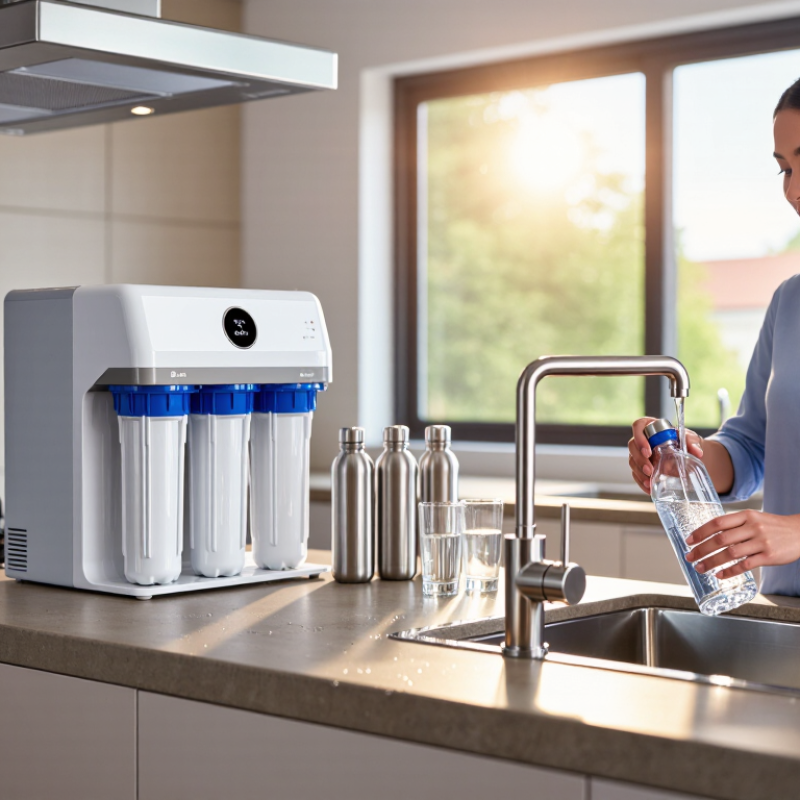
The best water filter system should match verified water quality, daily demand, installation space, and maintenance habits. A family filling steel bottles each morning may need different capacity than a single apartment resident. Look for independent certification, clear replacement schedules, tested contaminant claims, and realistic operating costs. A filter can look impressive under bright kitchen lights. Its cartridge may still be overdue for replacement. This guide compares leading technologies, including activated carbon, reverse osmosis, and whole-house filtration, using public health guidance and industry standards. No choice is perfect. Even careful recommendations deserve a second look when local test results change.

What Is the Best Water Filter System in 2026?

What a Water Filter System Does and Why It Matters in 2026

What Is the Best Water Filter System in 2026?

A water filter system removes or reduces specific impurities before water reaches your glass. It does not make every water source safe. The right choice depends on your local supply, plumbing, and certified performance.

The WHO/UNICEF Joint Monitoring Programme reported that 2.2 billion people lacked safely managed drinking water in 2022. This figure shows why filtration still matters, even when tap water appears clear. At home, the signs can be small: a metallic taste, white kettle scale, or a faint chlorine smell. These details may suggest minerals or treatment chemicals, but they cannot identify every contaminant.

Testing comes first.

The U.S. Environmental Protection Agency advises consumers to review local water quality reports and consider certified treatment devices. Certification should match the contaminant, not just the product category. For example, a system certified for chlorine reduction may not address lead, nitrate, or microorganisms. The Centers for Disease Control and Prevention also warns that filters require regular replacement and correct installation.

I once assumed a filtered pitcher solved everything. That assumption was incomplete. An old building’s pipes can still affect water after filtration. A practical system should offer clear test results, replacement guidance, and a realistic maintenance schedule. In 2026, convenience matters, but evidence matters more. A cheap unit with an expired cartridge becomes decoration, not protection.

What Is the Best Water Filter System in 2026?

What a Water Filter System Does and Why It Matters in 2026

The best water filter depends on the contaminant you need to reduce. This chart shows selected U.S. EPA maximum contaminant levels for public drinking-water systems, expressed in micrograms per liter (µg/L). A lower regulatory limit generally indicates that the contaminant is considered harmful at a lower concentration.

Activated carbon is commonly used for some organic chemicals and chlorine, reverse osmosis can reduce many dissolved substances, and ultraviolet treatment targets microorganisms rather than chemicals. Always test the water and choose a system certified for the specific contaminant. Source: U.S. EPA National Primary Drinking Water Regulations.

How to Compare the Main Water Filter Technologies

Choosing the best water filter system in 2026 starts with the contaminant, not the advertising claim. The WHO/UNICEF Joint Monitoring Programme reported that 2.2 billion people lacked safely managed drinking water in 2022. Local risks still vary widely. Check your municipal water report or obtain an accredited laboratory test before buying equipment. Carbon filters can improve chlorine taste and reduce some organic chemicals. They usually do not remove dissolved salts or many minerals. Reverse osmosis removes a broader range of dissolved substances, but it produces reject water and needs electricity, pressure, and regular membrane replacement. It can also reduce useful minerals. That trade-off is easy to overlook.

Ultrafiltration can retain particles, bacteria, and some larger contaminants while using less water. However, its performance depends heavily on pore size and maintenance. Ultraviolet treatment can inactivate microorganisms, yet it cannot remove sediment or chemicals. Ion-exchange systems can reduce hardness or selected metals, but exhausted media may release contaminants if neglected. NSF/ANSI standards identify different claims for filtration, reduction, and structural safety; certification must match the exact contaminant. The U.S. Environmental Protection Agency also emphasizes testing, maintenance, and correct installation for point-of-use systems. A practical comparison includes flow rate, cartridge life, wastewater ratio, storage volume, and replacement cost. Measure the filter’s output with a clean jug. Notice the smell, pressure, and first-minute water clarity. I would not treat one perfect laboratory result as permanent protection. Water quality changes, and household maintenance is often the weakest link.

How to Match a Filter System to Your Water Quality

The best water filter system in 2026 is not the most expensive one. It is the one that matches your actual water quality. Start with a recent utility report or a laboratory test. Check for chlorine, lead, nitrates, hardness, sediment, and microbial risks. Private wells require more frequent testing because conditions can change after heavy rain.

Test before buying.

Different problems need different designs. Activated carbon can reduce chlorine, odors, and some organic chemicals. Reverse osmosis can lower dissolved salts, fluoride, and several metals. However, it may waste water and remove useful minerals. Ultraviolet treatment can address microorganisms, but it does not remove sediment or chemicals. A sediment prefilter may protect the rest of the system when your tap water leaves grit in a glass.

Read the performance data carefully. Look for independent certification against the specific contaminant you found. Flow rate matters when several people use water at once. Storage tanks need cleaning, and cartridges need timely replacement. A neglected filter can become a weak point. I would also question test results that seem unusually perfect. Water quality is rarely identical throughout a building. Old plumbing, seasonal changes, and installation errors can alter the result. A system that works well in the kitchen may not suit every tap, and a whole-house unit may need professional assessment.

What Is the Best Water Filter System in 2026? - How to Match a Filter System to Your Water Quality
Water Quality or Household Concern Typical Indicators Recommended Filter System Main Contaminants Addressed Typical Filtration Performance Important Limitations Best Placement Verification to Look For
Municipal water with chlorine taste or odor Tap water is legally treated but has a swimming-pool taste, odor, or mild discoloration. Activated carbon block or granular activated carbon filter Chlorine, some taste- and odor-causing compounds, and certain organic chemicals Carbon performance depends on the media, contact time, flow rate, and cartridge condition. Standard carbon filters do not reliably remove dissolved minerals, nitrates, fluoride, or most microorganisms. Under-sink drinking-water line or whole-house system when odor is present at multiple fixtures Independent certification for the specific contaminant reduction claim; NSF/ANSI 42 is commonly associated with aesthetic effects such as chlorine taste and odor.
Lead risk from older plumbing or building fixtures Older service lines, solder, faucets, or plumbing components; testing is recommended because lead is not detectable by taste or smell. Certified activated carbon, ion-exchange, or reverse-osmosis system designed for lead reduction Lead and, depending on the certified model, selected metals Performance varies significantly by pH, water chemistry, flow rate, and cartridge age. Filtering does not repair a lead service line or eliminate exposure from unfiltered taps. Cartridge replacement is essential. Point-of-use filter at the kitchen tap used for drinking and cooking NSF/ANSI 53 certification or equivalent independent testing specifically listing lead reduction.
Hard water with scale on fixtures and appliances White deposits, soap scum, reduced soap lather, and frequent scale in water heaters or kettles. Water softener using cation-exchange resin Calcium and magnesium hardness ions Can substantially reduce hardness when correctly sized and regenerated with salt or potassium chloride. A softener is not a general-purpose purifier and does not remove pathogens, most organic chemicals, or all dissolved contaminants. Point of entry, after the main shutoff and before the water heater Professional water-hardness test and equipment sized for household flow, hardness, and daily water use.
Private well water with possible bacteria Well ownership, intermittent cloudy water, positive laboratory test, or nearby septic and agricultural activity. Ultraviolet disinfection, often preceded by sediment filtration Bacteria, viruses, and protozoa when the UV dose and water clarity are adequate UV inactivates microorganisms without adding chemicals; effectiveness depends on dose, flow, lamp condition, and low turbidity. UV does not remove chemicals, metals, hardness, or particles. It requires electricity and routine lamp and sleeve maintenance. Point of entry after appropriate prefiltration Water testing for total coliforms and E. coli, plus a UV system rated for the actual flow rate and certified for microbiological treatment.
Sediment, sand, rust, or visible particles Cloudy water, grit in faucet aerators, rust-colored particles, or sediment in toilet tanks. Washable screen filter, spin-down separator, or pleated sediment cartridge Sand, silt, rust particles, and suspended solids Particle removal depends on micron rating; finer ratings generally require more frequent cleaning or replacement. Does not remove dissolved contaminants, taste and odor compounds, or microorganisms. Whole-house inlet, preferably with an accessible bypass and pressure gauge Published micron rating, maximum flow, pressure-drop data, and a cartridge compatible with the household’s sediment load.
Nitrate or nitrite contamination Private well near agricultural land, septic systems, or areas with a documented nitrate advisory. Reverse osmosis, anion exchange, or a specifically rated nitrate-removal system Nitrate and nitrite, when the system is tested and certified for those contaminants Reverse osmosis can reduce many dissolved substances; actual removal depends on membrane condition and feed-water chemistry. Boiling does not remove nitrate and can increase its concentration through evaporation. Treatment must be verified by laboratory testing. Point of use for drinking and cooking, or point of entry when broader treatment is required Laboratory water test and independent certification or performance data specifically for nitrate and nitrite reduction.
Fluoride or high total dissolved solids Laboratory result shows elevated fluoride, salty taste, or high conductivity or TDS. Reverse osmosis or an appropriately selected adsorption or ion-exchange system Fluoride and many dissolved inorganic substances; exact reduction depends on system design Reverse osmosis can reduce a broad range of dissolved solids, but rejection rates vary with pressure, temperature, membrane age, and water chemistry. Produces a reject-water stream, needs replacement filters, and may reduce beneficial minerals. TDS meters do not identify individual contaminants. Point of use under the kitchen sink Independent testing for fluoride and the specific dissolved contaminants found in the laboratory report.
PFAS concern or documented PFAS contamination Local advisory, contaminated groundwater, industrial or firefighting-foam history, or a laboratory result. Certified granular activated carbon, reverse osmosis, or anion-exchange system selected for the target PFAS Specific per- and polyfluoroalkyl substances listed in the performance claim Reduction varies by PFAS chain length, media capacity, flow rate, and breakthrough; replacement timing is critical. Not every carbon or RO filter is effective for every PFAS. Used media must be handled according to local disposal guidance. Point of use for drinking and cooking unless a broader exposure assessment supports point-of-entry treatment Independent certification or laboratory data naming the relevant PFAS compounds and tested capacity.
Arsenic in private well water Well located in a region with naturally occurring arsenic or a laboratory result showing elevated arsenic. Adsorptive media, reverse osmosis, or anion exchange selected for arsenic type and concentration Arsenic, with performance strongly affected by whether it is present as arsenite or arsenate Some systems require pretreatment to convert arsenite to the more readily removed arsenate form. Generic carbon filters are not a dependable arsenic solution. Media capacity and disposal requirements must be managed. Point of use or point of entry according to test results and exposure assessment Laboratory speciation where appropriate and certification or data specifically for arsenic reduction.
Multiple dissolved contaminants requiring broad reduction Laboratory report identifies a combination of metals, salts, nitrate, fluoride, or other dissolved substances. Reverse-osmosis system with sediment and carbon prefilters; additional treatment may be required Many dissolved salts and selected contaminants, depending on membrane and certification Can provide broad point-of-use reduction when operated at suitable pressure and maintained on schedule. It is not automatically effective for every contaminant and may not address microorganisms without proper design and maintenance. Point of use for drinking and cooking; point of entry only after a whole-house assessment Water analysis matched to a contaminant-specific performance claim, plus verified flow, pressure, storage, and reject-water specifications.
Microplastics or fine suspended particles Concern about particles, visible debris, or a need for finer mechanical filtration. Fine sediment cartridge, ultrafiltration, or membrane system with a stated particle-removal rating Suspended particles and, for some membrane systems, selected microorganisms Removal depends on pore size, integrity, pressure, and whether the system is rated for the relevant particle size. Particle filtration does not remove dissolved chemicals, salts, or all pathogens. Very fine filters can reduce flow quickly. Point of use or point of entry with adequate prefiltration Published pore or micron rating and independent performance testing for the stated particle-removal claim.
Uncertain water quality before choosing a system No recent test report, changing taste or appearance, new well, or unclear plumbing history. Laboratory water test first; use temporary sediment or carbon filtration only for clearly identified aesthetic issues Determined by laboratory results rather than assumptions based on taste, color, or odor Correct selection depends on measured contaminant concentration, water chemistry, flow rate, and intended use. A single filter rarely solves an unknown water-quality problem. Do not rely on taste, odor, or a basic TDS reading alone. Test at the source and at the point of use when plumbing contamination is possible Accredited laboratory report, contaminant-specific treatment claim, installation instructions, and a documented maintenance schedule.
Performance varies by water chemistry, pressure, flow rate, filter age, and maintenance. Test the water first, then select a system whose independently verified performance claim matches the specific contaminant.

Which Features Define the Best Water Filter System

What Is the Best Water Filter System in 2026?

The best water filter system is defined by performance, fit, and trustworthy evidence. Start with a recent water quality report, not attractive packaging. Different filters target different concerns, including sediment, chlorine, metals, and microorganisms. A certified reduction claim should name the contaminant clearly. Vague phrases like “advanced purification” deserve careful questioning.

In practical comparisons, I check filtration stages, flow rate, and replacement costs. A system that produces one glass slowly may frustrate a busy household. The filter should also match daily water use and available installation space. Look for durable housings, secure connections, and simple cartridge changes. A filter-life indicator can prevent neglected maintenance. Still, electronic reminders can fail. A written replacement schedule remains useful.

Independent testing matters more than impressive technical language. Certification to recognized drinking-water standards offers stronger evidence than an unverified laboratory statement. Check whether the certification covers the exact model and claimed contaminant. Also examine the installation requirements, waste-water output, and pressure limits. These details affect real performance. I once focused too heavily on removal percentages and overlooked taste changes after several weeks. That was a mistake. Water quality can shift seasonally, especially in private wells. Retesting is sensible when taste, odor, or household plumbing changes. A professional water analysis may cost more, but it can prevent buying the wrong system.

How to Choose, Install, and Maintain the Right System

What Is the Best Water Filter System in 2026?
How to Choose, Install, and Maintain the Right System

The best water filter depends on your water, household size, and daily use. Start with evidence. Request a recent municipal water report, or test private well water through an accredited laboratory. Check for sediment, chlorine, hardness, lead, and microbial risks. A carbon filter may improve taste and odor, while reverse osmosis can reduce many dissolved contaminants. No system removes everything. Match the filter’s certified performance claims to your test results.

Installation should follow the manufacturer’s instructions and local plumbing requirements. Shut off the water supply before cutting any pipe. Measure twice. A pressure-reducing valve may protect delicate equipment in high-pressure homes. Leave enough space to replace cartridges without twisting the tubing.

I once placed a filter beneath a crowded sink, and maintenance became unnecessarily difficult. That shortcut was a mistake.

Maintenance controls performance more than the purchase price. Mark the replacement date on the housing with a waterproof pen. Change cartridges according to usage, pressure changes, or test results, not appearance alone. Wash your hands before handling internal parts, and sanitize the housing when instructed. Inspect connections for slow leaks after every service. Do not guess. If water develops an unusual smell, taste, or cloudiness, stop using the system and test the water again. Some systems need a licensed plumber for safe installation.

Build your system. Protect your boat. Join the movement.

Compare Products
Talk to Sales