China Best Water Filter System for Home Buyers

Choosing the China Best Water Filter System for Home Buyers requires more than comparing prices or counting filtration stages. A reliable water filter system for home should match your local water quality, household size, plumbing layout, and daily consumption. Tap water may look clear while carrying chlorine taste, sediment, hardness minerals, or aging-pipe particles. Appearance alone proves little.

Experienced buyers often begin with a recent water-quality report or a certified laboratory test. This practical step prevents unnecessary filtration and helps identify the right technology, such as activated carbon, reverse osmosis, ultrafiltration, or ultraviolet treatment. Each option has limits. Reverse osmosis can reduce many dissolved contaminants, but it may waste water and require regular maintenance. Carbon filters improve taste and odor, yet they do not remove every contaminant. Certification matters.

Look for testing from recognized organizations, transparent performance data, replacement-filter availability, and clear installation instructions. A trustworthy supplier should explain flow rate, filter life, wastewater production, and maintenance costs without promising perfect protection. Ask who tested the product and under which standard. Small details matter, such as a shutoff valve beneath the sink or a filter-change reminder beside the faucet.

Real homes are not laboratories. A system that performs well in one kitchen may disappoint in another. Buyers should inspect water pressure, cabinet space, family habits, and after-sales support before ordering. The best choice is not always the most advanced model. It is the system that delivers verified results, manageable upkeep, and safe drinking water throughout everyday use. Still, no filter replaces responsible plumbing maintenance or professional advice when contamination is suspected.
China Best Water Filter System for Home Buyers

What Makes a Water Filter System Suitable for Home Use in China

Choosing a water filter for a Chinese home starts with the water source, not the product label. Municipal water may meet treatment requirements, yet old apartment pipes can add rust, sediment, or an unpleasant smell. In rural areas, well water requires testing for hardness, nitrate, and microbial risks. A practical check includes a recent water report and a basic laboratory test. Do not rely on taste alone.

A suitable system should match the household’s daily volume and kitchen space. A family of four may need steady flow during cooking, washing, and drinking hours. Sediment filtration protects later stages, while activated carbon can reduce chlorine taste and many organic compounds. Reverse osmosis may help with dissolved salts. However, it uses reject water and needs electricity and regular filter changes. Ultraviolet treatment works best when water is clear and the lamp is maintained. Small details matter, including a dry installation area and food-contact components meeting applicable Chinese safety requirements.

From practical installation experience, maintenance is often the weak point. An advanced filter becomes unreliable when cartridges are forgotten. Record installation dates, replace parts according to measured use, and inspect leaks monthly. Water pressure also needs checking; low pressure can make some systems frustratingly slow. I would not promise one perfect design for every Chinese home. Building age, local water chemistry, budget, and wastewater tolerance can change the answer. Test before buying, then choose the simplest system that solves the measured problem.

How to Identify Household Water Quality and Filtration Needs

China Best Water Filter System for Home Buyers: How to Identify Household Water Quality and Filtration Needs

Choosing a household filter should begin with evidence, not appearance or price. The WHO/UNICEF Joint Monitoring Programme reported that 2.2 billion people lacked safely managed drinking water in 2022. This figure does not mean every home has the same risk. Municipal supply, private wells, storage tanks, and aging pipes create different problems.

Request a recent water-quality report from the local supplier. For well water, arrange laboratory testing at least annually, as recommended by the U.S. CDC. Test for bacteria, lead, nitrates, hardness, and other locally relevant contaminants. Taste is useful, but it is not proof of safety.

Match the treatment method to the result. Activated carbon can improve chlorine taste and some organic chemicals. Reverse osmosis may reduce dissolved salts, arsenic, or nitrate, but it needs pressure, maintenance, and wastewater management. Certified performance matters. NSF/ANSI standards can help verify contaminant claims, while the U.S. EPA’s 2024 PFAS regulation shows why updated testing remains important. Regulations differ by country.

Tips: Test before buying. Check flow rate, replacement costs, and installation space. Keep test records. Replace cartridges on schedule. A filter can become a problem when neglected. I would also retest after plumbing repairs, because water quality can change unexpectedly. A perfect choice is rarely obvious. Be willing to revise it.

Which Water Filter Technologies Best Fit Different Home Requirements

China Best Water Filter System for Home Buyers: Which Water Filter Technologies Best Fit Different Home Requirements

Choosing a home filter starts with the water problem, not the product shape. The WHO/UNICEF Joint Monitoring Programme reported that 2.2 billion people lacked safely managed drinking water in 2022. Local testing still matters, even in cities with treated supplies. A basic sediment filter suits cloudy water, rust particles, and old-pipe debris. It does not remove dissolved chemicals. Activated carbon improves chlorine taste and odor. It can also reduce several organic compounds, but performance depends on contact time and replacement.

For homes concerned about high dissolved solids, fluoride, or certain heavy metals, reverse osmosis offers deeper treatment. Its membrane requires stable pressure and regular servicing. It also produces wastewater, which many buyers overlook. The U.S. Environmental Protection Agency’s 2024 PFAS rule set limits of 4.0 nanograms per liter for PFOA and PFOS. That benchmark shows why certified contaminant claims matter. Look for testing against relevant standards, such as NSF/ANSI 53 or 58, rather than broad “purification” language.

Ultraviolet systems can control microorganisms when water is clear and electricity is reliable. They do not remove salts, metals, or pesticides. Whole-house filtration protects showers and appliances, while under-sink systems focus treatment at the drinking tap. Maintenance is not optional. A neglected cartridge may reduce flow and weaken protection. That part is easy to underestimate. Testing the incoming water, checking household pressure, and calculating annual replacement costs usually reveal the better fit.

China Best Water Filter System for Home Buyers - Which Water Filter Technologies Best Fit Different Home Requirements

A practical comparison of common household water-treatment technologies. Actual performance depends on source-water quality, system design, operating conditions, and verified product certification.

Water Filter Technology Main Contaminants or Issues Addressed Typical Reduction Capability Water Recovery and Flow Characteristics Maintenance Requirements Best Fit for Home Requirements Important Limitations
Sediment Filtration Sand, rust, silt, dirt, and visible suspended particles. Removes particles commonly rated from approximately 1 to 50 micrometres, depending on the filter design. Usually no water waste. Flow is generally high when the filter is clean, but pressure can decrease as particles accumulate. Replace or clean the filter when pressure drops, the cartridge becomes visibly dirty, or the manufacturer’s service interval is reached. Whole-house prefiltration
Protecting plumbing, water heaters, and downstream filters.
Does not normally remove dissolved chemicals, salts, microorganisms, or unpleasant tastes and odors.
Activated Carbon Filtration Chlorine, many taste- and odor-causing compounds, and selected organic chemicals. Effectiveness varies significantly by carbon type, contact time, cartridge size, and contaminant. Certified models may reduce specific compounds. Usually no water waste. Provides moderate to high flow, although flow decreases as the cartridge loads. Replace cartridges on schedule or when taste, odor, or flow changes. Poorly maintained units may support microbial growth. Municipal tap water
Improving drinking-water taste and reducing chlorine-related odor.
Standard carbon does not reliably remove dissolved salts, hardness, nitrate, or all microorganisms. Use only verified contaminant claims.
Ultrafiltration (UF) Suspended solids, colloids, bacteria, and some larger microorganisms. Membrane pores are commonly around 0.01 micrometres. Many UF systems do not remove dissolved salts or small dissolved chemicals. Often operates without electricity and typically produces little or no reject-water stream. Flow depends on pressure and membrane condition. Periodic flushing may be required. Replace the membrane and prefilters according to water quality and operating instructions. Low-waste drinking water
Homes seeking particulate and microbial-barrier treatment while retaining minerals.
Not a dependable solution for salinity, hardness, nitrate, fluoride, or many dissolved contaminants. Disinfection may still be needed for microbiologically unsafe water.
Reverse Osmosis (RO) Dissolved salts, many metals, nitrate, fluoride, and numerous other dissolved contaminants. Membrane performance varies, but properly designed systems can substantially reduce total dissolved solids and selected contaminants. Reduction should be verified for each target contaminant. Produces purified water slowly and normally sends concentrate to drain. Traditional systems may discharge several litres of water for each litre produced; efficient designs use less. Replace sediment and carbon prefilters regularly, replace the membrane as needed, and sanitize storage tanks and tubing where applicable. High-purity drinking water
Homes with high dissolved solids, salinity, or specific dissolved contaminants.
Removes minerals along with contaminants, requires installation space and adequate pressure, and does not automatically guarantee microbiological safety after the storage tank.
Ultraviolet (UV) Disinfection Inactivates bacteria, viruses, and other microorganisms when the required UV dose is delivered. Can provide effective microbial inactivation in clear water when correctly sized and maintained. It does not physically remove contaminants. Usually no water waste and provides continuous flow. Requires electricity and adequate water clarity for UV light transmission. Clean the quartz sleeve, replace the UV lamp according to its rated service life, and monitor system alarms where available. Private wells
Microbial control where water is otherwise reasonably clear and properly prefiltered.
Does not reduce hardness, salts, metals, sediment, or chemicals. A power interruption can stop treatment unless backup protection is provided.
Water Softening by Ion Exchange Calcium and magnesium hardness that causes scale and soap-performance problems. Designed primarily to reduce hardness ions. It does not provide general-purpose purification. Requires a regeneration cycle that uses salt or potassium chloride and produces wastewater. Flow is generally suitable for whole-house use. Refill regenerant, maintain the brine tank, check settings, and service the resin and control valve when necessary. Hard-water homes
Protecting pipes and appliances and improving bathing and washing performance.
Adds sodium or potassium to treated water, does not remove most contaminants, and needs drainage for regeneration. A separate drinking-water filter may be appropriate.
Whole-House Multi-Stage System Usually combines sediment filtration with carbon, softening, UV, UF, or other treatment stages. Performance depends on the exact combination and the verified claims of each stage. More stages do not automatically mean better treatment. May provide high household flow, but pressure loss increases as stages are added. Water waste depends on whether RO or regeneration is included. Requires coordinated replacement of several cartridges or media and regular inspection of valves, housings, tanks, and connections. Large households
Homes needing treated water at multiple outlets, including showers and appliances.
Higher purchase and maintenance cost. A whole-house system should be selected from a water test rather than from the number of stages alone.
Point-of-Use Drinking-Water System Treats water at one outlet, such as a kitchen faucet, without treating every household outlet. Can use carbon, UF, RO, UV, or combinations. The reduction profile depends on the selected technology and certified claims. Usually easier to install and maintain. Water use and waste are limited to the drinking-water outlet; RO models may produce reject water. Filter replacement is generally straightforward, but storage tanks, tubing, and faucet hygiene should also be checked. Apartments and small homes
Targeted drinking and cooking-water treatment with lower installation cost.
Does not treat water used for bathing, laundry, toilets, or appliances. The treated faucet and plumbing must be identified clearly.
Buyer guidance: Test the source water before choosing a system. Municipal water users often prioritize sediment and activated carbon, while private-well users may need testing for bacteria, nitrate, metals, hardness, and other site-specific contaminants. For any health-related claim, select equipment with independent certification for the exact contaminant and reduction performance required.

How to Compare System Capacity, Certification, Maintenance, and Cost

Choosing the best water filter system for a home in China requires more than comparing advertised prices. Start with daily capacity and peak flow. A four-person household may need 8–12 liters of treated water each day, but cooking and drinking habits vary. Check whether the system can fill a kettle quickly during busy mornings. A small tank may save space, yet it can cause waiting and frequent filter cycling.

Certification deserves careful inspection. Look for current certificates, test reports, and the exact model number. Confirm what the certification covers, such as chlorine, sediment, metals, or microbial reduction. A general safety certificate does not prove every contaminant claim. Ask for laboratory dates and testing conditions. Paperwork matters.

Maintenance often decides real ownership cost. Measure cartridge prices, replacement frequency, flushing requirements, and technician access before buying. A system costing less initially may become expensive after two years. Keep a simple replacement calendar. Do not ignore warning lights. My first cost estimate was too optimistic because I forgot delivery and installation fees. Water quality can also change seasonally, so testing the incoming water once is not always enough. Leave space beneath the sink for hand access and future cartridge removal. It sounds minor. It is not.

How to Choose, Install, and Maintain a Home Water Filter System in China

For China home buyers, choosing the best water filter system starts with testing, not advertising. The WHO Guidelines for Drinking-water Quality recommend identifying local contaminants before selecting treatment. Check municipal water reports, then test for turbidity, chlorine, hardness, and possible heavy metals from aging indoor pipes. China’s GB 5749-2022 standard provides the current framework for drinking-water quality. A filter should match that need.

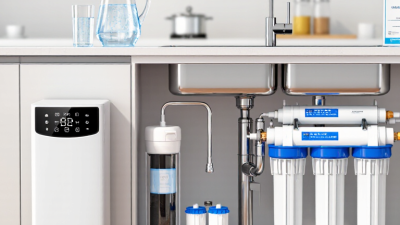
Installation details affect real performance. Place the system after the main inlet if whole-home protection is required, or under the kitchen sink for drinking water. Leave enough space for cartridge replacement. Flush new cartridges according to the instructions, and inspect leaks after twelve hours. A pressure gauge helps. Very low pressure can reduce flow and user satisfaction. Very high pressure may damage fittings. It is easy to overlook this.

Maintenance needs a calendar. Replace cartridges by measured capacity, time, or pressure drop, whichever comes first. The U.S. EPA notes that treatment devices need regular maintenance to perform as certified.

The WHO/UNICEF Joint Monitoring Programme reported that 2.2 billion people lacked safely managed drinking water in 2022, showing why household treatment still matters. However, a filter is not a cure-all. It may remove chlorine but leave dissolved salts. My practical hesitation is simple: many households delay replacement because water still looks clear. Clear water can still hide problems. Sampling after installation offers stronger evidence than taste alone.

Build your system. Protect your boat. Join the movement.

Compare Products
Talk to Sales