China Top 10 Home Water Filtration Manufacturers
China’s home water filtration industry is expanding with urban renovation, health awareness, and stricter quality expectations. The opportunity is substantial, but product claims require careful verification.
The WHO and UNICEF Joint Monitoring Programme reported that 2.2 billion people lacked safely managed drinking water at home in 2022. This gap keeps household treatment relevant, especially where taste, sediment, chlorine, or aging pipes concern families. The World Health Organization’s Guidelines for Drinking-water Quality also stress risk assessment, maintenance, and treatment performance. A filter is not automatically a safety solution.
This China Top 10 Home Water Filtration Manufacturers overview focuses on practical manufacturing capability, not advertising language. It considers reverse osmosis systems, activated carbon units, ultrafiltration membranes, UV treatment, smart monitoring, and replacement-filter supply. Certifications and test evidence matter. Relevant benchmarks may include NSF/ANSI 42, 53, and 58, WQA certification, ISO 9001 systems, and documented laboratory testing. However, certification scope differs between models. Readers should check the exact product number.
Market estimates also vary. Grand View Research and Fortune Business Insights both identify steady growth in global water purification demand, yet their market definitions are not identical. That limitation deserves attention.
A showroom can look impressive. The real test is often under the sink, beside a leaking fitting, or during a missed filter change. No ranking is perfect. This guide therefore compares evidence, engineering depth, export experience, after-sales support, and manufacturing transparency. These factors help buyers identify dependable partners for home water filtration, private-label projects, and long-term household use.
Definition and Scope of China’s Home Water Filtration Industry
China Top 10 Home Water Filtration Manufacturers
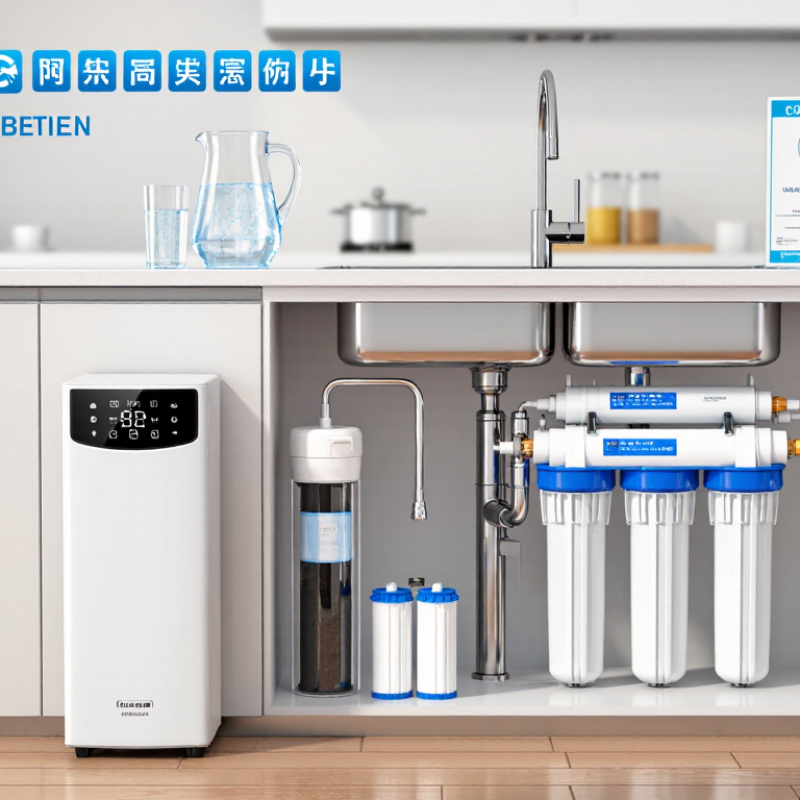
China’s home water filtration industry covers equipment designed for drinking, cooking, and household water treatment. Its scope includes countertop units, under-sink systems, whole-house filters, and water softeners. Common technologies include activated carbon, ultrafiltration, reverse osmosis, and sediment filtration. Each method addresses different concerns, such as chlorine taste, suspended particles, hardness, or dissolved substances.
The industry also includes filter membranes, pumps, housings, monitoring sensors, replacement cartridges, installation services, and after-sales maintenance. In a typical apartment kitchen, cabinet space, inlet pressure, drainage access, and replacement frequency affect product suitability. A compact reverse osmosis system may fit a small sink area, but it can produce wastewater and require electricity. Carbon filtration feels simpler, yet it cannot solve every water-quality issue.
When assessing China’s top 10 home water filtration manufacturers, buyers should examine factory quality controls, laboratory reports, material safety, testing records, and compliance with applicable national standards. Independent certification is useful, but it should not replace checking actual performance data. TDS readings alone can mislead consumers. Local water reports and professional testing offer better context. Service networks matter too, especially when membranes need replacement or leakage appears. The category is not perfectly tidy. Some rankings depend on export volume, technology ownership, production capacity, or domestic reputation. A manufacturer may excel in hardware but provide weak installation support. That difference deserves closer review.
Criteria for Ranking the Top 10 Chinese Manufacturers
China Top 10 Home Water Filtration Manufacturers
Ranking China’s leading home water filtration manufacturers requires more than comparing sales volume. The WHO/UNICEF Joint Monitoring Programme reported that 2.2 billion people lacked safely managed drinking water in 2022. This highlights the importance of verified treatment performance. Our ranking should assess product safety, filtration efficiency, factory controls, service quality, and documentation.
A practical scorecard can give safety and laboratory evidence 30% of the total. Compliance with China’s GB 5749-2022 drinking-water standard should be checked carefully. NSF/ANSI 42, 53, and 58 references can strengthen international comparisons, but certification scope matters. Production consistency may receive 20%. This includes batch testing, component traceability, and failure-rate records. Service coverage, replacement-filter availability, and response times deserve another 20%. Export experience, energy use, water waste, and transparent warranty terms complete the assessment. Market size alone is weak evidence.
Tips: Request recent third-party test reports. Check the tested model number. Confirm whether the report covers the complete system or only one filter. Ask for annual replacement costs and realistic membrane life. A polished factory tour proves little without records. No ranking is perfect. Some smaller manufacturers may disclose less, yet produce reliable equipment. That limitation should remain visible, not hidden behind attractive scores.
China Top 10 Home Water Filtration Manufacturers - Criteria for Ranking the Top 10 Chinese Manufacturers
| Rank |
Anonymous Manufacturer |
Overall Score
(100) |
Quality Management
(20) |
Filtration Technology
(20) |
Product Range
(15) |
Manufacturing & OEM Capability
(15) |
Testing & Compliance Evidence
(15) |
After-Sales Support
(10) |
Environmental Design
(5) |
| 1 |
Manufacturer A |
94 |
Excellent |
RO + UF + UV |
Broad |
Strong OEM |
Well documented |
Established |
Advanced |
| 2 |
Manufacturer B |
92 |
Excellent |
RO + UF |
Broad |
Strong OEM |
Well documented |
Established |
Developing |
| 3 |
Manufacturer C |
90 |
Excellent |
RO + UV |
Broad |
Strong OEM |
Well documented |
Standard |
Developing |
| 4 |
Manufacturer D |
88 |
Excellent |
RO + UF |
Medium |
Strong OEM |
Documented |
Standard |
Advanced |
| 5 |
Manufacturer E |
86 |
Excellent |
UF + Carbon |
Broad |
Strong OEM |
Documented |
Established |
Developing |
| 6 |
Manufacturer F |
84 |
Excellent |
RO + Carbon |
Medium |
Strong OEM |
Documented |
Standard |
Developing |
| 7 |
Manufacturer G |
82 |
Mature |
UF + Carbon |
Broad |
Moderate OEM |
Documented |
Standard |
Advanced |
| 8 |
Manufacturer H |
80 |
Mature |
RO + Carbon |
Medium |
Moderate OEM |
Partial evidence |
Standard |
Developing |
| 9 |
Manufacturer I |
78 |
Mature |
Carbon + UF |
Medium |
Moderate OEM |
Partial evidence |
Standard |
Basic |
| 10 |
Manufacturer J |
76 |
Mature |
Carbon filtration |
Medium |
Moderate OEM |
Limited evidence |
Basic |
Developing |
Ranking methodology: quality management systems, filtration technologies, product coverage, OEM manufacturing capability, publicly available testing and compliance documentation, after-sales support, and environmental design. The scoring model is intended for supplier comparison and should be validated against current certificates, factory audits, product test reports, and contract specifications before procurement.
Profiles of China’s Top 10 Home Water Filtration Manufacturers
China’s top ten home water filtration manufacturers show a wide range of production strengths. Some focus on under-sink systems, while others build countertop units, whole-house filters, or replacement cartridges. Their profiles differ in factory scale, material control, testing capacity, and export experience.
Several manufacturers operate automated molding and assembly lines. This can improve consistency in housings, seals, and filter connections. Others rely more heavily on skilled manual inspection, especially for small-batch orders. Their technical teams commonly work with activated carbon, ultrafiltration membranes, reverse osmosis elements, and sediment media. Buyers should examine flow rate, pressure limits, service life, and laboratory test methods. Clear specifications matter more than attractive product photography.
The stronger profiles usually provide traceable raw-material records, incoming inspection procedures, and batch testing documents. Some maintain quality systems and test products against recognized household water-treatment requirements. Yet a certificate alone proves little about daily performance. A factory visit, sample trial, and cartridge replacement test can reveal practical weaknesses. I have found that installation instructions are sometimes incomplete, even when the hardware looks reliable. That detail deserves attention. Manufacturers serving overseas markets may also offer private-label packaging, engineering support, and spare-part planning. Their response time after a failed sample is an important measure of professionalism. No profile is flawless. Cost pressure can still affect membranes, fittings, or final inspection.
Main Products and Technologies Offered by These Manufacturers
China’s top ten home water filtration manufacturers cover several household formats. Their main products include countertop pitchers, under-sink systems, faucet filters, and whole-house units. Many combine sediment cartridges with activated carbon, reducing chlorine taste, odors, and visible particles. Reverse osmosis systems add a tight membrane for dissolved salts, fluoride, and some heavy metals. They also produce ultrafiltration systems for bacteria and suspended solids, although performance depends on pore size and maintenance.
Newer models increasingly use UV disinfection, mineralization cartridges, leak sensors, and digital filter-life indicators. Some smart units measure flow, pressure, and total dissolved solids through mobile applications. These features can make servicing easier. They cannot replace laboratory testing. The World Health Organization and UNICEF Joint Monitoring Programme reported that 2.2 billion people lacked safely managed drinking water in 2022. That gap keeps demand focused on practical treatment, not decoration.
Manufacturers also develop commercial-looking technology for smaller kitchens. Compact RO units use booster pumps and improved membrane layouts to reduce wastewater, while tankless designs save cabinet space. However, “low waste” claims need careful comparison under real inlet pressure and temperature. The Water Quality Association recommends testing source water before choosing treatment stages. This matters because municipal water, private wells, and aging apartment pipes create different risks. A filter may improve taste yet miss a local contaminant. That limitation deserves more attention.
How to Compare Chinese Home Water Filtration Suppliers
When comparing Chinese home water filtration suppliers, start with evidence, not polished catalogs. Request business registration details, factory addresses, production scopes, and recent quality records. Ask whether the factory makes key components or outsources them. This affects consistency and response time. Ask for evidence. A video tour is useful, but an independent audit provides stronger confidence. Check whether certificates match the exact model, materials, and intended market. Generic certificates can create false comfort.
Request a working sample and test it under your local water conditions. Measure flow rate, pressure loss, leakage, taste, and cartridge life. Confirm that housings and seals are suitable for drinking-water contact. Laboratory reports should identify test methods, dates, and sample numbers. Do not rely on one headline removal figure. It may not reflect real household use. Compare replacement cartridge availability, packaging quality, minimum order quantities, and lead times. Hidden costs often appear after the first shipment.
Communication is another practical test. Send identical technical questions to each supplier and compare the precision of their replies. Strong teams explain limitations, maintenance intervals, and failure handling clearly. Weak replies often promise everything. That is a warning. Review warranty terms, spare-part support, inspection procedures, and payment safeguards before ordering. A small pilot order can reveal more than a long presentation. No comparison is perfect. Water chemistry varies, and supplier performance can change over time. Keep dated records and reassess after delivery.
China Top 10 Home Water Filtration Manufacturers — How to Compare Chinese Home Water Filtration Suppliers
A practical comparison framework for screening a shortlist of 10 Chinese home water filtration suppliers. The percentages represent procurement evaluation weights based on common water-treatment sourcing requirements, including certification, performance validation, quality control, customization, delivery, and after-sales support. They are not company-specific rankings.
Higher-weight criteria should receive greater attention during supplier audits. Verify claims through current certificates, independent laboratory reports, factory audits, production samples, and documented export records.