Why Is Home Water Filtration Important?
Why Is Home Water Filtration Important?
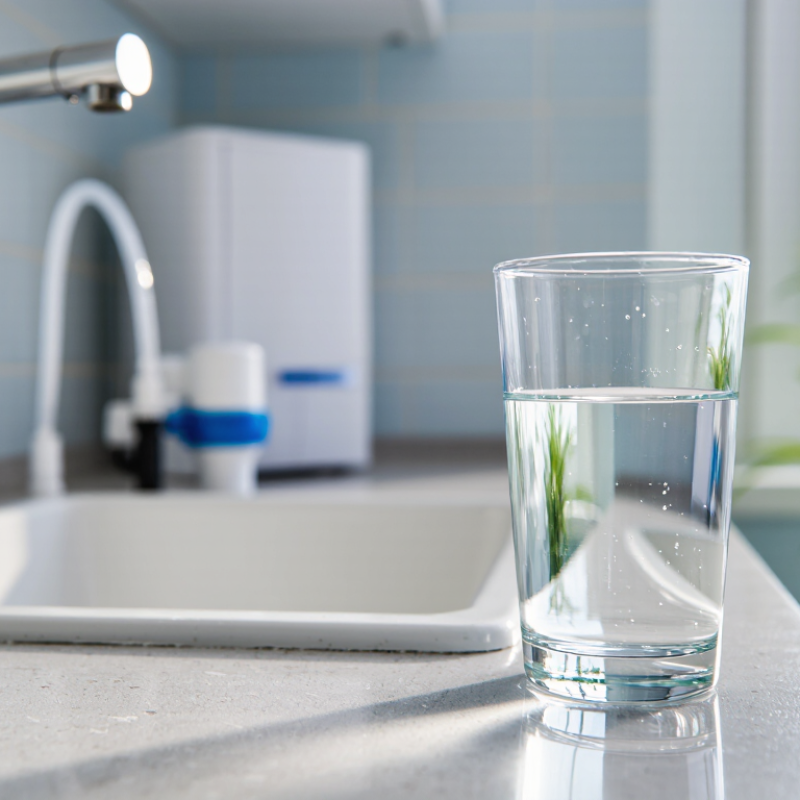
Water can look clear and still contain substances you may not want to drink. Depending on its source and plumbing, household water may carry sediment, chlorine taste, lead, or other contaminants. The risks vary by location, so no single filter is right for every home. A glass from the kitchen tap tells you little about what is dissolved inside it.
World Health Organization Director-General Dr. Tedros Adhanom Ghebreyesus, a physician and public-health expert, has said: “Safe and readily available water is important for public health, whether it is used for drinking, domestic use, food production or recreational purposes.” Filtration can be one practical step toward improving water quality, but it is not a cure-all. The right system depends on what testing finds and what the filter is certified to reduce. A filter that targets chlorine taste may not remove lead or microbes. Read the label carefully.
Small details matter. Check the cartridge schedule, installation instructions, and replacement cost before buying. An overdue cartridge can perform poorly. That part is easy to forget. Home water filtration works best when it addresses a known concern and receives regular maintenance. Even then, results deserve a second look: test water when appropriate, and ask a qualified professional if the problem is unclear. Clean-tasting water is reassuring, but taste alone cannot confirm safety.
What Home Water Filtration Is and How It Works
Home water filtration is a way to reduce specific unwanted substances as water enters the house or reaches a tap. The system may sit under a sink, connect to the main supply, or use a countertop unit. Its design matters because filters do not all remove the same things. A sediment filter catches particles such as rust or sand. Activated carbon can reduce chlorine taste and odor, while certain membrane systems can reduce dissolved substances. Some units combine several stages. The water passes through each layer, but no single filter removes every possible contaminant. That matters.
Choosing a system starts with understanding the water. A recent local water report can offer useful clues; a laboratory test may help when the source is a private well or concerns remain. Match the filter’s stated capabilities to the substances found, and check whether independent testing supports those claims. Flow rate is practical, too: a very slow tap can become frustrating during dinner preparation. Filters also need timely replacement. A neglected cartridge may perform poorly, even if the system worked well at first. I have seen people treat “filtered” as a guarantee, which is too broad. Filtration is a specific tool, not a substitute for checking water quality or maintaining the equipment.
| Filtration Method | How It Works | Commonly Targeted Issues | Why It Can Matter at Home | Important Limitations |
|---|---|---|---|---|
| Sediment filtration | Water passes through a porous screen or depth-filter material that physically traps particles larger than the filter’s rated size. | Sand, rust flakes, and suspended particles. | Can reduce visible particles and help protect downstream filters and plumbing fixtures. | Does not reliably remove dissolved chemicals, salts, or microorganisms. Performance depends on the filter’s rating and condition. |
| Activated carbon | Water flows through carbon with a large internal surface area. Adsorption can capture certain compounds; some carbon filters also reduce chlorine through chemical reactions at the surface. | Often used to improve chlorine taste and odor; some certified models reduce specified organic chemicals. | Can make water more pleasant to drink and cook with when the targeted substance is present. | Not all carbon filters remove the same substances. It generally does not remove dissolved minerals or salts, and it is not a dependable disinfection method. |
| Reverse osmosis (RO) | Water is pushed under pressure through a semipermeable membrane. The membrane allows water molecules through while rejecting a portion of many dissolved substances into a waste-water stream. | Depending on the system and certification, may reduce dissolved salts and specified contaminants such as lead or nitrate. | Can be useful when testing identifies dissolved contaminants that the selected system is certified to reduce. | Removal rates vary by contaminant and operating conditions. RO produces reject water, may reduce beneficial minerals, and usually requires maintenance and adequate water pressure. |
| Ultraviolet (UV) treatment | UV light inactivates susceptible microorganisms by damaging their genetic material as water passes through the treatment chamber. | Can inactivate certain bacteria, viruses, and protozoa when the unit is appropriately designed and maintained. | May provide an additional microbial barrier, particularly where a microbiological risk is identified. | Does not remove chemicals, particles, or dissolved minerals. Clear water and proper lamp operation are important; UV does not leave a disinfectant residual in the plumbing. |
| Water softening | Most household ion-exchange softeners exchange calcium and magnesium ions for sodium or potassium ions. | Hardness minerals that contribute to scale and soap-related cleaning problems. | Can help reduce scale buildup in appliances and improve soap lathering in hard-water areas. | Softening is not the same as broad contaminant removal or disinfection. It adds sodium or potassium to the water, and the amount depends on the incoming hardness. |
| Point-of-use and point-of-entry systems | Point-of-use units treat water at one tap, such as a kitchen faucet. Point-of-entry systems treat water where it enters the home. | Targets depend on the treatment technology installed and the system’s verified performance claims. | A point-of-use system can focus treatment on drinking and cooking water; a point-of-entry system can treat water used throughout the home. | The system should be selected for the specific water concern. A filter that is not maintained or replaced as directed may lose effectiveness. |
| Testing and certification | Water testing identifies which substances are present; independent product certification checks performance claims against defined protocols. | Local contaminants, household plumbing concerns, and specific treatment goals. | Helps avoid choosing a filter that does not address the actual water-quality issue. | Certifications apply to specific reduction claims, not to every possible contaminant. Check the exact claim and follow the replacement schedule. |
Key point: Home water filtration is the treatment of household water using one or more processes to reduce specified impurities or improve taste and odor. The right choice depends on the water source and test results; no single filter removes every contaminant.
Related Posts
-
What Is Home Water Filtration and How Does It Work?
-
Best Water Purifier for Home Which One Should You Choose?
-
China Top 10 Home Water Filtration Manufacturers
-
What Is Home Water Filtration and How Does It Work?
-
How to Choose a Pure Water Filter for Global Sourcing?
-
2026 Top Water Filter for Home Options You Need to Know?