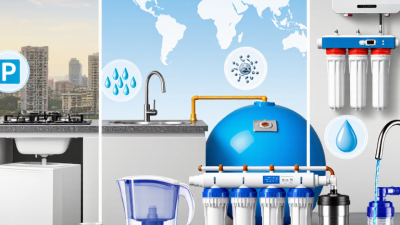
Choosing a water filter for home is not just a matter of picking the sleekest pitcher or the most expensive under-sink unit. Your water source, household size, and the specific contaminants you want to reduce all matter. A family filling bottles every morning may value fast flow and a large capacity. Someone in a small apartment may care more about easy installation and limited counter space. The right choice depends on your daily routine.
This guide compares seven types of home water filters, including pitchers, faucet-mounted units, countertop systems, and reverse osmosis models. It looks at practical details: what each system is designed to reduce, how often its cartridges need replacing, and whether its verified performance matches your needs. Check the product’s certification against standards such as NSF/ANSI, and read the exact claim; certification for one contaminant does not prove removal of every contaminant. That distinction matters.
A filter can improve taste and odor, but it cannot solve every water-quality problem. If your water comes from a private well, consider testing it before buying equipment. Municipal water users can review their local water quality report, though older plumbing may affect water at the tap. Small details count. Filter costs and replacement schedules can also be easy to underestimate. I would not treat any single “best” pick as right for everyone; even a well-reviewed model may be inconvenient in your kitchen. Use the comparisons below to find a sensible match, and confirm current specifications with the manufacturer before you buy.
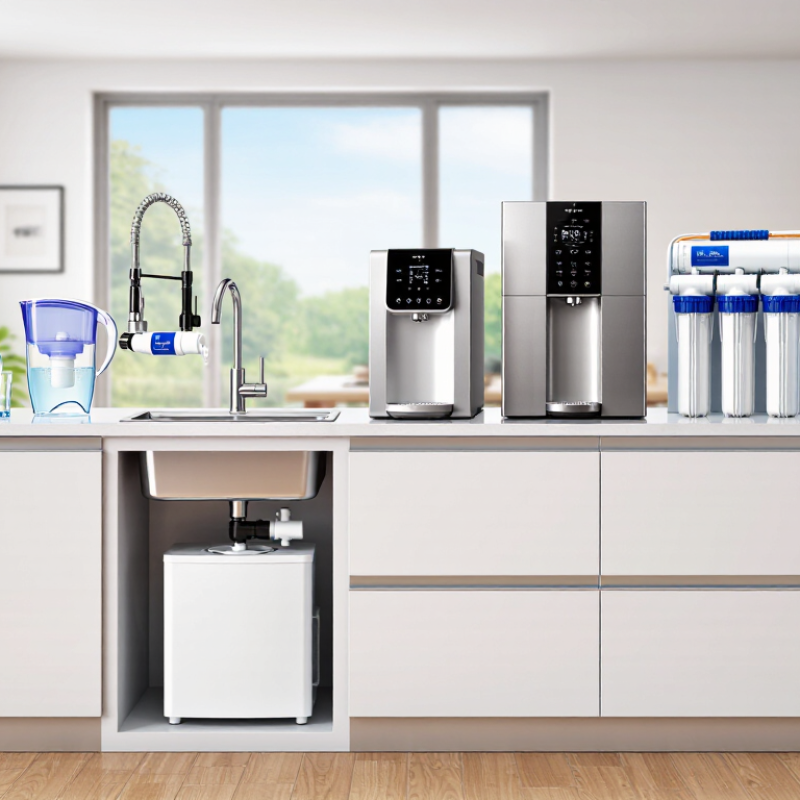
A home water filter can improve taste, reduce odors, or capture specific contaminants. What it removes depends on its design. Carbon filters often reduce chlorine taste and some organic chemicals. Sediment filters catch visible particles, such as grit or rust. Certain certified systems can reduce lead or cysts, but not every filter does. It is easy to assume “filtered” means “safe from everything.” It does not.
Start with your water source and a recent water quality report. Well water may need testing because its contents can change over time. A filter’s label should name the contaminants it is certified to reduce. Reverse osmosis can lower several dissolved substances, but it also removes some minerals and creates wastewater. No single setup suits every kitchen. Sometimes, a simple carbon filter is enough.
Tips: Check the filter’s certification and replacement schedule before buying. Read the label. Replace cartridges on time; an overdue filter may work poorly. If your water has an unusual smell, color, or taste, investigate the cause rather than masking it. A filter can help, but it cannot fix every plumbing or water-quality problem.
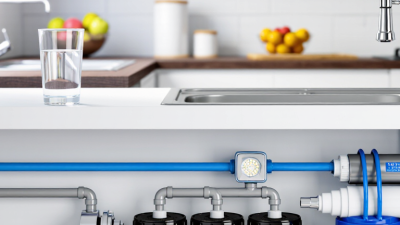
Household water filters use different methods, and each targets a different problem. Sediment cartridges trap visible particles such as sand, rust, or grit before they reach a tap. Activated carbon uses a porous surface to reduce chlorine taste and odor, and some models are tested for specific chemicals. It does not remove everything. Clear-looking water can still contain dissolved substances.
Reverse osmosis pushes water through a fine membrane, reducing many dissolved contaminants, including certain salts and metals. It usually needs regular filter changes and may send some water to the drain. Ion-exchange units swap minerals such as calcium and magnesium for other ions, often to reduce hardness and scale. They are not a substitute for every kind of treatment. Ultraviolet systems can inactivate microbes, but they do not remove particles or chemicals, and cloudy water can interfere with performance.
The useful question is not which filter sounds strongest, but what your household water actually needs. A local water-quality report can point to concerns; private wells may need testing, too. Check that a filter’s independent certification covers the contaminant you want reduced, rather than relying on a broad “clean water” claim. Replacement schedules matter. A neglected cartridge can perform poorly, and I would not assume a filter is working just because the water tastes better.
Before comparing home water filters, find out what your water contains. Read your utility’s latest water quality report, or arrange a certified laboratory test if you use a private well. A USGS national assessment found that about 23% of sampled domestic wells had at least one contaminant above a health benchmark. That figure is not a prediction for your well; it shows why testing matters. Lead, for example, cannot be seen or tasted. Test first.
Match the filter’s independently verified claims to your test results. NSF/ANSI 42 addresses aesthetic effects, such as chlorine taste, while NSF/ANSI 53 covers specific health-effect claims. Certification applies only to the contaminants listed for that model. Check the fine print, plus replacement costs, cartridge life, and flow rate. The WHO/UNICEF 2023 Joint Monitoring Programme estimated that 2.2 billion people lacked safely managed drinking water in 2022. That global figure offers context, but it does not tell you whether your tap needs treatment. A “99% reduction” headline alone is not enough.
Tips: Keep your test report beside the filter’s performance sheet. Replace cartridges on schedule, and retest if the water’s taste, color, or smell changes. I’d avoid guessing from appearance; clear water can still contain contaminants.
EPA maximum contaminant levels for selected contaminants in public drinking water. Use these benchmarks to identify concerns—not as a guarantee of any filter’s performance.
Before buying, check a filter’s independent certification and its specific reduction claims for the contaminants found in your water. Values shown: arsenic 0.010 mg/L, total chromium 0.1 mg/L, nitrate (as nitrogen) 10 mg/L, and fluoride 4.0 mg/L. Source: U.S. EPA drinking-water standards.
Choosing among seven home water filters means matching the technology to the water, household size, and maintenance budget. A 2023 USGS study estimated that at least one PFAS may occur in nearly 45% of U.S. tap water. The finding does not mean every home has contaminated water; local results vary. Check a utility report or test private-well water before buying.
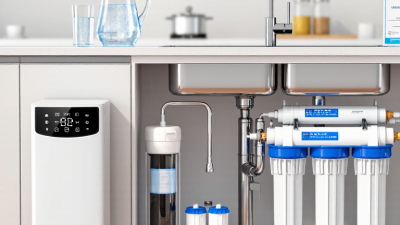
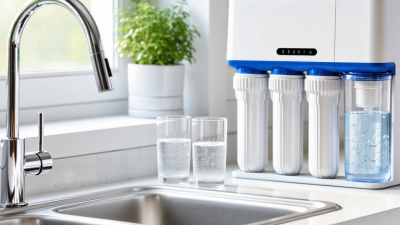
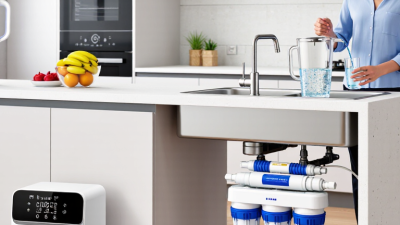
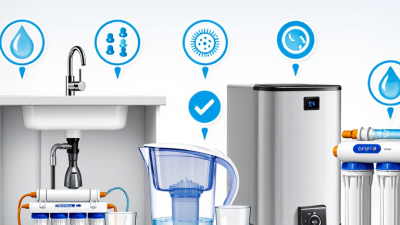
A pitcher or faucet-mounted filter is compact and simple, but cartridges need regular replacement. Countertop units avoid installation, though they take up workspace. Under-sink carbon filters save counter space and can reduce specific contaminants when certified for them. Reverse-osmosis systems remove a wider range of dissolved substances, but use water for flushing and may need more upkeep. Whole-house filters treat water at multiple taps, yet can be costly and may not target every health concern. UV units can inactivate microorganisms, but do not remove chemicals or particles.
Certification matters more than broad claims. NSF/ANSI 42 covers aesthetic effects, while 53 addresses certain health-related contaminants; standard 58 applies to reverse osmosis. Look for the exact contaminant listed on the certification, not just a seal. A filter also works only when fitted correctly and maintained on schedule. Easy to forget. I would compare cartridge costs and replacement intervals before choosing, though those details are less exciting than the advertised filtration claims.
| Filter Type | Typical Strengths | Typical Flow or Output | Installation | Maintenance | Best Suited For | Important Limitation |
|---|---|---|---|---|---|---|
| Activated-Carbon Pitcher | Can reduce chlorine taste and odor; specific models may also reduce listed contaminants such as lead. | Small batches; filtration commonly takes several minutes. | No plumbing work; fill by hand. | Replace the cartridge on the schedule or volume stated by its manufacturer. | Renters, small households, and people who want a low-cost, portable option. | Limited capacity; ordinary carbon does not reliably remove dissolved salts or disinfect water. |
| Faucet-Mounted Carbon Filter | Often used to improve chlorine taste and odor; certified models may reduce additional named contaminants. | On-demand flow, generally slower than an unfiltered tap. | Attaches to a compatible faucet; some faucet designs are not compatible. | Replace the cartridge as directed; check for leaks and reduced flow. | Households wanting filtered water directly at the sink without under-sink installation. | Performance varies by cartridge and contaminant; it does not soften water unless specifically designed to do so. |
| Countertop Carbon Filter | Carbon media can reduce chlorine taste and odor; some systems use additional media for other specified contaminants. | Continuous tap-fed output, with flow dependent on the system and water pressure. | Usually connects to a faucet adapter; occupies counter space. | Change cartridges at the stated interval or capacity. | Renters or households seeking more capacity than a pitcher offers without permanent plumbing changes. | Not all units fit all faucets; carbon filtration alone does not remove most dissolved minerals. |
| Under-Sink Carbon Filter | Can reduce chlorine taste and odor; exact reductions depend on the certified model and its cartridge. | On-demand supply through a dedicated faucet or connected tap; flow depends on the system. | Installed beneath the sink; may require a separate faucet or plumbing connection. | Replace the filter according to its rated capacity and instructions. | Homeowners wanting convenient drinking and cooking water while keeping the counter clear. | Does not automatically remove dissolved solids, hardness, or microbes; verify each claimed reduction. |
| Under-Sink Reverse Osmosis (RO) | A membrane system can reduce many dissolved substances; certified performance is specific to the model and listed contaminants. | Filtered water is produced into a storage tank or on demand; production is slower than a standard tap. | Typically installed under the sink with a dedicated faucet; some setups need a drain connection. | Replace prefilters, postfilters, and the membrane at their specified intervals. | People who want broad reduction of dissolved contaminants and are comfortable with more upkeep. | Produces reject water; performance and water use vary, and some systems require remineralization for taste. |
| Whole-House Sediment and Carbon System | Sediment stages can capture particles; carbon stages can reduce chlorine and related taste or odor when properly sized. | Supplies multiple household outlets; adequate flow depends on system sizing and plumbing demand. | Installed on the incoming water line, usually by a plumbing professional. | Replace or service media as directed; monitor pressure and sediment loading. | Homes seeking treatment at several taps or appliances, especially for sediment or chlorine concerns. | Usually not intended to remove dissolved salts or guarantee safe drinking water; choose treatment based on a water test. |
| UV Disinfection with Prefiltration | Ultraviolet treatment can inactivate susceptible microorganisms when the unit is correctly sized and water is sufficiently clear. | Flow-through treatment; maximum flow depends on the UV unit and required exposure dose. | Usually installed in-line with electricity; prefiltration may be needed to reduce particles that shield microbes. | Maintain the lamp and sleeve as directed; keep the unit powered and follow alarm guidance. | Homes using a microbiologically vulnerable supply, such as some private wells, after appropriate testing. | Does not remove chemicals, particles, or dissolved minerals; UV treatment leaves no disinfectant residual. |
Selection note: Filter performance is model-specific. Check independent certification and the exact contaminant-reduction claims for the product you are considering; a certification does not mean a filter reduces every contaminant. For private wells or a known water-quality problem, test the water and choose treatment based on the results.
Choosing a home water filter starts with your water, not a product ranking. Check your local water quality report, or arrange a test if you use a private well.
The USGS estimated that at least one type of PFAS may be present in water from 45% of U.S. taps, based on samples from 716 locations. That national estimate is not a diagnosis of your tap. It is a reason to check what needs filtering.
Match the filter’s certification to the contaminant you want reduced. NSF/ANSI 53 covers specific health-related reduction claims, while NSF/ANSI 58 applies to reverse osmosis systems. Read the exact claim; certification does not mean a filter removes everything.
Space matters, too. Measure the cabinet, check faucet clearance, and note whether installation needs a separate tap. Small detail. A pitcher takes little room, but needs refilling; an under-sink unit stays out of sight, but takes more setup.
Compare replacement-filter prices and schedules, not just the purchase price. A filter that is awkward to maintain may sit unused. That’s easy to overlook.
If your test results are unclear, ask a certified water-testing professional before choosing.
Build your system. Protect your boat. Join the movement.